 Skip to content


Arrange an independent probate valuation of household contents when belongings may have significant value, ownership is disputed, or the estate needs reliable written evidence for Inheritance Tax. Ordinary household goods can often be valued using supported second-hand estimates.
You don’t need to make every decision about the house straight away. Start by recording and protecting belongings, then identify what needs specialist attention before anything is sold, shared or cleared.
Key Takeaways
- A probate contents valuation covers household goods and personal possessions, not the building or the whole estate. It uses each item’s open-market value at the date of death.
- Specialist belongings, disputed values and contents that could affect tax reporting may need an independent professional valuation. The report should identify the items, valuation date, basis and valuer.
- For ordinary goods, make an inventory and support estimates with comparable completed second-hand sales. Keep photographs, notes and other evidence with the estate papers.
- A clearance quote covers agreed removal work; it doesn’t establish the probate value of the contents. Keep any contents value and clearance charge separate.
- IHT407 covers household and personal goods when used with IHT400. Individual jewellery items worth £1,500 or more must be listed separately, but this reporting threshold doesn’t set when a professional valuation is needed.
What a probate contents valuation covers
It covers the deceased person’s household goods and personal possessions. This may include furniture, jewellery, artwork, vehicles, tools and collections.
It doesn’t value the building or establish the value of the whole estate.
Use open-market value at the date of death
The required figure is the open market value of an item at the date of death. Think of a willing buyer and willing seller, rather than a shop’s replacement price.
Original purchase prices, insurance figures and sentimental value aren’t substitutes. HMRC’s Inheritance Tax account notes explain the date-of-death valuation basis.
An everyday dining table may have modest resale value. A signed artwork or sought-after watch may need closer assessment.
Agree who will use the report
The executor or administrator uses the valuation to support estate records and any required tax reporting. A probate solicitor or accountant may also use it when preparing the estate account.
An independent report can help beneficiaries understand the figures. It doesn’t decide who owns an item or who should inherit it.
Agree the purpose before instructing the valuer. A probate valuation, insurance assessment and sale estimate answer different questions.
When an independent valuation is appropriate
An independent professional valuation is useful where uncertainty could affect formal tax reporting, sale decisions or fair treatment between beneficiaries.
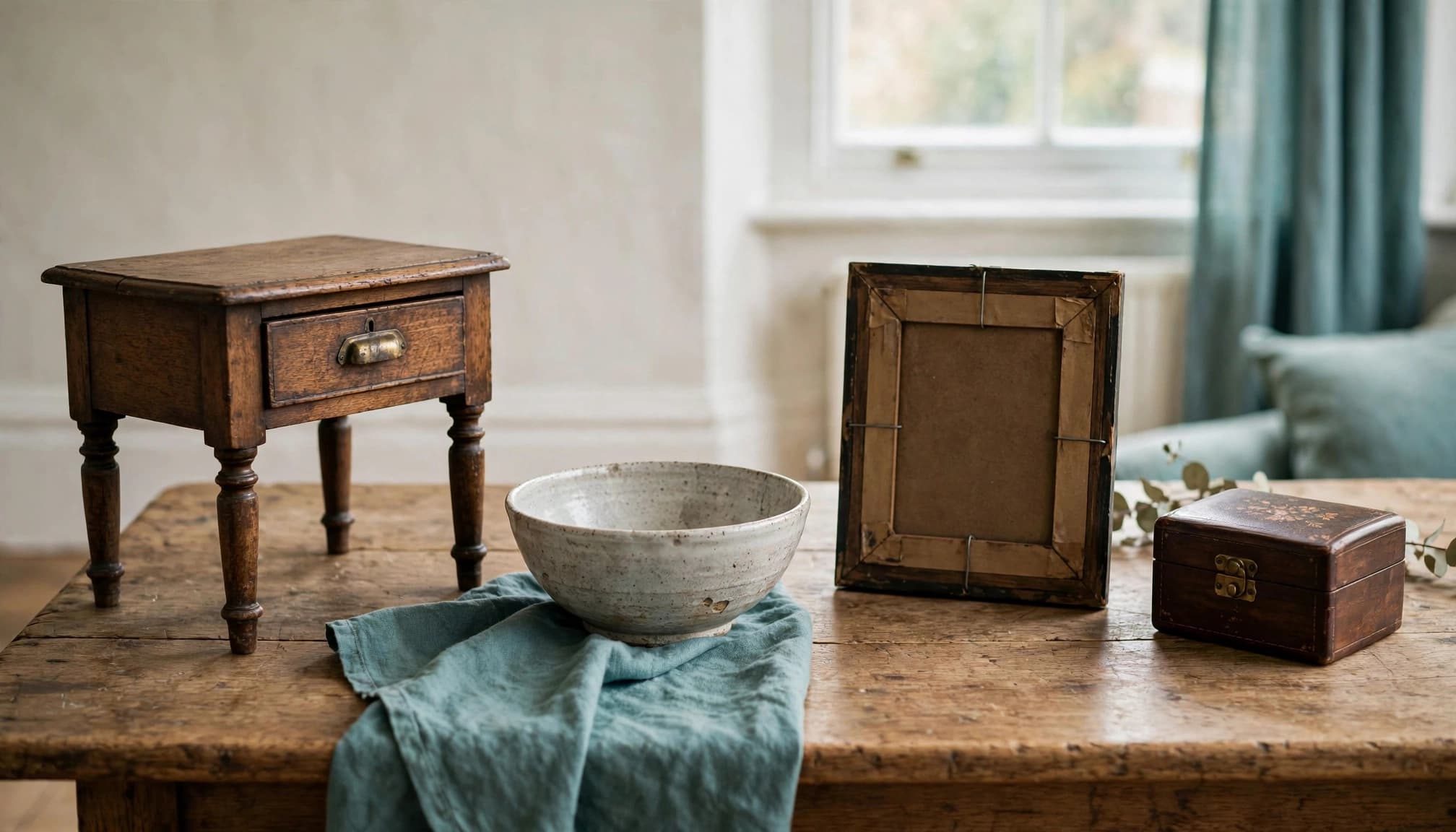
Set aside specialist belongings
Jewellery, antiques, fine art, vintage watches, coins, musical instruments, specialist tools and substantial collections may need professional assessment.
Use a suitably experienced specialist with knowledge of the items involved. That may be a qualified antiques valuer, auction-house specialist or jeweller. A property surveyor isn’t automatically the right person to value a collection.
Keep old receipts and insurance schedules, but don’t assume their figures remain suitable. Insurance values commonly concern replacement costs, whilst probate needs a historical market value. That value may have risen or fallen.
Bring in help where the figures matter
Professional evidence is particularly useful where contents could materially affect the estate’s tax position, beneficiaries disagree about value, or a clearance offer includes potentially valuable belongings.
Independence also matters if the person offering a valuation wants to buy the items. Keep a buying offer separate from the valuation evidence.
Ask for a written report identifying the items, valuation date, basis and valuer’s details. Tell the valuer whether the report is needed for tax reporting, estate administration or another agreed purpose.
How to record and estimate ordinary contents
You don’t need a separate specialist appointment for every everyday possession. You do need a reasonable method and a record of how you reached the figures.
Make an inventory before things move
Work room by room. Include accessible cupboards, garages, sheds and lofts where it is safe to do so.
Record a short description, condition, location and ownership where known. Photograph rooms first, then individual items needing closer attention. Include hallmarks, signatures, serial numbers and maker’s marks.
Our guidance on sorting belongings after bereavement explains how to keep records and separate decisions without rushing.

Use completed sales as evidence
For ordinary furniture and domestic goods, compare similar second-hand items. eBay sold listings are more useful than optimistic asking prices.
Match age, maker, materials and condition as closely as possible. Keep dated screenshots or notes, particularly where the date of death was some time ago.
Group ordinary goods sensibly without overlooking valuable items within a group. Add those supported totals to separately assessed belongings, without counting anything twice.
The IHT407 household goods form allows ordinary furniture and domestic goods to be reported as a total. Individual jewellery items worth £1,500 or more must be listed separately. That is a reporting threshold, not a universal rule about when professional valuation is required.
What should you budget for a valuation?
There isn’t a fixed national fee. Cost depends on the number of items, specialist knowledge required, travel and the written report.
As a published price example, Swift Values lists in-person contents valuations from £298 and an online service at £119 per property. These are provider prices, not a national average or a quote for your estate.
A photograph-based assessment may suit straightforward belongings. It may be unsuitable where authenticity, condition or identifying marks need physical inspection.
Agree whether the price includes the visit, written report, specialist referrals, travel and VAT. An auction estimate offered to attract a consignment may have a different scope from a paid probate report.
Property valuation fees are separate. The Gazette gives an indicative range of about £200 to £600 for standard residential probate valuations. That doesn’t cover a specialist household-contents assessment.
How contents fit into the wider estate
A contents report is one part of an estate valuation, alongside property, savings, investments, debts and relevant lifetime gifts.
Keep property valuation separate
Estate agent valuations can provide informal estimates for a possible sale. A formal property valuation may need evidence from a RICS chartered surveyor, particularly where tax exposure, unusual features or a farmhouse require specialist judgement.
Joint ownership needs care. A joint tenant’s interest is often based on an equal share, whilst tenants in common may hold unequal shares, such as 60% and 40%. The interest to report should follow the ownership and applicable valuation rules.
For a wholly owned property worth £200,000 with an allowable outstanding mortgage of £150,000, the net equity is £50,000. The property and mortgage still need to be recorded correctly.
Look beyond the basic tax threshold
The basic Inheritance Tax nil-rate band is £325,000. This inheritance tax threshold doesn’t mean an estate above it automatically owes tax.
Spouse or civil-partner exemptions, transferable unused allowances and the residence nil-rate band can change the position. Some gifts made during the seven years before death can also affect the calculation. They shouldn’t simply be treated as possessions still owned at death.
The IHT400 estate account brings the relevant asset and liability figures together where a full account is required.
This is general guidance, mainly for England and Wales, rather than legal or tax advice. Ask the probate solicitor or accountant where ownership, gifts or allowances affect the estate.
Which HMRC forms cover household contents?
Not every estate requires a full IHT400 account. Where it is required, supporting schedules separate different assets and circumstances.
These are the forms most relevant to contents and the home.
| Form | What it covers |
|---|---|
| IHT404 | Jointly owned assets, including jointly owned possessions. |
| IHT405 | Houses, land, buildings and interests in land. |
| IHT407 | Household and personal goods, including jewellery, vehicles, boats, aircraft, antiques, artwork and collections. |
| IHT408 | Qualifying household and personal goods inherited by beneficiaries and then donated to charity. |
HMRC’s IHT407 reporting guidance confirms that the household-goods schedule is used with IHT400.
Keep the report, inventory, photographs and supporting sale evidence with the estate papers. If an item is later sold, retain the sale receipt and commission statement too.
If further assets come to light after probate, or the estate account contains an error, raise this promptly with the probate professional handling the reporting. Don’t leave the original figures unaddressed.
Keep valuation and clearance decisions separate
A clearance quote tells you the cost of agreed removal work. It doesn’t automatically establish the probate value of everything inside the property.
Some clearance companies may offer to offset saleable contents against their charges. Sometimes those contents cover the clearance cost. Record the contents value and service charge separately, with specialist belongings assessed before agreement.
A zero balance on a clearance invoice doesn’t mean the household contents had no value.
Keep uncertain items outside the removal scope. Record what stays, what can leave and who can approve changes. A relative’s agreement alone doesn’t settle legal authority.
Our guidance on clearing a house before probate explains the distinction between protecting belongings and distributing them.
A valuation may also help with fair distribution, but families should agree whether they are using date-of-death or current values. Sentimental importance needs a separate conversation.
At Placeback, our probate and bereavement clearance follows an agreed plan for what stays, what can be removed and what needs more time. Clearance work doesn’t replace qualified valuation or tax advice.
Frequently Asked Questions
What does a probate contents valuation cover?
It covers the deceased person’s household goods and personal possessions, such as furniture, jewellery, artwork, vehicles and collections. It doesn’t value the building or the whole estate.
How do I estimate the value of ordinary household goods?
Compare similar second-hand items using completed sale prices, matching age, maker, materials and condition as closely as possible. Keep an inventory, photographs and dated notes to show how you reached the figures.
When should I arrange an independent valuation?
Arrange one when specialist belongings need assessment, beneficiaries disagree about value, or the figures could affect tax reporting or sale decisions. Use a specialist with experience of the items involved and ask for a written report.
Does a house-clearance quote show the probate value of the contents?
No. A clearance quote covers the cost of agreed removal work, and any offer to offset saleable contents should be recorded separately from the service charge. Keep uncertain or potentially valuable items out of the removal scope until they’re assessed.
Do I have to list jewellery separately on the IHT407?
Individual jewellery items worth £1,500 or more must be listed separately. This is a reporting threshold, not a general rule about when to arrange a professional valuation.
A clear next step before belongings leave
A sound probate valuation starts with a clear record. Protect the belongings and support ordinary estimates, but seek qualified valuation or tax advice where value or uncertainty calls for it.
If clearance is needed, tell us about your property and identify anything awaiting assessment. You don’t need the whole house sorted before agreeing what happens next.
