 Skip to content


You can usually protect and record a deceased person’s home while probate is pending, but that doesn’t mean belongings can be removed freely. Keep a clear distinction between protecting the estate and selling, donating or distributing its contents.
Probate clearance may include limited early work, such as removing perishables to prevent deterioration, but disposal decisions should wait until authority is clear. You don’t need to decide everything straight away; first establish who can act and what must remain.
Key takeaways
- Securing the home, removing perishables and recording belongings can usually begin before the grant.
- Keep sales, gifts, donations and distribution on hold until authority, ownership, valuations and beneficiary rights are clear.
- Record what moves, why it moves and where it goes. Protect documents, specific gifts and uncertain items.
- Insurance, council tax and Inheritance Tax have separate deadlines. Emptying the house doesn’t resolve them.
Who can authorise house clearance before probate?
The following guidance mainly concerns England and Wales. Scotland and Northern Ireland have different estate procedures.
An executor’s authority comes from the will
The grant of probate confirms that authority, and banks or other organisations may require it before releasing assets.
Before agreeing any work, check the will, property ownership, insurance terms, and any lender or co-owner requirements. An executor must preserve assets. Permission to secure or sort belongings doesn’t automatically include authority to dispose of them.
Probate isn’t always required before protective work, such as securing the property or sorting items for storage. Keep any specific gifts available for beneficiaries unless there’s a lawful reason otherwise.
A relative doesn’t automatically have authority
Being next of kin doesn’t give someone permission to empty the home. Where no will exists, the person applying to become administrator normally obtains authority through letters of administration.
An estate may not require a grant. That still doesn’t make its contents available for informal distribution.
GOV.UK advises against making financial plans or putting property on the market before probate. Where authority is uncertain, seek advice from a probate solicitor before agreeing removal.
What can be moved, and what should wait?
Early work should have a clear purpose. Protecting belongings in secure storage is different from giving them away.
Use this distinction when agreeing the scope.
| Contents or task | Before the grant | What needs recording |
|---|---|---|
| Perishables, including food, and obvious rubbish | Usually removable to prevent deterioration | Photographs and reason for removal |
| Bank papers, deeds and insurance records | Find and secure them | Their location and who holds them |
| Jewellery, cash and valuable collections | Secure them; arrange valuation | Inventory, photographs and storage details |
| Furniture and ordinary household goods | Inventory first; limit removal to justified preservation | Ownership, condition and destination |
| Specific gifts or disputed belongings | Keep outside the clearance scope | Will instructions, beneficiaries’ rights or the unresolved concern |
| Sales, donations and family distribution | Hold back pending authority and advice | Valuation, approval and eventual recipient |
As a cautious default, wait for probate before selling, gifting, donating or distributing estate items. Any earlier disposal needs clear legal authority and a documented reason.
An executor can face personal claims if belongings disappear, including jewellery. Misappropriation can create civil liability; dishonest taking may amount to theft. An early house clearance isn’t automatically a criminal offence.
Protect the property without rushing the clearance
Deal with insurance and access first
Notify the insurer about the death and any change in occupation. Ordinary home insurance commonly limits cover once a property has been unoccupied for a stated period.
Arrange suitable unoccupied property cover where needed. Follow the policy’s requirements for inspections, heating, water and security. There isn’t one vacancy period that applies to every policy.
Keep keys controlled and record who enters, when and why. Relatives helping with sorting need clear limits on what they may remove.
Establish ownership too. A surviving co-owner, mortgage lender or landlord may have requirements affecting access, storage or handover.
Keep the council tax dates separate
In England, Class F can exempt a qualifying home left unoccupied following a death whilst probate or letters of administration is pending.
That period isn’t limited to six months after the death. After the grant, exemption can continue for up to six months, provided the qualifying conditions remain met.
The home must remain unoccupied and must not have been sold or transferred. Keeping furniture inside doesn’t prevent Class F exemption.
Notify the council of the death and occupation position. Retain its written decision and record the grant date. Joint ownership or someone continuing to live there can change eligibility.
Make a record before anything leaves

Photograph each room and list the contents
Take wide photographs of every room, then closer photographs of individual belongings before they move. Include cupboards, drawers, lofts, garages and sheds where access is safe.
Create a room-by-room inventory covering furniture, valuables, collections and personal belongings. Record condition, ownership where known and anything requiring valuation.
Our guidance on protecting valuable estate belongings covers the decisions to resolve before removal. Specialist items may need independent assessment rather than a clearance company’s estimate.
If something moves into storage, record its destination and who is responsible for it.
Keep documents and uncertain finds separate
Don’t discard bank statements, share certificates, Premium Bonds records, insurance policies, pension letters or deeds. They may identify assets, debts or arrangements that still need attention.
Look carefully through books, tins and drawers before treating their contents as waste. Cash and jewellery can be stored amongst ordinary household belongings.
Keep documents, specific gifts and items needing a decision apart from approved waste. Our guide to documents to retain during clearance explains which papers may need further attention.
Photographs and family letters can matter even when they have little financial value.
Value the contents and record the tax deadlines
Use the value at the date of death
Household goods need an open market valuation at the date of death. This is what they could reasonably have sold for, rather than their insurance replacement value.
HMRC’s valuation and reporting guidance supports the estate account. Retain written valuations for jewellery, artwork, antiques and collections where needed.
Where a full account is required, household and personal goods are reported using IHT407, amongst HMRC’s Inheritance Tax forms. Individual jewellery items worth £1,500 or more must be listed separately.
Nobody wanting an item doesn’t make its taxable value zero.
Tax deadlines don’t wait for clearance
The standard Inheritance Tax threshold is £325,000. A qualifying home left to children or grandchildren can bring the available threshold to £500,000, subject to the residence allowance conditions.
Larger estates can lose some or all of that additional allowance.
For an estate owing tax, reporting the estate to HMRC involves IHT400 and relevant schedules.
These deadlines run separately from the clearance.
| Requirement | Usual deadline |
|---|---|
| Submit IHT400 where required | Within one year of death |
| Pay Inheritance Tax | End of the sixth month after the month of death |
| Post-grant Class F exemption | Up to six months after the grant, while eligible |
Some assets qualify for instalment payments. Tax advice may be needed before arranging sales to raise funds.
Paying clearance costs from the estate doesn’t automatically make them deductible for Inheritance Tax.
Agree the clearance scope and payment in writing
Give the team clear instructions
Specify which rooms are included, what must remain and what has been approved for removal. Identify who can decide if jewellery, documents or uncertain belongings are found.
A partial clearance may be suitable when a tenancy or insurance condition creates pressure. Important items can remain protected while agreed waste is removed.
We can combine clearance and cleaning under one agreed plan. Where agreed, completion photographs can form part of the handover.
A clearance team can’t interpret a disputed will, settle ownership or decide the estate’s tax valuation.
Keep costs and waste records together
Reasonable clearance costs should normally be paid from estate funds. Keep the quote, invoice, receipts and any executor approval.
If accounts are frozen, an upfront payment may be needed, but reimbursement isn’t guaranteed, particularly if funds are short. Our guidance on who pays clearance costs explains this distinction.
The quote should list labour, transport, sorting, disposal and any cleaning or specialist work.
In England, registration is the relevant check, not a separate “waste carrier licence”. Verify the business’s registration on the Environment Agency’s public register.
Environment Agency guidance explains the documentation rules: waste transfer notes are required for business waste transfers, while private household waste has different rules. Obtain a note where applicable and keep records for every collection.
Donate usable furniture only when approved
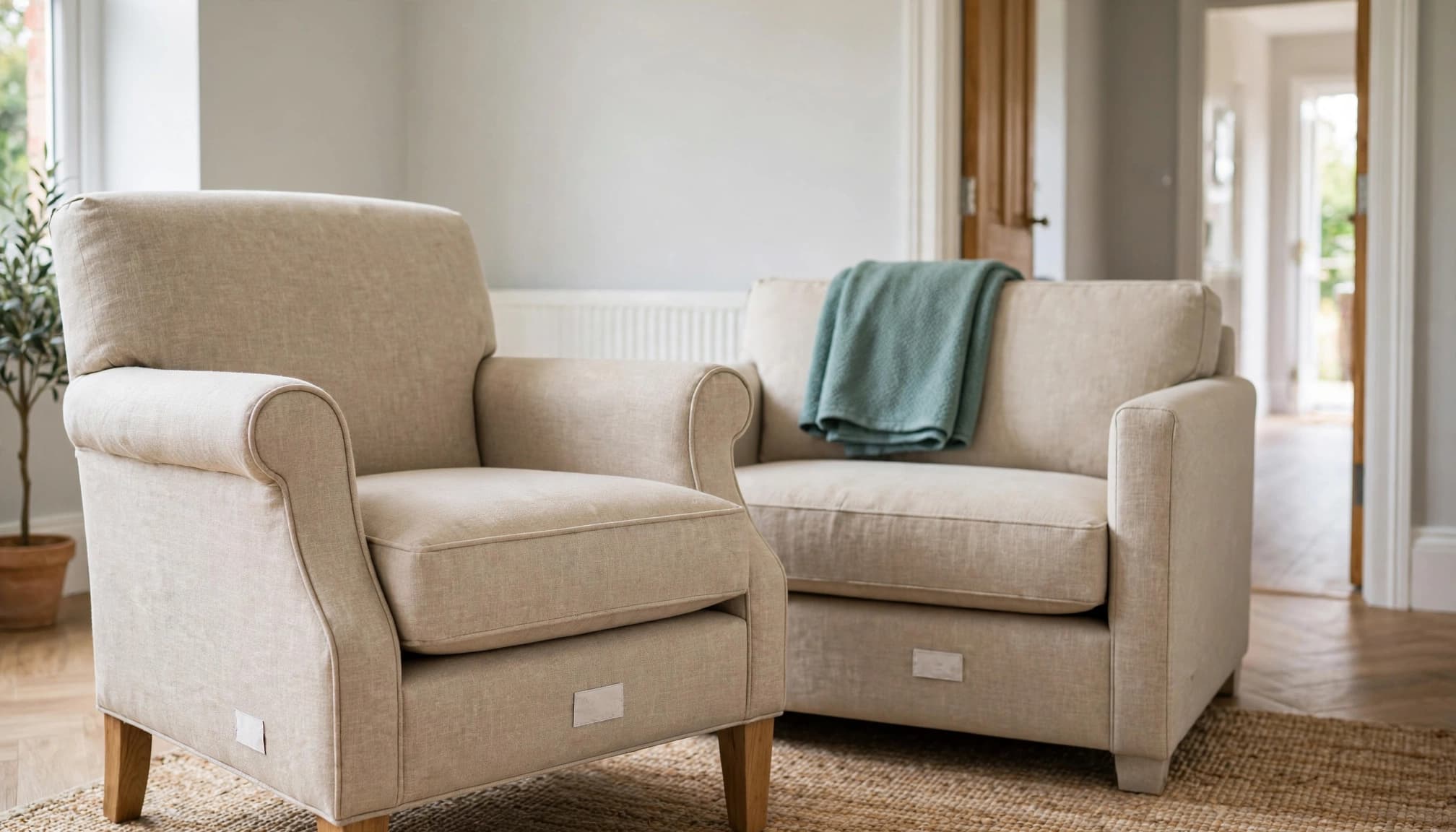
Donation still removes an estate asset. Record and value suitable items before the authorised person approves them for donation.
The British Heart Foundation offers free collection of suitable furniture. Upholstered furniture generally needs its original fire safety label attached. Check the fire safety label before booking a collection. Items must be clean, usable and free from rips, tears, heavy staining or significant scratches.
An unlabelled sofa may need another lawful disposal route. Don’t remove the fire safety label during sorting or cleaning.
Keep a record of what was donated, the recipient and the collection date. Leave uncertain or disputed belongings out of the donation pile, even if a collection has already been booked.
Frequently asked questions
Can I clear the house if the contents have little value?
Low value doesn’t remove ownership rights or an executor’s duties. Ordinary furniture may still be specifically gifted, jointly owned or important to a beneficiary.
Record the contents first. Genuine rubbish and perishables can usually be dealt with early, but a whole-house clearance needs clear authority and instructions.
Can someone live in the house during probate?
Sometimes, depending on ownership, occupation rights and the estate’s circumstances. Being one of the beneficiaries doesn’t automatically give someone permission to move in.
Occupation can affect insurance, council tax and plans for the property. Where rights are uncertain, obtain legal advice before agreeing a move. An occupied home won’t qualify for Class F as an unoccupied property.
A clear next step, without rushed decisions
House clearance before probate can begin with protection, records and carefully limited work. Wider removal needs clear authority, proper valuation and respect for beneficiary rights.
You don’t need everything sorted before asking for practical help. You can tell us about your property, including what must stay and what still needs a decision.
Keep uncertain belongings protected until the person responsible can approve the next step.
