 Skip to content


A home can hold years of paperwork in drawers, folders, cupboards and boxes. Before a clearance begins, house clearance documents need to be found, set aside and reviewed.
This matters after a death, during probate, and especially during a bereavement house clearance. It also matters before a sale or where ownership is unclear. You don’t need to sort every room at once. Start by protecting the papers and belongings that could affect what happens next.
A clear pause at the beginning can prevent a difficult mistake later.
Pause before you clear the property
During a house clearance, don’t treat paperwork as part of the general household contents. Important documents may be mixed with old post, manuals, photographs or items that look ready to throw away.
Check obvious places first:
- Filing cabinets, desk drawers, bedside tables and paperwork boxes.
- Safes, lockable cupboards and folders marked with a solicitor’s name.
- Lofts, garages, sheds and drawers inside furniture.
- Letters near a telephone, computer or household diary.
Set aside passports, birth certificates, driving licences, bank papers, property records, keys and anything that appears official. Use a lockable box or one clearly identified room where possible.
A document does not need to look valuable to matter. One letter can confirm ownership, insurance, a debt, an account or the authority to deal with an estate.
If the home is heavily cluttered, don’t rush through it when sorting items or looking for paperwork. Agree a slower, room-by-room approach. Tell the clearance team what must stay, what may be removed and any access requirements.
Confirm who has authority to decide
Being a close relative does not automatically give someone the right to remove, sell, donate or dispose of belongings. During a bereavement house clearance, establish who is responsible for the estate before anything leaves the property.
Find the will and executor details
Look for the original will, along with letters from a solicitor, bank, pension provider or probate service. A letter of wishes may be useful, but it does not replace a valid will.
The executor named in the will usually deals with the estate. If there is no will, someone may need to apply to become the administrator under intestacy rules. If you cannot find a will, you can search probate records and wills for England and Wales using the deceased person’s name and year of death.
Identifying the executor or administrator is essential for a probate house clearance. They must approve decisions about legal documents, valuables and other belongings before removal begins. Don’t assume probate has been granted because family members have started sorting the home. If authority is unclear, speak to the executor or a solicitor before clearing the property.
Keep evidence linked to the estate
Set aside death certificates, probate documents, the grant of probate, letters of administration and executor correspondence. These papers may be needed when dealing with banks, insurers, lenders, utilities and HM Land Registry.
Write down who has final authority to approve removal. If several relatives are involved, keep instructions in writing. A simple list can state what stays, what can go and what needs a decision.
Mixed instructions cause delays. They can also lead to personal belongings leaving the property before the right person has seen them. Keep any property inventory already prepared with the estate records.
Check property ownership records
Property paperwork is easy to overlook because it often sits amongst old bills, mortgage letters and household files. Keep it separate until the property has been sold, transferred or its legal position is clear.

Look for title, mortgage and lease documents
Set aside property deeds, including older deeds where relevant, transfer documents, mortgage deeds, leases, property insurance papers and correspondence from a conveyancer. Older documents can still be useful, even where the title is registered.
HM Land Registry holds records for most land or property sold in England and Wales since 1993. You can search the property register to check the title register and title plan. Online copies cost £7 each, but they are not legal proof of ownership.
Where the register refers to a document as “copy filed”, an official copy of a transfer, lease or mortgage deed may be available. Don’t discard paperwork because it looks old or duplicated. Let a solicitor or conveyancer advise if it is still needed.
Check what happens after an owner’s death
When an owner has died, property records may need updating after probate or letters of administration have been obtained. GOV.UK explains the process for updating the register after a property owner dies.
For jointly owned property, form DJP may be needed with an official copy of the death certificate. Where a sole owner’s property passes to a beneficiary, form AS1 may be relevant. The right form depends on the ownership and estate position.
If you are unsure whether the home is owned, rented, mortgaged or subject to a restriction, contact the lender, landlord, executor or solicitor before any clearance takes place.
Keep financial and household account papers
Not every bill needs permanent storage, but ordinary paperwork can show accounts that need attention after a death. During a bereavement house clearance, review it before disposal.
Find insurance, tax and utility records
Keep current home insurance documents, council tax letters, utility bills, service contracts and mortgage statements. Contact insurers, lenders, utility providers, landlords and relevant authorities through their bereavement or account-holder processes before cancelling anything.
Insurance is particularly important. An unoccupied property may have conditions about heating, inspections, security or how long it can be empty. Speak to the insurer before leaving the property vacant or clearing it fully.
Property files may also include Stamp Duty Land Tax paperwork for England and Northern Ireland, or Land Transaction Tax paperwork for Wales. Keep these with the wider property records until a solicitor confirms they are no longer needed. Older routine papers may be disposed of later once accounts and responsibilities are settled.
Check vehicles and recurring payments
Look for V5C registration certificates, vehicle insurance, finance agreements and spare keys. A car parked in a garage or driveway can be part of the estate. Don’t sell, transfer or scrap it until the executor or authorised representative has agreed.
Also set aside letters relating to subscriptions, care arrangements, loans, pension providers and credit accounts. They may help identify regular payments that should be reviewed.
Sort documents into clear groups
You don’t need to decide the future of every paper immediately. Use the four-folder system below as your house clearance checklist. It keeps the work manageable and gives the right people time to review what has been found.
Use four practical categories
Create separate folders or boxes for:
- Documents that must stay with the estate or property file.
- Papers that need action from a solicitor, executor, insurer, lender or provider.
- Records that may be useful but need a later decision.
- Confidential paperwork approved for secure destruction.
Label the outside of each folder clearly, without writing account numbers or sensitive details on display. Take photographs of the contents only where this is helpful and secure.
For a probate or bereavement house clearance, potentially valuable records and belongings should remain available for the executor. This can include photographs, letters, medals, jewellery, collections and sentimental items. Any charitable donations should be approved before they leave the property.
Give the clearance team written instructions
A provider carrying out professional house clearance should receive a written plan. Include access requirements and details of bulky items before clearance day.
Keep instructions concrete. “Set aside all photo albums in the front bedroom” is useful. “Save anything important” leaves too much open to judgement.
House clearance documents, keys, financial records and named personal items should be excluded from removal unless written approval says otherwise. Request a waste transfer note for collected waste. If an item is uncertain, leave it out of the clearance scope until someone with authority decides.
Protect personal information before disposal
Old paperwork can contain addresses, signatures, National Insurance details, bank information and account references. It should not go into a general rubbish pile, skip or donation box.
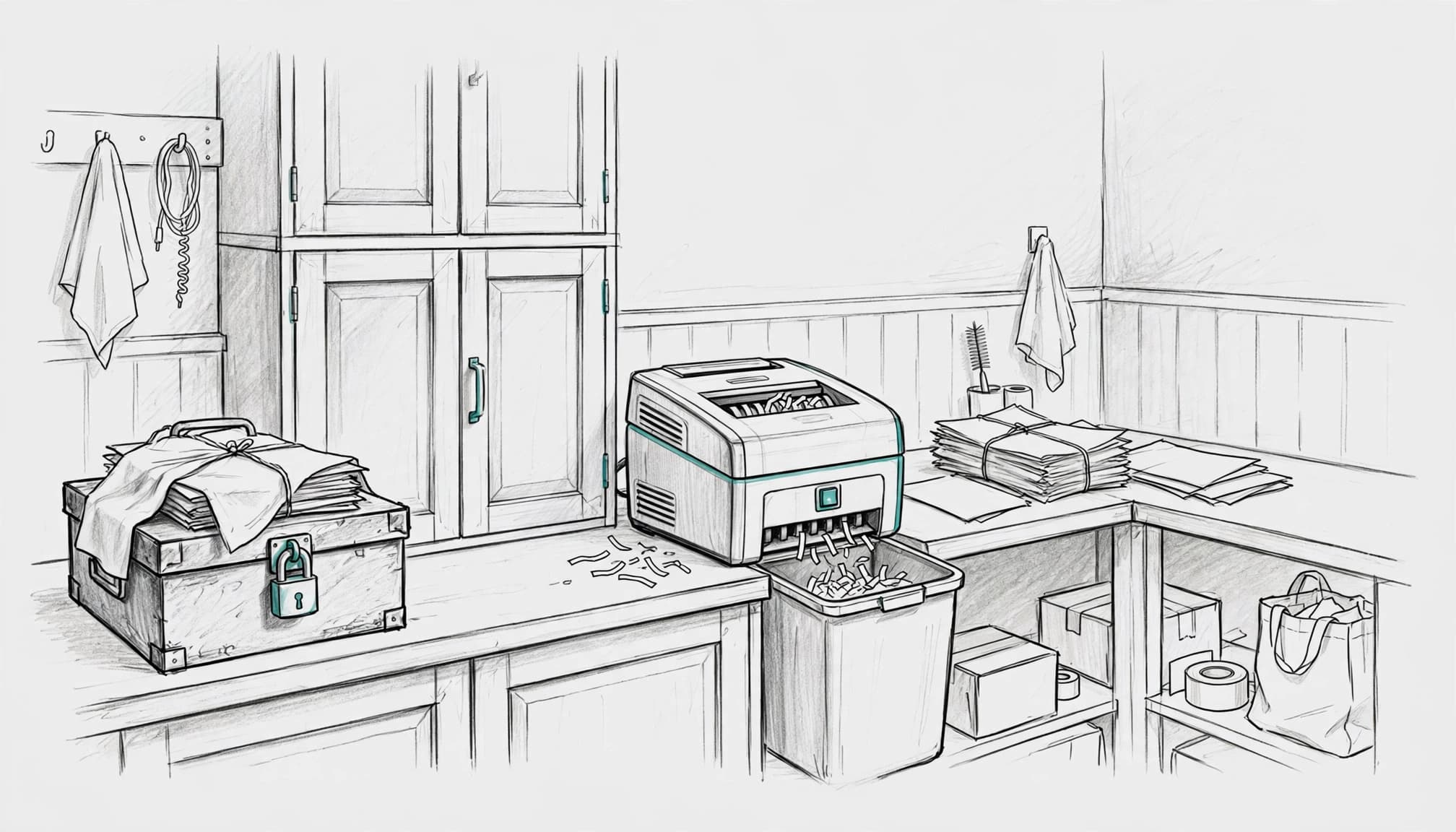
Store confidential papers securely
During a bereavement house clearance, confidential papers need protection while the property is being sorted. Keep documents awaiting review or destruction in a locked room, cabinet or box.
Limit access while the property is being sorted, especially if tradespeople, relatives or clearance teams are coming and going.
The ICO’s guidance on disposal and deletion recommends permanent destruction of personal information. It identifies cross-cut or micro-cut shredding as secure methods for paper records.
The guidance is written for organisations, but the same principle is sensible at home. Secure shredding is part of responsible disposal. Confidential papers should not be left loose amongst general clearance materials.
Check devices before they leave
Laptops, tablets, mobile phones, memory cards and old external hard drives can hold personal information, photographs and account access. A device that looks outdated may still matter.
Set devices aside until the executor, owner or family representative has checked them. Suitable devices can go to recycling centres only after personal data has been reviewed and securely removed.
If you find unfamiliar financial paperwork, cryptocurrency details, unusual keys, legal letters or documents linked to another person, pause work in that area. Contact the relevant authority or a solicitor before moving on.
Key takeaways before a home clearance
Before clearing a home, keep the process simple:
- Find and secure wills, probate papers, death certificates, property records and financial documents.
- Confirm who has authority before belongings are removed, sold, donated or disposed of.
- Check with insurers, lenders, utility providers, landlords or local authorities where the property’s status is unclear.
- Use written instructions when family members or a clearance team are involved.
- Store sensitive papers safely, then use secure shredding only once disposal has been approved.
This is general information, not legal or financial advice. A solicitor, executor, conveyancer or relevant provider can advise on the documents that apply to your situation.
Frequently asked questions
Do I need to clear a loved one’s home straight away?
No. Secure the property, remove perishables where needed and set aside documents, keys and valuables. The wider sorting can happen gradually.
A tenancy, sale date or insurance condition may require some early action. Even then, a partial clearance or room-by-room plan may be more suitable than removing everything at once.
Can I donate belongings before probate is complete?
Only when the executor or authorised representative has agreed. Some belongings may need to be listed or valued before they are distributed, donated or sold.
Keep a basic written record of valuable items, jewellery, collections and anything family members may want. If ownership is disputed, stop and seek legal advice.
What should I do with old bank statements and bills?
Review them first. They may show accounts, debts, payments, insurance policies or services that still need attention.
Once the relevant account holder, executor or provider has confirmed that the papers are no longer needed, arrange secure shredding. Don’t place documents containing personal information in general waste.
A clear plan protects what matters
A careful clearance starts with paperwork, authority and clear instructions, especially during a bereavement house clearance. You don’t need to have every cupboard sorted before asking for help.
Set aside what matters. Confirm who can decide. Before work starts, check access requirements and entry arrangements.
Ask any house clearance company about its removal arrangements. Check it holds the appropriate waste carrier licence and confirm how hazardous materials will be handled in line with relevant fire safety regulations. Disposal routes should also reflect environmental responsibility.
If you are arranging a property clearance in South Yorkshire, you can tell us about your property before everything is organised.
