 Skip to content


Sorting a loved one’s home during grief and bereavement can feel impossible when every drawer, coat and photograph carries a memory. You don’t need to clear everything straight away, and you don’t need to make every decision alone.
When you sort belongings after bereavement, start by protecting what matters and agreeing who can make decisions. A clear order helps you deal with the practical work without putting pressure on yourself to let go before you’re ready.
Key Takeaways
- Secure the property, important documents, valuables and digital devices before sorting ordinary household contents.
- Confirm who has authority to make decisions, and don’t give away, sell or dispose of belongings without the executor or authorised representative’s agreement.
- Use clear groups such as keep, sell, donate, dispose and “needs a decision”, with review dates for uncertain items.
- Photograph and record valuable or sentimental belongings before anything is moved, and seek professional advice where valuation, probate or family disputes may be involved.
- Work gradually and use written instructions when involving family members or a house-clearance service, so everyone knows what stays, what goes and what needs further thought.
Start with safety, security and legal authority
Before sorting begins, make the property safe and establish who is responsible for the estate. This helps prevent belongings being removed before the right person has seen them.
Find the will and identify who can decide
Look for the will and testament, but don’t search through the house in a rush. Check obvious places first, such as a filing cabinet, desk drawer, safe, paperwork box or solicitor’s correspondence.
A letter of wishes may offer useful guidance, but it doesn’t replace the will. The executor of the estate named in the will usually deals with the estate. If there is no will, the person entitled to apply may become the administrator of the estate. The relevant authority may differ under intestacy rules. GOV.UK explains the main steps for dealing with an estate after someone has died, including when probate may be needed.
Before distributing anything, confirm the relevant authority, whether this comes through a grant of probate or the intestacy rules. Don’t assume that being a close relative gives you the right to remove or sell personal belongings. If several people are involved, agree who has final authority before items leave the property.
Secure items that need early attention
Treat documents, valuables and other potentially important contents as estate assets, and set them aside before working through ordinary household contents. Use one lockable box or a clearly identified room if possible.
Look out for:
- Passports, birth certificates, wills, property deeds and insurance papers.
- Bank statements, driving licences, spare keys and vehicle documents.
- Jewellery, cash, medals, watches, collections and small antiques.
- Prescription medicines, perishables and anything that could attract pests.
- Phones, laptops, tablets, memory cards and external hard drives.
If you find firearms, ammunition, unknown chemicals, gas cylinders or suspected hazardous materials, don’t place them in a wheelie bin, skip or general rubbish pile. Stop work around that area and contact the police or an appropriately authorised specialist for advice.
Use a simple system for sorting belongings after bereavement
A home may contain decades of household contents. You don’t need to decide the future of each item on the first day.
Sorting through belongings is easier when you work one room, cupboard or category at a time. Start with an area that feels manageable, not the room that holds the hardest memories.
Sort into clear working groups
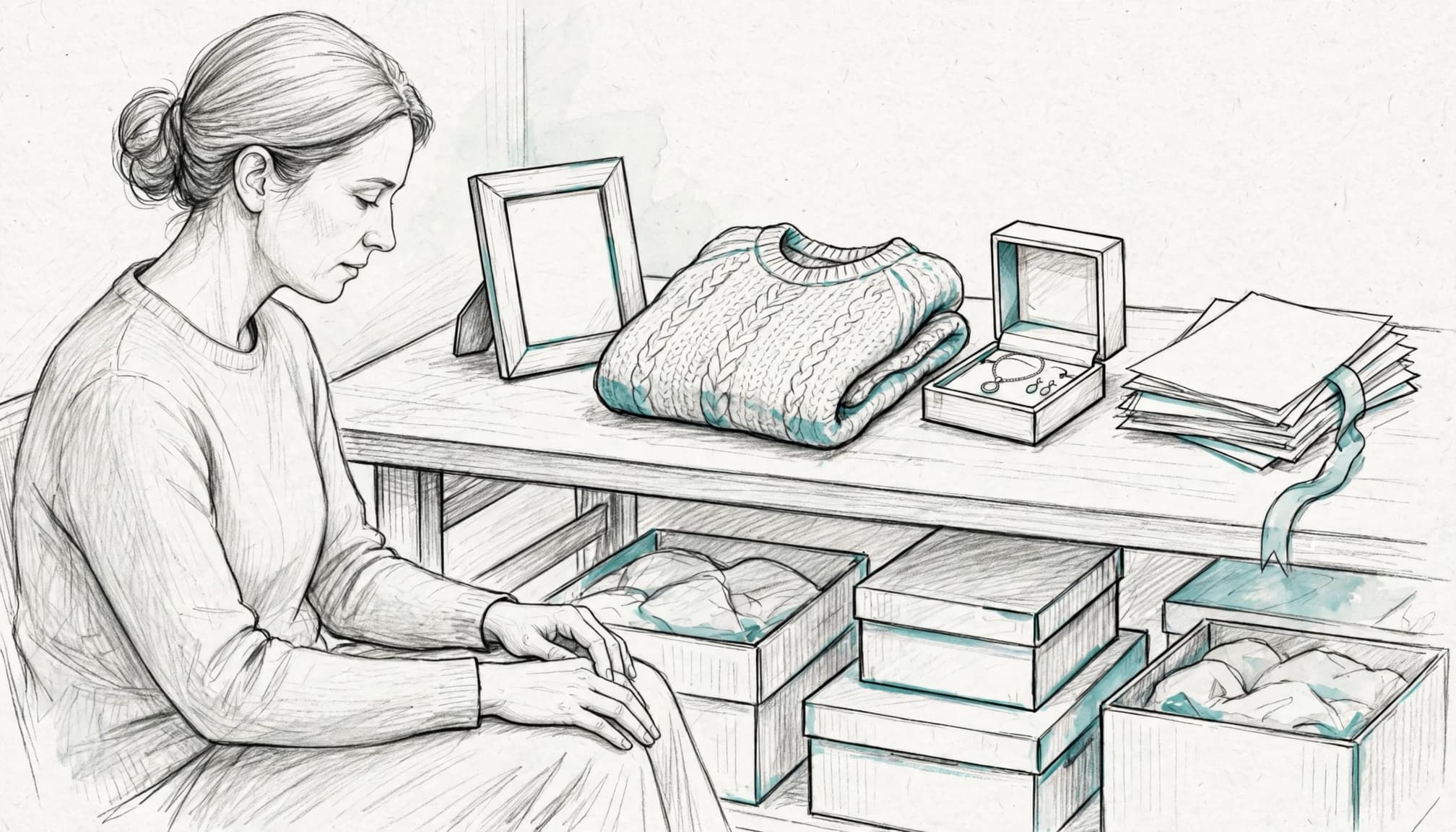
Use five groups: keep for yourself, keep for someone else, sell, donate and dispose. Add a sixth group called “needs a decision”.
This last group matters. It stops uncertain items being treated as rubbish because nobody has had time to think.
A short written list is enough. For example, “keep all photo albums from the front bedroom” is much clearer than “save sentimental items”. For photographs or small keepsakes, use a labelled memory box without forcing anyone to decide what to discard. If you’re looking for a particular item, such as a wedding ring or military medal, write that down before anyone starts clearing.
Not every decision needs to happen on the same day. An item without clear approval should stay out of the removal pile.
Put a review date on uncertain items
A “needs a decision” box can become permanent storage if it has no limit. Choose a realistic review date, perhaps after the funeral, the probate application or a family meeting.
Photograph the contents before closing the box. Write a brief note about where it came from and who needs to be involved. This is useful when family members live away or cannot visit the property straight away.
Self storage may give you breathing space, but it can also add cost and delay decisions. Use it for a defined purpose, not as a default answer to every difficult item.
Record valuable items before anything is moved
Personal effects can be emotionally important, but they can also form part of the estate. Jewellery, artwork, antiques, collectables and household goods may need a date-of-death value for probate or Inheritance Tax.
This is general guidance, not legal, tax or valuation advice. If you’re unsure, speak to a solicitor, accountant or qualified valuer about a professional valuation before selling anything or approaching auction houses.
Take photographs and create an inventory
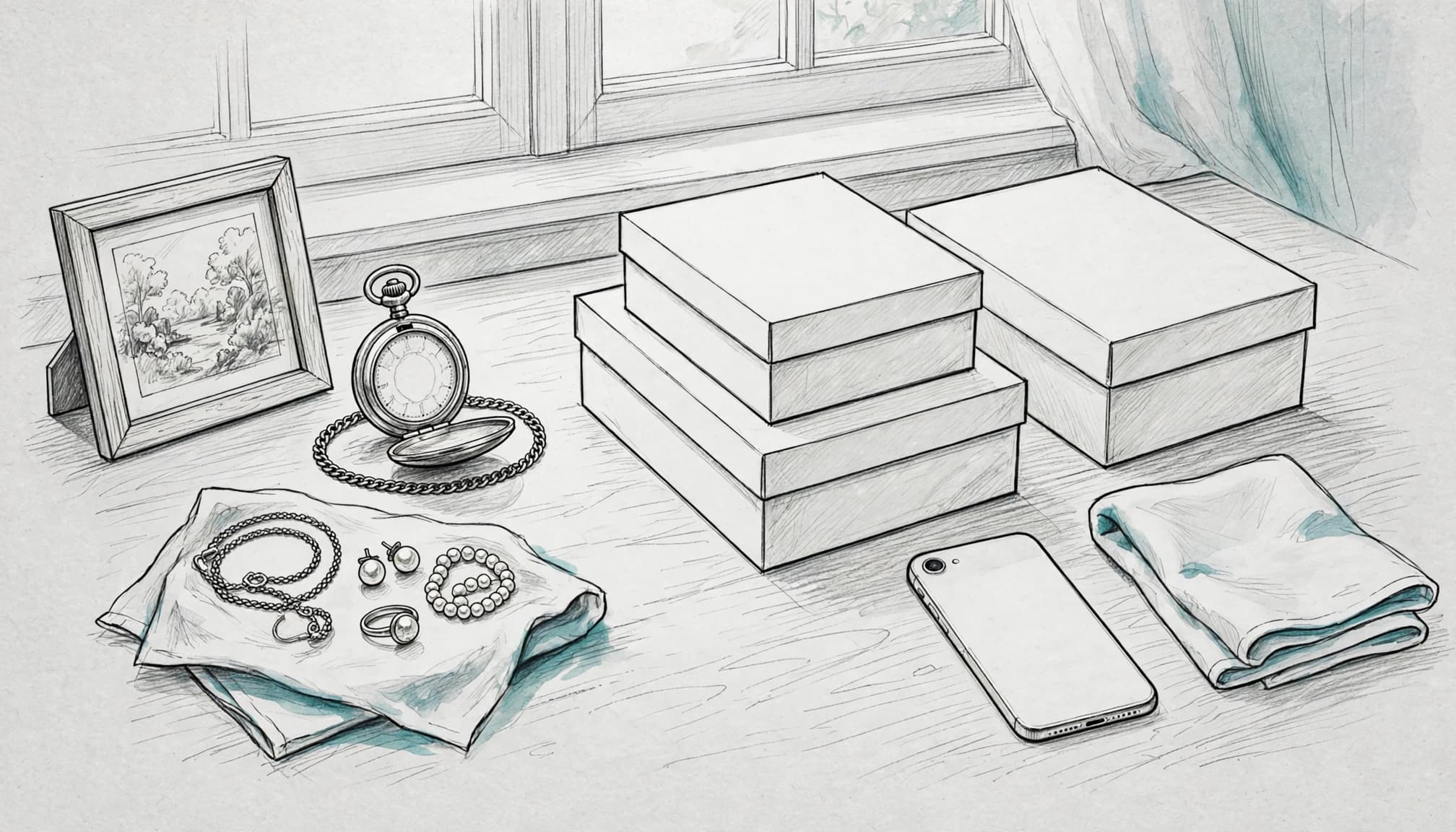
Photograph valuable items where they are found, then take closer images of hallmarks, serial numbers, signatures or maker’s marks. Record the room, a short description and any known history.
Keep the record with estate paperwork. GOV.UK’s guidance on valuing an estate for Inheritance Tax confirms that property, money and possessions should be identified and valued as at the date of death.
Don’t rely on a quick opinion on clearance day. An old watch, silver item, artwork or collection may need a proper appraisal. Get one before deciding whether it should be sold, shared or retained.
Keep estate assets separate from everyday items
Personal effects include clothing, photographs, furniture and objects used in daily life. Some may have little resale value but considerable sentimental value.
Estate assets can include personal belongings with a financial value, as well as property, savings and investments. Don’t give away or throw out items simply because they look ordinary. The executor or administrator needs a clear picture of what the estate contains.
Keep receipts, valuations and sale records. They may be needed later if beneficiaries have questions or if the estate receives income after death.
Handle family decisions before they become family disputes
Disagreements over a small number of sentimental items can hold up an entire house clearance. Often, the issue is not the object itself. It is the feeling that somebody has acted without asking, especially when sorting through belongings.
Set a simple process before anyone starts taking items home. Family members should pause, communicate and agree next steps rather than compete for possessions.
Give everyone a fair chance to identify keepsakes
Ask close family members to name a limited number of items that matter to them. Give them photographs or a video walk-through if they cannot attend.
A shared inventory is more useful than relying on memory. Record the item, its condition, who wants it and whether the executor has agreed it can be released. Keep the tone factual.
Where two people want the same item, pause rather than forcing a decision. They may agree to take turns choosing, draw lots for lower-value household contents, or find another item with similar meaning.
Keep difficult decisions with the right people
Blended families, estranged relatives and unclear ownership can make matters harder. A clearance team cannot decide who owns an heirloom or whether an item should be sold, donated or kept.
If the will is unclear, or family members cannot agree, get advice before distribution. Where someone dies without a will, intestacy rules determine who inherits their money, property and possessions.
Written agreement protects everyone. It also means the property can move forward without repeated changes to the plan.
Deal with digital belongings with the same care
Digital belongings are easy to miss because they are not sitting on a shelf. A phone may hold thousands of photographs. A laptop may contain financial records, subscriptions or accounts with value.
Don’t guess passwords or access accounts in a way that breaches the provider’s terms. Keep devices safe until the executor has checked what needs to happen.
Preserve photographs and personal memories
Set aside phones, cameras, tablets, USB sticks, memory cards and hard drives. Photograph each device and record where it was found.
You may want to copy family photographs, voice recordings or scanned letters once you have authority and a secure method. Keep the original files where possible. A shared folder can help relatives access agreed photographs without passing devices between households.
Check for cloud storage, photo-printing subscriptions and paid services that may continue to charge the estate.
Protect personal data and financial information
Cancel or secure accounts only through the provider’s bereavement process. Financial apps, cryptocurrency accounts, online shops and email addresses may contain information needed for the estate.
Shred confidential papers securely rather than placing them with general household waste. Ask any clearance provider how paperwork will be handled if secure destruction forms part of the agreed work.
A device that looks outdated can still hold private information. Keep it out of donation or disposal until it has been checked and wiped properly.
Choose the right route for items leaving the property
Clearance doesn’t mean everything goes into a van and disappears. Household contents may be retained, sold, donated, reused, recycled or disposed of, depending on their condition and the authority given.
The important point is clear instructions before removal begins.
Sell or donate only when the decision is agreed
Clean, usable furniture, clothing, books and household items may suit charity donations or a reuse route. Check what the charity currently accepts. Damaged furniture, stained mattresses, broken electrical items and incomplete sets may not be suitable.
For antiques, jewellery, artwork or specialist collections, arrange a professional valuation before approving a sale. Their secondhand value may be modest or uncertain. Before selling items, agree the route with the executor or authorised representative. Options may include auction houses, dealers or online marketplaces, but selling isn’t automatically the best choice.
Don’t promise family members that a sale will cover clearance costs. Labour, transport, sorting and responsible disposal still need to be paid for.
Use a house-clearance service with a written scope
A professional house clearance can help when the property is large, heavily cluttered, unsafe to work through alone or needs to be handed over from a distance. You don’t need to empty every cupboard first.
Agree what stays, what can be removed and what needs a decision. Potentially valuable contents should remain recorded as estate assets until the relevant decision-maker authorises their removal. Mention lofts, garages, sheds, difficult access, mould, sharps, pests or damaged floors before a quote is given.
In England, businesses that transport or dispose of waste must meet registration requirements. Check waste carrier registration guidance and keep any paperwork you receive.
For properties in Doncaster, Sheffield, Rotherham, Barnsley or nearby, you can tell us about your property before everything is organised. A clear assessment can identify what needs to stay, what can go and what requires more time.
Questions people often ask
Do I need to clear a loved one’s property straight away?
No. Some practical tasks need early attention, such as securing the property, dealing with food and setting aside documents. The wider sorting process can happen gradually.
If there is a tenancy, sale deadline or insurance concern, check what action is required. Even then, a partial clearance or room-by-room plan may be more suitable than removing everything at once.
Can I donate belongings before probate is complete?
Only donate items when the executor or authorised representative has agreed. Where there is no will, the person with authority under the intestacy rules must approve any donation or distribution.
Valuable items may need to be recorded and valued first, even if nobody in the family wants them. For jewellery, collections or specialist possessions, reputable auction houses may be considered after proper assessment.
Keep a basic list of donated items and the receiving organisation. If something needs a decision, leave it out of the clearance scope until that decision has been made.
A clear plan protects what matters
The best way to approach personal belongings after death is to slow the process down enough to protect documents, valuables, family memories and each person’s right to be heard.
Start with what you know. Set aside what matters. Record what may have value. Then work through the rest in a clear order.
You don’t need to have the whole property sorted before the next step becomes manageable.
