 Skip to content


An empty house can still need heating, electricity and water after its owner has died. Cancelling everything straight away can leave the property without services needed for maintenance, security or insurance cover.
Managing utility accounts at an estate property starts with understanding what needs to remain connected, who can give instructions and how charges will be paid.
You don’t need every account sorted immediately. Begin with the paperwork, the meters and a clear record of what each supplier needs.
Start with responsibility and paperwork

Agree who will deal with the accounts
The executor or administrator should oversee decisions about estate bills. A family member can help gather information, but being a relative doesn’t automatically give them authority to change contracts.
Agree one main contact for suppliers. If several people are involved, keep instructions and updates together so nobody closes an account another person needs.
You can report the death before every probate document is available. Ask the supplier what evidence it needs before accepting instructions, releasing information or arranging a refund.
Keep household records separate
Look for recent utility bills, account numbers, insurance documents and bank statements showing regular payments. Keep these outside anything approved for disposal.
Placeback’s guide to documents to find before clearance covers paperwork that may still be needed for property and estate decisions.
Create one secure folder for readings, bills, correspondence and payment records. Include the property address and a contact address where future letters will be received.
Identify the gas, electricity and water suppliers
Find the energy accounts
Recent bills are the simplest starting point. The gas supplier and electricity supplier may be different companies, even where both serve the same property.
If paperwork is missing, bank statements may show the name of an energy supplier. A payment reference alone may not identify the right account, so confirm the property address with the company.
Find My Supplier can help identify who supplies gas. For electricity, the local distribution network operator’s meter point administration service can usually identify the registered supplier. The network operator and the company sending bills aren’t necessarily the same organisation.
A name printed on the meter may be its manufacturer, rather than the current supplier.
Check water and other connected services
Water UK provides a postcode-based company finder to identify your water supplier. Depending on the area, water supply and sewerage services may involve different companies.
Ask whether the property is metered. Don’t assume a bill reflects current use, particularly if it was estimated or based on a fixed charging arrangement.
Also check broadband, telephone and alarm-monitoring contracts. An apparently unused connection may support security equipment. Establish what depends on it before requesting cancellation.
Notify each supplier of the death
Contact your gas supplier, electricity supplier and water supplier individually. Use each provider’s bereavement process where available, and explain to the energy supplier that the property is now empty.
Have the account number, property address, date of death and your contact details ready. Explain your role and whether anyone still lives there.
Ask how the deceased person’s account will be handled and how charges after the death will be recorded. If you need to transfer utilities to keep the supply in place, confirm the supplier’s process and whether a new account is needed. Transferring an account doesn’t automatically make you personally liable.
Farra’s guidance on utility companies explains why you need to contact providers separately. Don’t assume that notifying one organisation reaches the others.
Before finishing the conversation, establish what documents are required, where bills will be sent and whether any payments are pending. Ask whether the supplier needs a meter reading, or can retrieve one remotely from a smart meter. If there’s a fixed tariff, check its terms and ask whether an exit fee applies; don’t assume one is due after a death.
Keep the date, adviser name and reference number. If you decide to transfer utilities, ask the supplier to confirm the arrangement in writing.
Reporting the death and disconnecting a service are separate decisions. Make clear that essential services may need to continue.
Record meter readings and check the final bill
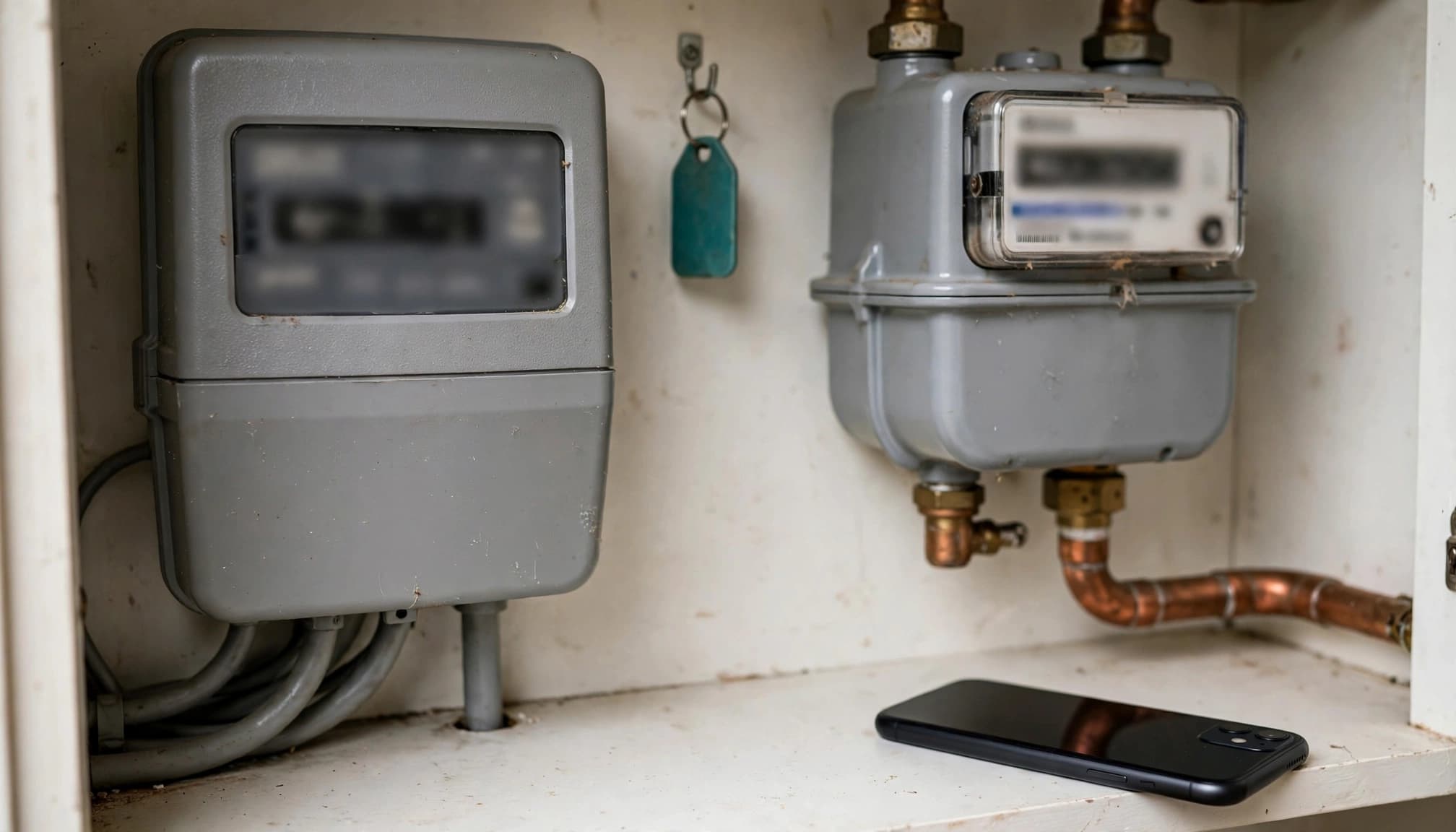
Take dated readings when access is safe
Record a meter reading for gas, electricity and water as soon as practical. Photograph the reading and meter serial number, then note the date separately.
For electricity meters with more than one register, record each relevant meter reading. If you’re unsure which display to use, ask the supplier rather than guessing.
A smart meter may allow the supplier to retrieve information remotely. Ask what a smart meter can provide, particularly if you need a meter reading close to the date of death.
Don’t move heavy clutter or enter an unsafe cupboard to reach a meter. Explain the access problem and agree another way to establish a meter reading.
Separate earlier charges from ongoing use
Ask how the supplier will distinguish charges before the death from those incurred while the estate manages the empty property. Legacy Trail’s energy and water guidance outlines these account arrangements.
Check the final bill against the meter reading, billing dates, payments and account balance. Query estimates or unexplained adjustments before treating the account as settled.
A final bill for the deceased person’s account doesn’t necessarily mean the physical supply has stopped. Confirm how later use and standing charges will be billed.
Retain refunds, revised bills and payment confirmations with the estate records.
Keep essential services and check the insurance
Agree what must remain connected
An empty property may still need electricity for lighting, alarms, heating controls and maintenance work. Gas may be needed for heating or hot water.
Disconnecting supplies can affect frost protection and leave contractors without services needed for cleaning or repairs. Keep only what the property requires, and make that decision with a clear maintenance plan.
Tell the insurer about the death and vacancy. Ask for its conditions in writing, including inspection frequency, heating requirements, security precautions and any limit on how long the home can remain empty.
Don’t assume every insurer requires the same temperature or winter arrangements. During an inspection, take a meter reading if usage seems unexpected or a service may have failed.
A boiler’s frost setting cannot protect the house if its gas or electricity supply has stopped.
Check water and prepayment meter arrangements
Ask the insurer and a suitable plumber whether water should remain on, be isolated or be drained down. Turning off a stopcock doesn’t necessarily remove water from pipes or the heating system.
With a prepayment meter, check its credit and how standing charges are collected. A loss of credit can interrupt services the property still needs.
Tell the supplier if the meter is recovering an earlier debt. Ask it to explain the balance and account arrangements before paying an unfamiliar charge.
If clearance is planned, probate and bereavement clearance should fit around the agreed access, maintenance and insurance arrangements.
Arrange payment through the estate
Keep estate bills separate from personal spending
Valid bills owed solely by the deceased are generally dealt with through the estate. Being a family member doesn’t automatically make you personally responsible.
Citizens Advice explains responsibility for an energy bill, including the executor’s or administrator’s role after a death.
Joint accounts, surviving occupiers and new contracts need separate attention. Before agreeing to an account in your own name, ask what responsibility you’re accepting.
Where possible, arrange payment through the estate’s agreed banking process. If you pay an approved expense personally, keep the invoice, receipt and proof of payment. Confirm how the estate’s reimbursement process works rather than assuming payment is guaranteed.
Ask about delays and empty-property charges
If estate funds aren’t accessible, explain this promptly. Ask about payment arrangements while the estate is being administered.
Energy standing charges usually continue even when consumption is low. Charges on a prepayment meter may also need attention during estate administration. Water companies have different empty-property and bereavement policies, so request the current terms directly.
If you need to query a bill for ongoing use, provide a meter reading. Ask when any relief starts, what evidence is needed and whether cleaning or building work affects eligibility. Obtain written confirmation.
If the estate may not have enough money to meet its debts, seek advice before paying creditors or distributing assets.
Prepare for sale, transfer or a longer vacancy
Keep taking a meter reading during visits. Unexpected use can help identify a leak, heating left running or another issue needing attention.
Assign responsibility for inspections and keep a simple access log. Record who visited, what was checked and what needs a response. Where several relatives or contractors have keys, agree who can change heating or utility settings.
Council tax is a separate account. Check empty property council tax during probate and ask your local authority to confirm any exemption and its dates. Utility charges don’t stop because council tax relief applies.
Before a sale or property transfer, contact suppliers to confirm their notice requirements and how to transfer utilities. Take a dated meter reading and photographs at handover, including the smart meter display if relevant, and provide a correspondence address. Confirm how to transfer utilities and when the estate’s account responsibility ends.
For ordinary domestic accounts, don’t assume unpaid utility bills automatically become the buyer’s debt or attach to the property. Joint liability, secured claims or unusual arrangements need separate advice. Your conveyancer should check any concern relevant to the transaction.
If clearance or cleaning is needed before handover, you can tell us about your property and explain which services must remain available.
Key takeaways for estate utility accounts
- Identify each supplier and agree who will handle correspondence.
- Record dated readings and check bills before settling them.
- Keep services needed for insurance, security and property care.
- Confirm payment responsibility and retain proof of payment with estate records.
- Review account arrangements again when the property is sold, transferred or occupied.
Supplier terms, ownership arrangements and insurance conditions differ. Ask for decisions in writing so everyone working on the property has the same instructions.
Frequently Asked Questions
Do I need probate before contacting utility suppliers?
No. You can report the death before all probate documents are available, but each supplier may ask for evidence before accepting instructions or releasing information. Ask what it needs for the specific request.
Should utilities stay connected while the property is empty?
Keep services needed for security, heating, maintenance or insurance, and confirm the insurer’s conditions in writing. The right arrangement depends on the property and its maintenance plan.
Am I personally responsible for the deceased person’s utility bills?
Being a relative doesn’t automatically make you responsible for bills owed solely by the deceased; these are generally dealt with through the estate. A joint account or a new contract in your name may create different responsibilities, so check before agreeing to an account transfer.
What should I do if I can’t find a utility supplier?
Check recent bills and bank statements, then confirm the property address with the company. For gas, use Find My Supplier; for electricity, contact the local distribution network operator’s meter point administration service, and use Water UK’s postcode-based finder for water.
A clear plan keeps the property protected
An empty estate property still needs a managed utility plan. Confirm the suppliers, record the readings and establish which services must stay connected.
Keep bills and decisions with the estate records. Review the arrangements when the property’s circumstances change.
You don’t need every answer at the start. You need a named contact, safe access and a clear next step for each account.
