 Skip to content


Animal waste clearance needs a safe plan before anyone starts moving belongings. Small amounts of routine dog waste are different from accumulated waste, urine-soaked flooring or contamination spread through a home.
You don’t need to clear the affected rooms before asking for help. Where bereavement, illness or hoarding is involved, the first step is to understand the risks and agree what needs to happen.
Key takeaways
- Keep children, pets and unnecessary visitors away from affected areas.
- Leave extensive contamination, unknown substances and unsafe rooms for specialist assessment.
- Agree what stays, what goes, what needs cleaning and how waste will leave the property.
Understand the risks before moving contents
Infection and contamination
Dog waste can contain parasites such as Toxocara and bacteria including E. coli. Extensive or long-standing contamination needs particular care. Contact with contaminated hands, surfaces or belongings can create a route for infection.
Dried waste also needs care. Sweeping, brushing or using an ordinary vacuum can disturb contaminated dust and spread it through the property.
Urine may soak into carpets, underlay, floorboards and furniture. Removing the visible mess doesn’t necessarily remove the contamination underneath. Strong smells may indicate an extensive problem, but smell alone can’t establish whether a room is safe.
Conditions that need a pause
Stop ordinary clearance where there are large accumulations, widespread droppings, active pests, damaged floors, blocked exits or unknown substances.
Sharps, chemicals and other hazards may be hidden amongst contents. Don’t reach into bags, move unstable piles or lift flooring to investigate.
If entering causes breathing difficulty or eye irritation, leave the area. Someone with breathing problems, reduced immunity or another relevant health condition shouldn’t be involved in the clean-up.
Prepare for animal waste clearance safely
Limit access and protect belongings
Keep affected rooms separate where this can be done safely. Don’t carry contaminated items through clean rooms or place them in a family car.
Explain what you know about the property, including where animals stayed and which rooms appear affected. Photographs can help, but only take them from safely accessible areas.
Identify documents, keys, photographs and sentimental belongings that need attention. You don’t need to retrieve them from contaminated contents yourself. Give clear instructions so they can be considered during the assessment.
Protective equipment has limits
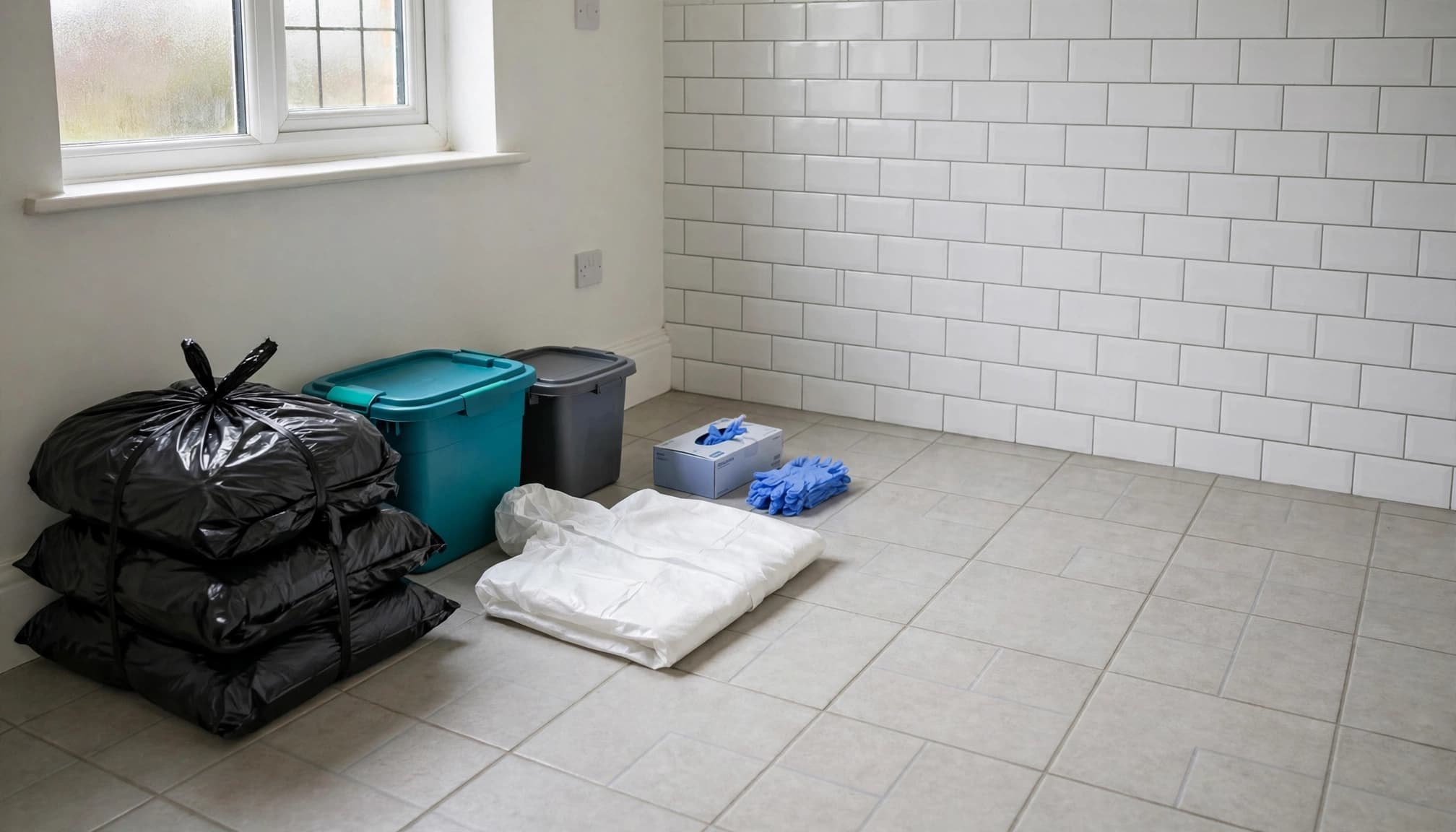
For a small, known pet mess on a safe washable surface, disposable gloves and dedicated washable footwear help limit contact. Cover cuts and wash your hands afterwards.
Extensive contamination may require protective clothing, eye protection and suitable respiratory protection selected through a risk assessment. A basic dust mask doesn’t make the work safe.
Don’t mix cleaning products. Bleach can react with ammonia in old urine and release harmful gases.
Protective equipment doesn’t make unknown contents safe to handle. The hazards need assessing before the clearance method is agreed.
Agree what needs clearing and cleaning
Waste removal, surface cleaning and contamination treatment are separate tasks; removing contents alone doesn’t decontaminate a property. A property may need all three, with repairs afterwards.
Our guide to what professional house clearance includes explains why specialist hazards need separate consideration. Ordinary rubbish removal shouldn’t be assumed to include decontamination.
The agreed scope should identify the rooms involved, belongings to retain and materials that may need removal. Urine-soaked carpet and underlay may need a different approach from a washable floor. Where flooring is affected, carpet removal during house clearance needs to be included.
During bereavement or hoarding-related work, clearance decisions still need permission. Contamination doesn’t remove the need to respect ownership or sentimental value.
We can combine clearance and specialist cleaning under an agreed plan, subject to assessment. We’ll explain the boundaries of the work and where another appropriately qualified service is needed.
Choose an appropriate disposal route
Routine waste and accumulated contamination
For routine waste disposal, small quantities of securely bagged domestic dog waste, also called dog poop, commonly go in the residual household bin, rather than recycling or garden-waste collections. Larger accumulations and contaminated furnishings need a planned collection and suitable receiving facility.
GOV.UK’s household waste guidance covers furniture, mattresses, garden waste, oils, paints, scrap metal, septic tank sludge and DIY materials including rubble, timber and bricks. Being household waste doesn’t mean these materials can share the same disposal route.
Waste collection arrangements vary, so check your council’s local rules, whether you’re in Bristol or on the Isle of Dogs.
A bag’s label doesn’t determine whether your local recycling service accepts it. Beco presents recycled plastic as preferable where composting isn’t available and claims its bags use 86% less carbon than virgin plastic. That’s a brand claim, not an independent comparison, and bag choice doesn’t change disposal requirements.
Its dog-waste disposal guide also explains why biodegradable bags may persist in oxygen-poor landfill conditions. Biodegradable doesn’t mean suitable for a household compost heap.
Treat claims of eco-friendly disposal with caution unless they’re supported, and choose an authorised route for the waste.
Methods that can spread the problem
Don’t flush dog waste or dog poop, or poop bags labelled flushable. Flushing can obstruct plumbing, and animal waste shouldn’t be treated as suitable toilet waste.
Burning creates smoke and odours and can amount to a statutory nuisance where neighbours are affected.
Shallow burial also leaves risks. Even a depth of around 60 cm, or two feet, doesn’t remove the possibility of contamination reaching soil or water. Burial isn’t an appropriate solution for waste accumulated during a home clearance.
Understand the limits of garden disposal systems
Dedicated composting needs controlled conditions
Dog waste shouldn’t go into an ordinary garden compost heap. A compostable label alone doesn’t mean a bag is suitable for a household heap or accepted by your local collection scheme.
Dedicated systems need sustained heat, moisture control, aeration and carbon-rich material such as sawdust, shredded newspaper or leaves. Beco describes temperatures of at least 60°C for several days, followed by several months of curing.
That temperature alone isn’t a guarantee that every part of the material has been treated. Research into household dog-waste composting highlights the difficulties of managing pathogens reliably at home.
Any resulting compost should be restricted to non-edible planting and landscaping. Don’t use it around food crops.
Digesters and wormeries serve a different purpose
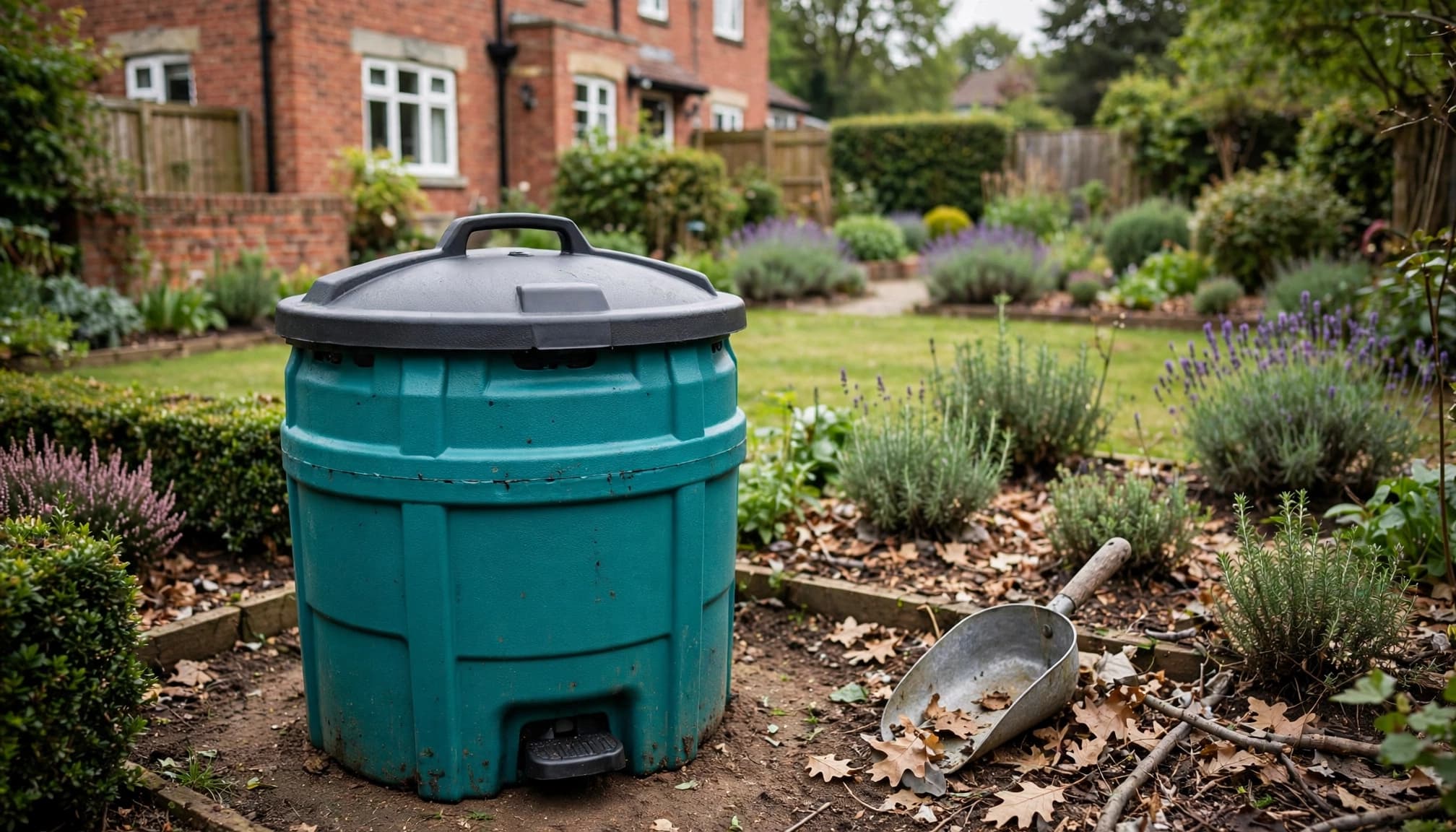
Purpose-built garden bins and in-ground digesters can help manage ongoing pet waste. They aren’t a disposal route for contaminated carpets, mixed household contents or large amounts recovered indoors.
A pet-waste wormery must stay separate from a kitchen-waste wormery. Keep its contents away from compost used for food growing.
For a contaminated home, arranging removal is usually more practical than trying to establish a new garden treatment system.
Use an appropriately registered waste carrier
Match the registration to the collecting business
For a paid household clearance in England, check the current Environment Agency’s waste-carrier register entry using the business name or registration number. Select upper tier for the usual arrangement, where a contractor collects someone else’s waste.
Match the entry to the business physically carrying the load, including any subcontractor. A branded van or photograph of a certificate isn’t a substitute for a current registration entry.
Wales, Scotland and Northern Ireland have separate registers through Natural Resources Wales, SEPA and NIEA.
Registration covers particular waste activities. It doesn’t establish competence to undertake animal waste clearance or replace any permission needed to store, treat or dispose of waste at a private site.
Keep a record of the handover
The written arrangements should identify the waste, collecting business, authorised waste disposal route and paperwork supplied.
Private householders don’t usually need a Waste Transfer Note when handing over their own household waste. Business clearances have different requirements. Non-hazardous business waste-transfer records generally need keeping for two years; hazardous waste may require different documentation.
Keep the quote, invoice and disposal records provided. Failing to take reasonable care over who receives household waste can lead to a council fixed penalty notice or prosecution. The responsibility doesn’t end with paying for collection.
Know what the quote should cover
The cost depends on the amount of waste, contamination, access, sorting requirements and treatment needed. A straightforward furniture collection and a contaminated-property clearance involve different work.
A written quote should separate assessment, removal, cleaning, decontamination and any agreed flooring removal. Ask whether the waste removal price includes waste collection from inside the property, transport and authorised treatment, or whether collection is charged separately. It should also explain exclusions, approval for additional work, payment stages and cancellation terms.
Check the contractor’s insurance and specialist experience, as well as waste-carrier registration. In England, verify registration with the Environment Agency, as registration doesn’t confirm specialist competence. Training, task-appropriate protective equipment and authorised disposal arrangements need to match the actual job.
Be cautious about vague prices or promises to recycle everything. Contamination can make otherwise reusable furniture unsuitable for donation or recycling.
A clear completion standard matters too. An empty room, a cleaned room and a room ready for occupation are different outcomes. Agree which outcome the work is intended to achieve.
Frequently asked questions
What are the penalties for dog fouling in public?
Keep Britain Tidy’s dog-fouling guidance lists a £100 fixed penalty and a court fine of up to £1,000.
In England, the Dogs (Fouling of Land) Act 1996 was an earlier framework. Check your council’s current local rules or Public Spaces Protection Order, which councils commonly use for dog controls.
Public-space fouling rules are separate from arranging lawful disposal of waste removed from a home.
Is animal waste automatically hazardous waste?
Animal waste isn’t automatically classified as hazardous simply because it’s unpleasant or contaminated. Classification depends on its source, composition and other materials present.
That doesn’t make it suitable for ordinary handling. A load containing unknown chemicals, sharps or other hazardous materials needs separate assessment and appropriate disposal arrangements.
Waste-carrier registration alone doesn’t establish that a contractor can safely manage those hazards.
Start with a clear, agreed plan
You don’t need to make the property presentable before asking for help. The priority is safe assessment, followed by clear decisions about belongings, removal and cleaning.
You can tell us about your property with the information you already have. We’ll work through what needs attention and agree the next step without asking you to disturb contaminated contents first.
