 Skip to content


Yes, house clearance can include carpet removal, but lifting fitted flooring isn’t automatically included and must be part of the agreed scope. Rugs and loose carpets are straightforward. Some house clearance services offer fitted-flooring removal as an add-on. Glued flooring, tiles and adhesive removal may need extra work or a specialist.
You don’t need to know how everything will be removed before contacting us. Start with which rooms in the property need clearing and what needs to stay.
Key takeaways
- Carpet lifting and disposal may be offered as an add-on rather than included automatically.
- Put the flooring, preparation, access and disposal arrangements in writing.
- Older flooring or adhesive needs assessment before disturbance if there’s reason to suspect hazardous materials.
What carpet and flooring removal can include
Carpets, rugs and underlay
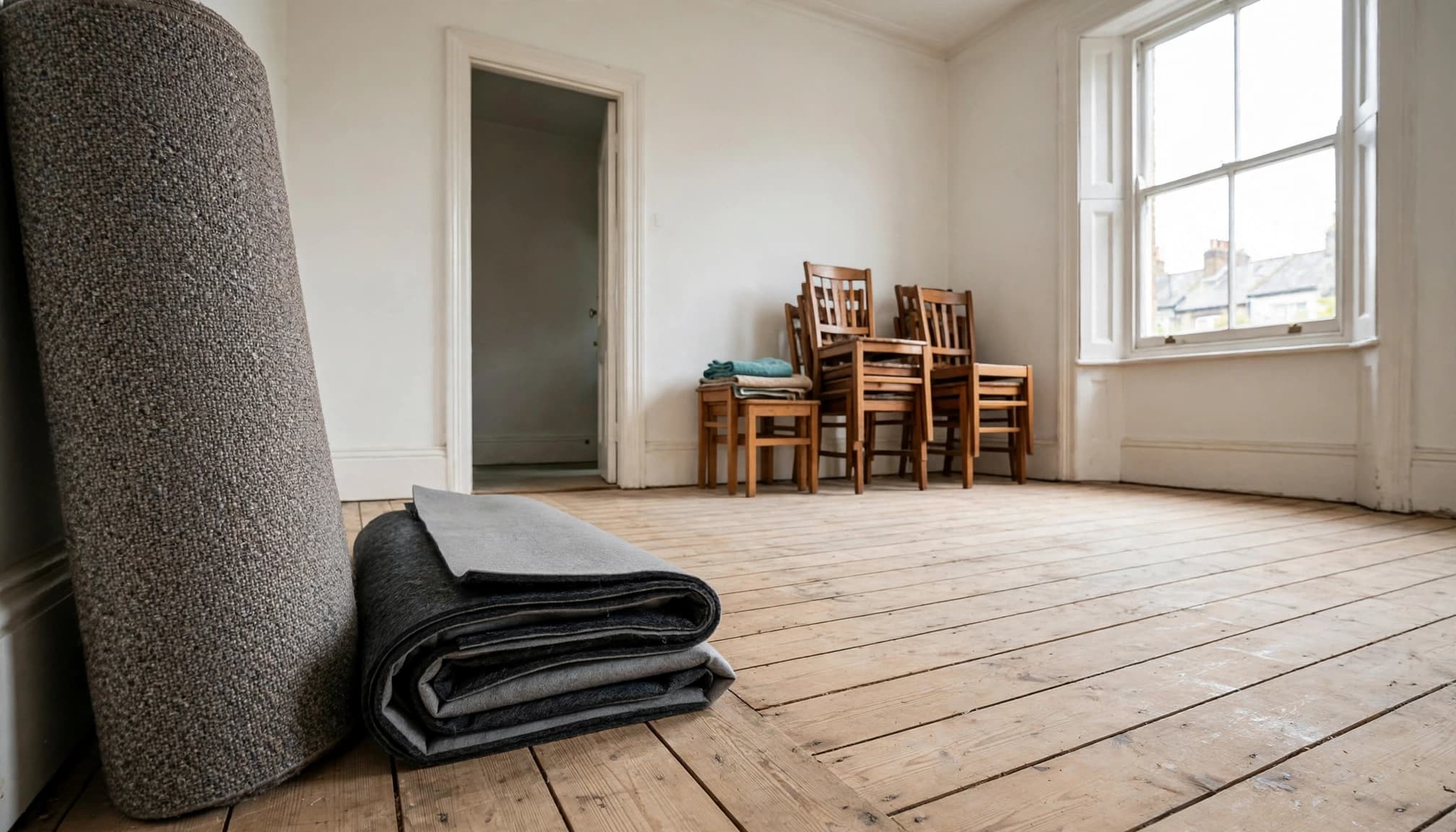
Carpets, rugs and soft furnishings are among the items a property clearance can include. Furniture, white goods and other bulky items can also be included in a full house clearance, but fixed-flooring work should be specified separately. Carrying away a rolled carpet takes different work from lifting fitted carpet throughout a house.
The written scope should identify each room and state whether underlay, gripper rods, staples and door bars are included. Agree whether the floor needs to be left bare, swept or prepared for another contractor. Those are different outcomes.
Laminate, vinyl and other fixed flooring
Floating laminate, glued vinyl, timber flooring and ceramic tiles need different removal methods. Taking away loose material doesn’t include scraping adhesive, repairing floorboards or preparing a level surface.
Flooring removal may be a separate add-on or require a specialist contractor. For an end-of-tenancy property, landlords should specify whether flooring must remain. Tenants need permission from their landlords before removing landlord-owned flooring.
What does house clearance with carpet removal cost?
Published prices are planning figures
Published home improvement cost guides provide a starting point for pricing, not a fixed rate for each property. MyJobQuote’s 2026 house-clearance guide gives a typical range of £100 to £600, averaging about £450.
Its separate bedroom-based estimates are:
| Property | Estimated clearance cost |
|---|---|
| Two-bedroom house | £250 to £450 |
| Three-bedroom house | £400 to £700 |
These are planning estimates, not an all-in flooring-removal price. The guide uses different measures, including load size and property size, so the figures aren’t interchangeable.
What the written quote needs to cover
Volume, weight, stairs, parking, carrying distance and sorting time affect the price. Carpet lifting adds labour, whilst disposal arrangements depend on the material and its condition.
Photos or a short video can help establish the work. Include cupboards, the loft, garage and any rooms that aren’t visible. Larger, cluttered or awkward-access properties may need a visit.
A partial clearance should reflect the actual contents and work involved. Where a provider offers a free quote, check what it covers. The quote should separate labour, transport, disposal, flooring work, cleaning and VAT where applicable. Payment terms also need to be clear before work starts.
How carpet disposal works
Carpet material and underlay need an appropriate waste route. Recycling depends on their materials, condition and the facilities available. Reuse, recycling and disposal are separate outcomes; not every carpet can be recycled.
A household recycling centre may accept domestic carpet, depending on local arrangements. Trade waste collections follow different rules. A waste transfer note records a waste handover where applicable; it isn’t proof of the final disposal destination.
Older flooring, backing or adhesive can contain asbestos. If there’s reason for concern, get it assessed before lifting, cutting or scraping. HSE’s asbestos guidance explains why asbestos waste must be kept separate from ordinary household waste.
Preparing the property for removal
You don’t need to sort every room first. Focus on instructions and belongings that matter.
- Set aside documents, cash, jewellery, passports, medication and financial records where possible. Clearly separate anything staying.
- Identify the rooms, including any loft not shown in initial photos or instructions, and the flooring included. Record whether moving or dismantling furniture, carpet lifting and cleaning form part of the job.
- Explain access arrangements, including stairs, lifts, shared entrances, parking and the distance to the loading area.
- Flag paint tins, gas bottles, chemicals, suspected asbestos, sharps or contamination before work begins. Don’t move hazards to make the property look ready.
Keep the agreed preparation, access and disposal arrangements together in writing. This also gives everyone a clear record of what completion should look like.
Probate clearance needs clear instructions
The executor or authorised representative should approve what may be removed after a death. Written instructions can reduce uncertainty during bereavement, and flooring work should follow them too.
Where agreed, sorting can include looking for named valuables and sentimental belongings. If a bereavement is being managed from a distance, confirm who can approve changes. Secure shredding should only follow approval once paperwork is no longer needed. Key collection from a solicitor or agent can be included in the access plan.
If probate is still underway, confirm the authorised representative has approved the work. A clearance team’s identification of something valuable isn’t a certified valuation. Legal or insurance valuations need an appropriately qualified valuer. Keep uncertain belongings outside the removal scope.
Frequently asked questions
Is DIY carpet disposal cheaper?
It can be for a small, already sorted job with safe access and enough help. Include vehicle costs, loading, disposal charges and repeat journeys in the comparison. Professional clearance becomes more useful when furniture, several rooms or difficult access need managing together.
Can house clearance be free, or the quote change?
Some providers offset saleable contents against clearance charges. Record the contents value and service cost separately; free clearance isn’t guaranteed.
Additional rooms, hidden conditions or extra work can change the price. Any variation should be explained and agreed before that additional work proceeds.
Agree what needs to happen next
Carpet removal can sit alongside house clearance when the work and disposal route are clear. The important distinction is between removing contents and taking up fixed flooring.
You can tell us about your property before everything is organised. We’ll work through what stays, what needs removing and what needs separate attention.
