 Skip to content


A landlord may deduct a reasonable clearance cost from a tenant’s deposit if the tenant’s breach caused an evidenced loss. A clearance invoice alone doesn’t establish what the tenant owes.
When arranging house clearance or flat clearance, keep the service separate from tenancy money and the contractor’s booking payment. Agree the work with the landlord first.
When clearance costs can be deducted
What the tenant was responsible for
A deduction must be allowed by the tenancy agreement and comply with legal limits. Contract wording doesn’t override those restrictions.
Removing rubbish or unauthorised furniture may justify a reasonable charge if the tenant was responsible for removing it. Clearing landlord-owned furniture for refurbishment doesn’t become the tenant’s responsibility.
Other claims may include rent arrears, damage beyond fair wear and tear, and legally recoverable early-termination losses. Unpaid utility bills aren’t automatically deductible, particularly where the debt belongs to the tenant’s supplier.
Citizens Advice’s deposit guidance explains why routine wear and tear cannot be charged. Faded curtains and worn flooring are examples of wear and tear, unlike rubbish that needs removal.
What was agreed could stay
Furniture left with the property owner’s permission isn’t automatically unauthorised waste. Keep the written agreement, including any agreed removal charge.
Other belongings don’t become disposable simply because the tenant has left. Record them, protect documents and valuables, and follow the applicable notice, storage and disposal process.
Lawful possession and authority to dispose of belongings are separate matters. Our guidance on clearing an abandoned rental property explains that distinction. Seek housing legal advice where ownership or possession is unclear.
Evidence and deposit disputes
Record the property before work starts
The evidence must support any deposit deductions. Compare the move-in inventory with dated checkout photographs before anything is cleared or cleaned.
Identify the room, items, tenancy obligation and required work. Support the amount with a written quote or an itemised invoice, and keep proposed work separate from completed work. Any amount must be reasonable, evidenced and permitted by the tenancy terms.
Account for age, condition and wear and tear where relevant. Don’t charge twice for overlapping clearance and cleaning, or pass the full cost of an upgrade to the tenant.
Our landlord move-out inspection checklist helps organise these records.
Use the correct national process
Send proposed deductions in writing and give the tenant an opportunity to respond.
For applicable protected deposits in England and Wales, GOV.UK’s deposit protection guidance states that repayment is due within 10 days of agreeing the amount. That period doesn’t start automatically at move-out.
Wales uses occupation contracts. Scotland and Northern Ireland have separate schemes and procedures. Disputed deductions go through the relevant scheme’s process and deadlines.
The Residential Tenancies Board handles tenancy matters in the Republic of Ireland, not the UK. Its procedures, including any claimed 90-day deadline, aren’t UK rules.
Typical UK flat clearance costs
These indicative flat clearance ranges support planning. They aren’t a contractor’s quote.
| Clearance scope | Typical planning range |
|---|---|
| Small partial clearance | £175 to £300 |
| Studio flat | £250 to £450 |
| One-bedroom flat | £350 to £650 |
| Two-bedroom flat | £500 to £900 |
| Three-bedroom or heavy clearance | £800 to £1,500 or more |
Size, waste volume, item types, access, location, disposal charges and VAT affect the clearance cost.
Mattresses, fridge freezers, washing machines, cookers, furniture dismantling and upper-floor properties without a lift may carry extra charges. Cleaning isn’t automatically included.
The whole clearance bill isn’t automatically deductible. Only reasonable work attributable to the tenant’s responsibility belongs in the claim.
Clear the agreed areas before handing back keys
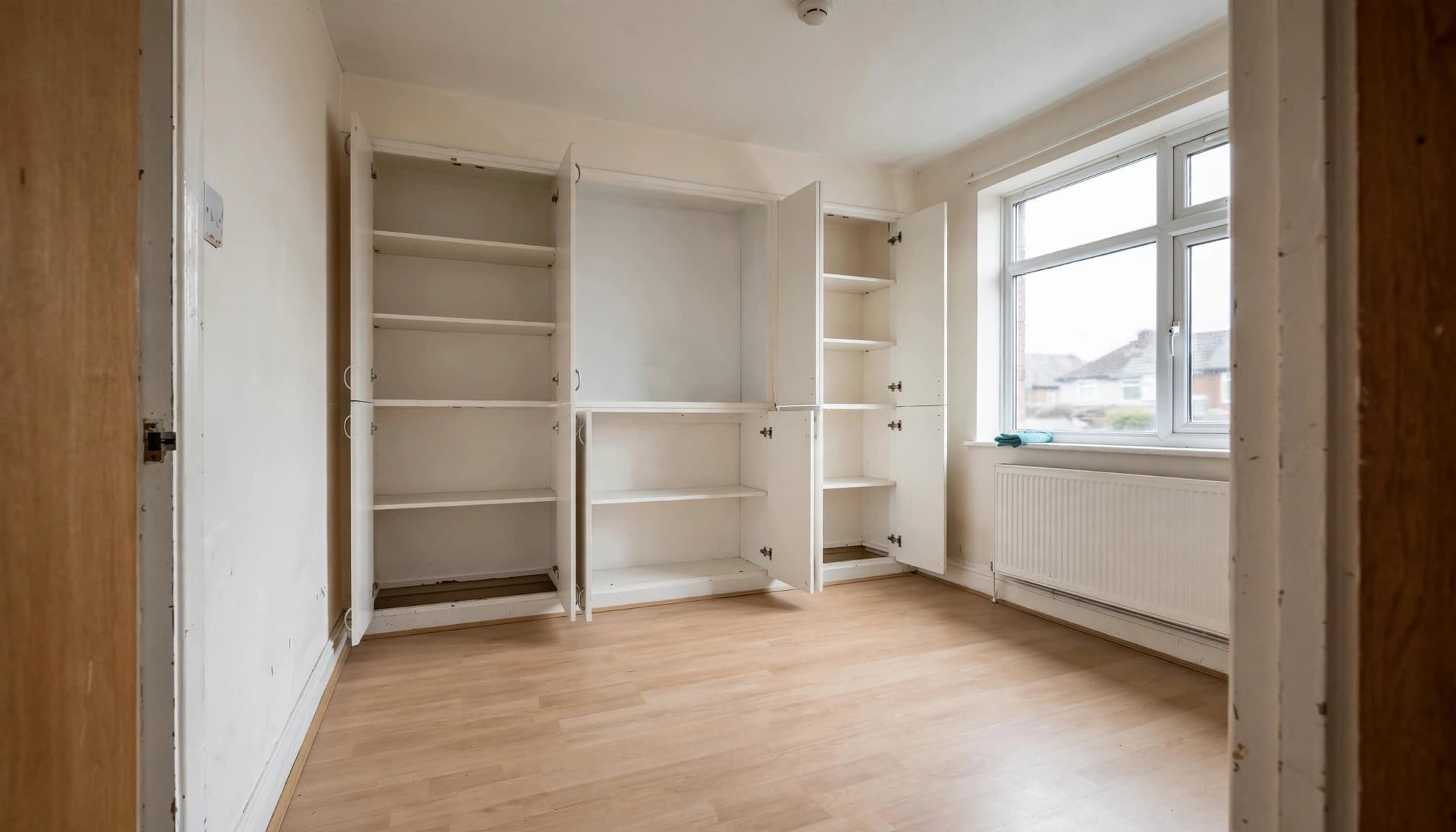
Work through the property in a consistent order.
- Agree which areas a partial clearance covers, what stays or goes, and anything needing a decision. Keep permission to leave items in writing.
- Walk through every room, built-in cupboard, attic, shed, garage and garden.
- Remove the agreed contents and rubbish. Leave the landlord’s inventory items unless removal is authorised.
- Photograph the empty areas, record meter readings and keep the handover record.
Allow time for removal before the end of tenancy. Clearing contents and restoring cleanliness are separate tasks.
Clearance bookings and responsible waste handling
A property clearance deposit is a contractor’s booking payment, separate from any tenancy deposit. Some reputable firms require one; others don’t. The balance may be due after the work, under the agreed terms.
Written terms should define the work, including any partial clearance, and explain refunds and cancellations. The price may depend on access and waste disposal requirements. Some contracts make the booking payment non-refundable within a cancellation window, impose fees within 48 hours, or charge up to 100% within 24 hours. Those terms must still comply with consumer law.

Use an insured, appropriately registered waste carrier with a written scope and authorised disposal routes. In England, check registration with the Environment Agency and confirm any required authorisation for hazardous waste. Trade membership with a complaints procedure is useful, but doesn’t replace registration.
Contents may be reused, donated or sent for recycling, depending on their condition and your approval. Ask the contractor whether recycling is suitable for each item or if another route is needed.
A Waste Transfer Note records a transfer of waste that isn’t classified as hazardous. Business waste documentation rules require relevant records to be kept for two years. Private household clearances have different paperwork requirements.
Key takeaways
- Tie any landlord deduction to a clear obligation, supporting evidence and a reasonable cost.
- Handle remaining belongings lawfully before clearance.
- Keep contractor booking payments separate from tenancy deposit claims.
Frequently asked questions
Is professional cleaning always required?
In England, an automatic professional-cleaning term doesn’t by itself justify a charge. Routine cleaning is expected, but a deduction shouldn’t cover fair wear and tear. The relevant issue is whether the property was returned less clean than it was at move-in.
Can a landlord claim more than the deposit?
The sum held limits the money available, not necessarily the tenant’s liability. Any additional claim still needs a lawful basis and evidence.
Agree the work before the property is cleared
A fair claim depends on responsibility and evidence, including what the landlord can show. Keep the clearance scope clear, and protect belongings that still need a decision.
If authorised clearance or cleaning is needed, tell us about your property. We’ll agree what needs removing and what must remain.
