 Skip to content


A property clear-out can feel difficult before anything has been moved. The main question is how much work you can manage yourself.
With skip hire, you’ll need to sort and load the waste yourself, safely. A clearance service can take on agreed sorting, carrying and removal, with cleaning included where arranged.
Start with what needs to go, what must stay and what condition you need the property left in.
Key takeaways
- Skip hire suits identified waste when you have safe access, enough help to load it and a suitable place for the container.
- A house clearance service can handle agreed sorting, carrying and removal, which may be more practical for mixed contents or difficult access.
- Compare written quotes against the same scope, including labour, disposal, access, exclusions and any cleaning required.
- Set aside important belongings and agree in writing what stays, what goes and who can approve changes before work begins.
- Check waste-carrier registration and clarify any council permit responsibilities before booking a skip or clearance.
Container hire vs a clearance service: what are you paying for?
Traditional skip hire provides a container, delivery and collection for accepted waste. You normally organise the sorting and loading yourself, unless separate labour has been arranged.
Full house clearance provides people to remove agreed contents. Depending on the scope, this can include sorting, dismantling furniture, carrying items downstairs and arranging appropriate disposal.
For a small number of selected items, a man with a van may be suitable. This isn’t necessarily equivalent to a team handling an agreed whole-property scope.
The practical differences are straightforward.
| Practical question | Container hire | Clearance service |
|---|---|---|
| Who loads the waste? | You or separately arranged help | The clearance team |
| Who sorts belongings? | Usually you | The team, where agreed |
| What space is needed? | Suitable space for the container | Vehicle access and loading space |
| Are important items checked? | You must check before loading | Written instructions guide the team |
| Is cleaning included? | No | Only where quoted and agreed |
The right comparison is the whole job, including disposal routes such as a recycling centre and any work left for you.
A full clearance also needs a defined boundary. It might cover the house, garage and shed, or only selected rooms. The service name alone doesn’t confirm which areas are included.
When skip hire is the practical choice
The waste is already identified
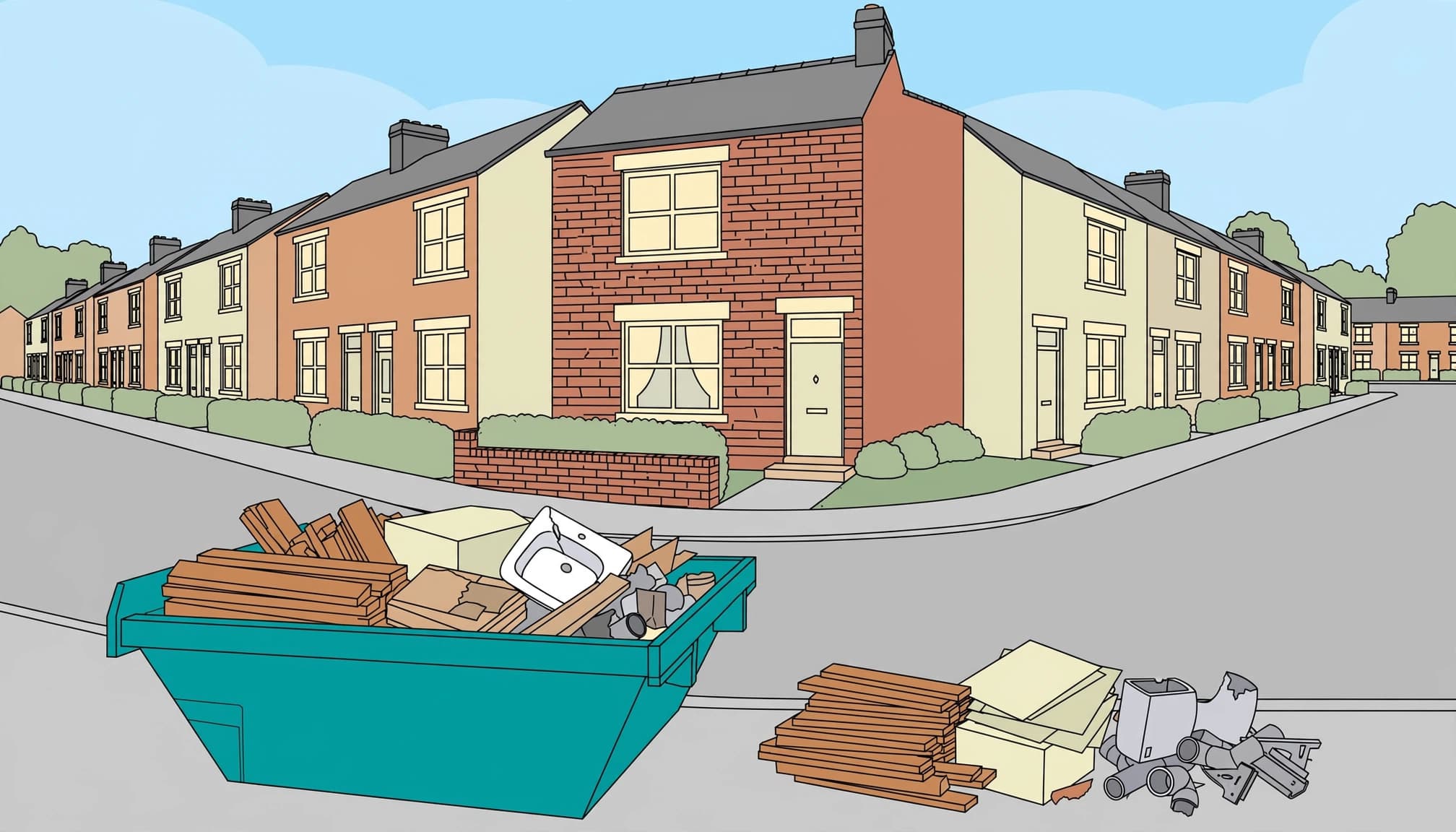
A skip can suit a home renovation where construction waste builds up over several days. It can also work for a garage clear-out or garden clearance once tools, documents and anything reusable have been set aside.
You control when you load it during the agreed hire period. That can be useful when work happens around other commitments.
Before booking, describe the materials to the supplier. Choose a skip size that suits the amount of waste. Material type and weight can also affect the skip size you need. Mini skips and builders skips suit different loads, so ask which option is appropriate. Confirm accepted materials, weight limits, the permitted fill level and whether the contents can go to a recycling centre.
You have safe access and enough help
Consider the route between each room and the skip. Stairs, narrow doorways and a long carrying distance can make loading harder than expected.
A sofa or wardrobe still needs to be moved safely. Skip hire doesn’t provide lifting equipment or another pair of hands.
This approach to waste removal is more manageable when the waste is accessible and you have suitable help. Allow time for loading and collection within the agreed terms. If delivery or collection dates matter, confirm them before booking. If the skip may stand on a public road, check council permits; parking details are covered in the relevant section.
When full house clearance fits better

Several rooms need sorting and emptying
A house clearance involves more than loose rubbish. Cupboards, drawers, appliances, furniture and personal belongings may all need attention.
A professional team can work through agreed areas and sort contents according to your instructions. This is useful after a move, during a landlord clearance or when family members live elsewhere.
You don’t need to sort the whole property before asking for an assessment. Explain what you know and identify anything that must remain. Confirm that sorting is included rather than assuming it comes with every quote.
Clutter or property condition makes DIY work difficult
Heavily cluttered homes may contain blocked routes, unstable piles or important belongings mixed with waste. A room-by-room plan can make the work more controlled.
Cleaning, pest treatment and specialist handling are separate considerations. Suspected asbestos, chemicals, sharps or biohazards shouldn’t be treated as ordinary household waste.
Ask how these issues will be assessed before work starts. Check insurance for the agreed tasks and whether the business is registered to carry waste where required.
A clearance team can look out for named belongings, but it can’t guarantee every requested item will be found.
Compare costs using the same scope
There isn’t one reliable price for either option. Charges vary by location, provider, waste type, volume and access.
For a skip hire vs property clearance cost comparison, compare written quotes against the same contents list and required outcome.
What changes a skip hire quote?
Skip size, hire duration and accepted waste affect a skip hire quote. Some providers use volume-based pricing. Heavy materials can change which container is suitable, even when the load looks small.
Ask about delivery, collection, weight restrictions and charges for prohibited items or overfilling. If the skip needs to stand on a public road, ask who arranges council permits, as responsibilities and costs can vary.
Include any help you need to pay for. A lower container price can leave you arranging labour, separate appliance collections or another skip. For a small, suitable load, a man with a van may work, but it isn’t comparable with a full clearance. Confirm whether VAT applies to the quoted total.
What changes a clearance quote?
A clearance quote should account for the work involved, not only the number of rooms.
Sorting, stairs, parking restrictions, heavy furniture, dismantling and disposal routes can affect the cost. Lofts, sheds and outbuildings should be identified before the quote is agreed.
Ask for labour, transport, disposal and any cleaning or specialist work to be clearly covered. Confirm exclusions and how unexpected contents will be handled.
If one quote includes loading and another only provides a container, the totals aren’t pricing the same job.
A fixed price for an agreed scope also needs a clear process for approving changes.
Waste sorting and disposal still matter
Whichever option you choose, check belongings before they become waste.
Set aside documents, keys, jewellery, photographs and anything already chosen to keep. Items awaiting a decision should remain outside the removal scope.
With a skip, you normally handle this separation before loading. With a clearance service, agree which sorting tasks the team will undertake and who decides about uncertain finds.
Suitable items may be kept, reused or donated with approval. Depending on the material, they may go to a recycling centre. Other contents need recycling or authorised disposal, and some mixed waste may become landfill waste.
Ask about fridges, mattresses, electrical equipment and upholstered furniture before booking. These may need separate arrangements or charges, with electrical equipment handled in line with WEEE regulations.
GOV.UK’s household waste duty of care guidance requires householders to take reasonable measures to pass waste to an authorised person.
Keep the quote and receipt, and ask about the provider’s disposal arrangements, including whether suitable materials go to a recycling centre. Paperwork requirements can differ between private household and business collections, so ask whether a waste transfer note applies. Promises of eco-friendly disposal don’t replace a clear explanation of where waste goes.
Check parking, permits and collection access
A skip hire booking needs somewhere suitable for the skip to stand, with enough access for delivery and collection.
In England and Wales, placing a skip on a public road requires a licence or permit. GOV.UK’s skip permit requirements explain that council permits and application responsibilities vary by location and provider.
The skip company usually applies, but some councils require the customer to do so. Confirm who is responsible for council permits before delivery.
Fees, permitted periods and application times vary by location and provider.
Safety lights, cones or markings may also be required. Don’t assume a parking space outside the house is available for a skip. Ask whether parking restrictions need a separate arrangement, and whether the proposed position could risk driveway damage.
Professional clearance still needs practical loading access. Tell the provider about shared entrances, stairs, lifts, narrow streets and timed parking restrictions.
For properties in Doncaster, Sheffield, Rotherham or Barnsley, give the full postcode and photographs where possible. This helps the provider understand the actual access rather than relying on the property description alone.
Bereavement and tenancy clearances need clear authority
After a bereavement, choosing a removal method comes after confirming who can instruct the work.
Being a close relative doesn’t automatically authorise someone to sell, donate or discard estate belongings. The executor or authorised representative should approve a house clearance and any disposal of belongings, and record significant decisions.
Valuable items may need an independent valuation before disposal or donation. If ownership or value is disputed, leave the item outside the clearance scope and seek appropriate advice.
A clearance company can remove approved contents. It can’t decide ownership or provide probate and tax advice.
Where a sale or tenancy deadline creates pressure, a partial clearance may be more suitable. Agreed areas can move forward while other decisions remain paused.
Landlords also need to confirm lawful possession and follow the appropriate process for belongings left by tenants. Regaining access doesn’t automatically settle what can be disposed of.
If important decisions remain unresolved, leave those contents out of any skip or removal load.
Agree the job and the handover before booking
A clear scope helps you compare providers and keeps the work manageable.
- Describe the property and the outcome needed. Include rooms, cupboards, lofts, garages and outside areas, along with access, parking and any deadline.
- Confirm what stays, what goes and what needs a decision. Name one person who can approve changes, and give written instructions about important belongings.
- Agree the price, exclusions and completion record. Confirm whether cleaning is included and whether photographs or disposal records, including details of any recycling centre used, will be supplied.
For waste removal in England, “waste carrier licence” is a common search phrase. Check the carrier’s waste-carrier registration, rather than looking for a separate licence, using the Environment Agency’s public register guidance.
Check finished work against the agreed areas. Record anything left because it needed approval, specialist handling or safer access.
An empty room may still need cleaning or repairs. Completion photographs aren’t a structural inspection or confirmation that the property is ready for occupation.
At Placeback, we can agree clearance and cleaning under one scope where required. You can tell us about your property with a description or photographs. You don’t need every room organised before making contact.
Frequently asked questions
Is skip hire cheaper than a house clearance?
Not necessarily: the cost depends on the waste, access, labour and disposal arrangements. Compare quotes for the same job, including any help or extra collections you would need with a skip.
Do I have to load a skip myself?
Usually, yes. Skip hire provides the container, delivery and collection, so you normally arrange sorting and loading unless you book separate help.
Does a house clearance service include sorting and cleaning?
Sorting is included only where it has been agreed as part of the scope. Cleaning is also separate unless it is specifically included in the quote.
Do I need a permit for a skip?
A skip placed on a public road in England and Wales needs a council licence or permit. Confirm who will apply and whether any separate parking arrangements are needed, as responsibilities vary by location and provider.
What should I do with belongings I want to keep?
Set aside documents, keys, valuables and anything else you want to keep before items are removed. For a clearance, give written instructions and leave anything uncertain outside the agreed scope.
Choose the support that matches the work
The choice between skip hire and house clearance depends on what needs removing and who can load it safely.
A skip suits identified waste, suitable space and manageable loading. A house clearance service is better for mixed contents, difficult access or agreed sorting and removal.
Choose based on the complete scope, protecting important belongings and agreeing what happens next.
