 Skip to content

If you find needles or other potentially contaminated sharp objects in a hoarded property, stop work and leave them where they are. This is the right first response when dealing with sharps in hoarded property.
Keep people and pets away, then arrange an assessment by a qualified sharps or hazardous-waste service. You don’t need to make the property ready first. A search for “hoarder clean up” shouldn’t lead to sorting suspected sharps before assessment. The immediate priority is keeping others out of the affected area.
Key takeaways before anyone starts
- Don’t reach into bags, drawers or piles where sharps are visible or suspected.
- Keep children, pets, visitors and other workers away from the affected area.
- Get urgent medical help after a needlestick injury or blood exposure. Don’t wait for symptoms.
1. Stop work and keep the area secure
Needles may be hidden amongst clothing, bedding, paper, furniture or household waste. Razors, lancets and broken glass can also cause injuries.
Syringes or evidence of injecting should be treated as a warning that more needles may be present. Prescribed injections can also explain their presence. Avoid assumptions about the person living there.
Step back without disturbing nearby contents. Don’t compress bags, shake bedding, move furniture or search for further sharps.
Where you can do so safely, close the room’s door and tell everyone with access which area must remain undisturbed. Don’t lock someone inside or obstruct their escape route. If an animal is already inside, don’t enter a hazardous area to retrieve it yourself.
The HSE’s guidance on found sharps says not to handle needles or syringes and directs people towards local-authority clinical-waste arrangements.
For private properties, collection arrangements depend on location and how the waste was generated. Contact the council’s clinical-waste service or a qualified contractor for this waste.
If someone has a needlestick injury or exposure
Act straight away. A small puncture still needs medical assessment because the contents and history of a discarded needle are unknown.
Encourage the wound to bleed gently under running water. Wash with soap and running water, then cover it with a clean waterproof dressing. Don’t scrub or suck the wound.
If blood or bodily fluid enters the eyes, rinse thoroughly with clean water. For mouth exposure, rinse with water and spit it out.
Seek urgent medical assessment. Go to A&E after a puncture from a used or unknown needle, or contact NHS 111 immediately for direction. Some preventative treatment is time-sensitive. Don’t wait until the clearance is finished.
Tell the clinician when it happened, what caused the exposure and what you know about the material involved. Don’t collect the needle or take it with you.
For a workplace incident, stop the task, inform the responsible manager and record the exposure. Medical care comes first.
2. Assess the property without disturbing contents
A sharps discovery changes the clearance plan. Ordinary sorting should pause until the affected area has been assessed.
A risk assessment should cover blocked exits, fire risk, unstable piles, damaged floors, exposed wiring, mould, pests and contamination such as blood, urine or faeces. Arrange pest control through a qualified service if needed, without disturbing contents.
Landlords or local authorities may use the Housing Health and Safety Rating System (HHSRS) to assess housing hazards. It doesn’t replace a specialist sharps assessment.
Don’t climb over belongings to inspect a room. Don’t switch on damaged electrical equipment or disturb unknown chemicals.
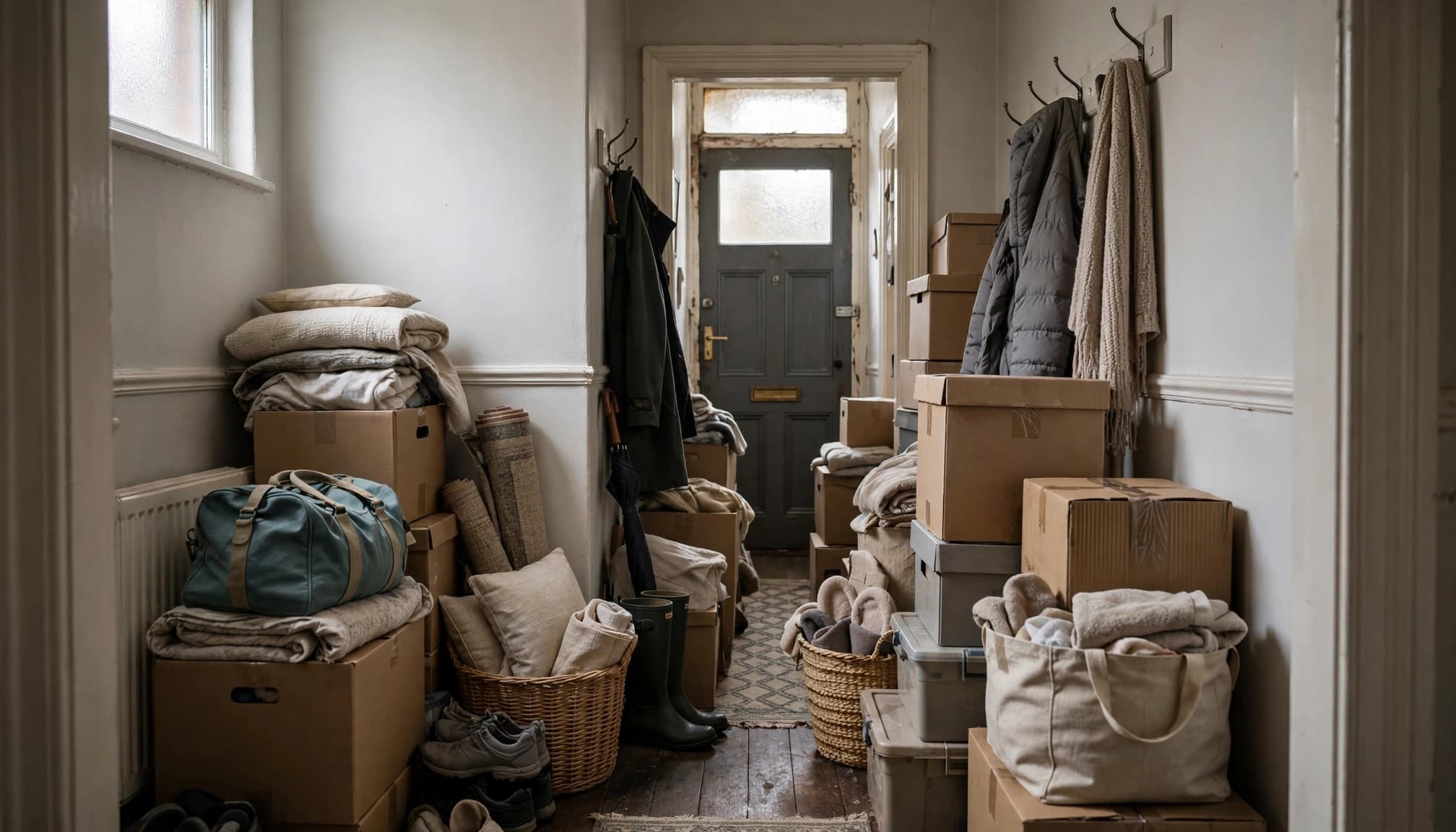
Accessible exits come before wider clearance, but creating access mustn’t expose someone to needles or unstable contents. Where safe access isn’t possible, leave the work to an appropriately equipped team.
Call 999 if there is an immediate threat to life, such as a fire or someone trapped.
PPE must be selected for the assessed task. Gloves don’t make reaching into unknown contents safe, and respiratory protection needs proper selection and fitting.
Our guidance on items needing specialist clearance explains why sharps, chemicals and other hazards need separate consideration before removal.
3. Agree consent and protect belongings
Establish who can authorise the work
A family relationship, property ownership or tenancy concern doesn’t automatically give someone permission to discard another person’s possessions.
Agree who can instruct the work, what is approved for removal and what must remain. Without informed consent or another lawful basis, don’t remove belongings. Emergency action must have proper legal authority.
Where capacity is in doubt, the Mental Capacity Act 2005 framework applies in England and Wales. Capacity concerns must relate to the particular decision. A diagnosis, disagreement or refusal doesn’t establish a lack of capacity.
Any decision made for someone who lacks capacity must follow the relevant legal process and best-interests requirements.
Keep the approach respectful
Use a trauma-informed approach. Hoarding disorder is recognised in DSM-5 and ICD-11. Commonly cited prevalence estimates are around 2% to 6%, although findings vary between studies. Clutter alone doesn’t establish a diagnosis.
Avoid blame, threats or describing everything as rubbish. Agree manageable stages and ask which belongings, including sentimental items, matter to the resident.
Serious self-neglect may raise adult safeguarding concerns. A GP, adult social care team or housing provider may need to be involved alongside the clearance.
Our hoarding and clutter clearance can focus on agreed rooms or areas where a staged approach is appropriate. Plan aftercare with relevant support services. Renewed accumulation, or relapse, can indicate a need for ongoing support, not personal failure.
4. Separate specialist removal from ordinary clearance
Define the specialist work first
A standard house clearance or clutter removal service, including hoarding clean up, doesn’t automatically include a sharps search, biohazard cleanup or hazardous waste removal.
The agreed plan should identify who will assess the affected area, remove sharps, manage contaminated materials and decide when ordinary clearance can resume. Blood-contaminated materials may need a separate biohazard assessment.
Waste-carrier registration alone doesn’t demonstrate competence to undertake these tasks. The service needs suitable training, insurance, task-appropriate PPE and authorised disposal arrangements. PPE doesn’t make unknown contents safe to handle. Where applicable, COSHH assessments address work-related exposure to hazardous substances.
Tell us what you know before work begins. We’ll explain what we can safely handle and where another appropriately qualified service is needed. After assessment, a qualified team may consider using a HEPA vacuum. Don’t vacuum near suspected sharps or use a vacuum instead of specialist removal and decontamination.
Sort only when the area is suitable
Once the relevant hazards have been addressed, belongings can be separated into Keep, Donate, Recycle, Dispose and Unsure or Valuables categories.
Those categories don’t apply to loose sharps or contaminated contents awaiting specialist handling.
Secure personal documents in a lockable box where safe access allows. Organisations handling personal information must follow UK GDPR and the Data Protection Act 2018, including secure destruction where appropriate.
Electrical items need a suitable WEEE recycling route. Check that the provider accepts each item under WEEE requirements. Batteries require separate handling, particularly if damaged. Don’t dismantle appliances or handle suspect batteries during initial sorting.
5. Arrange the correct waste route
Keep clinical waste out of general loads
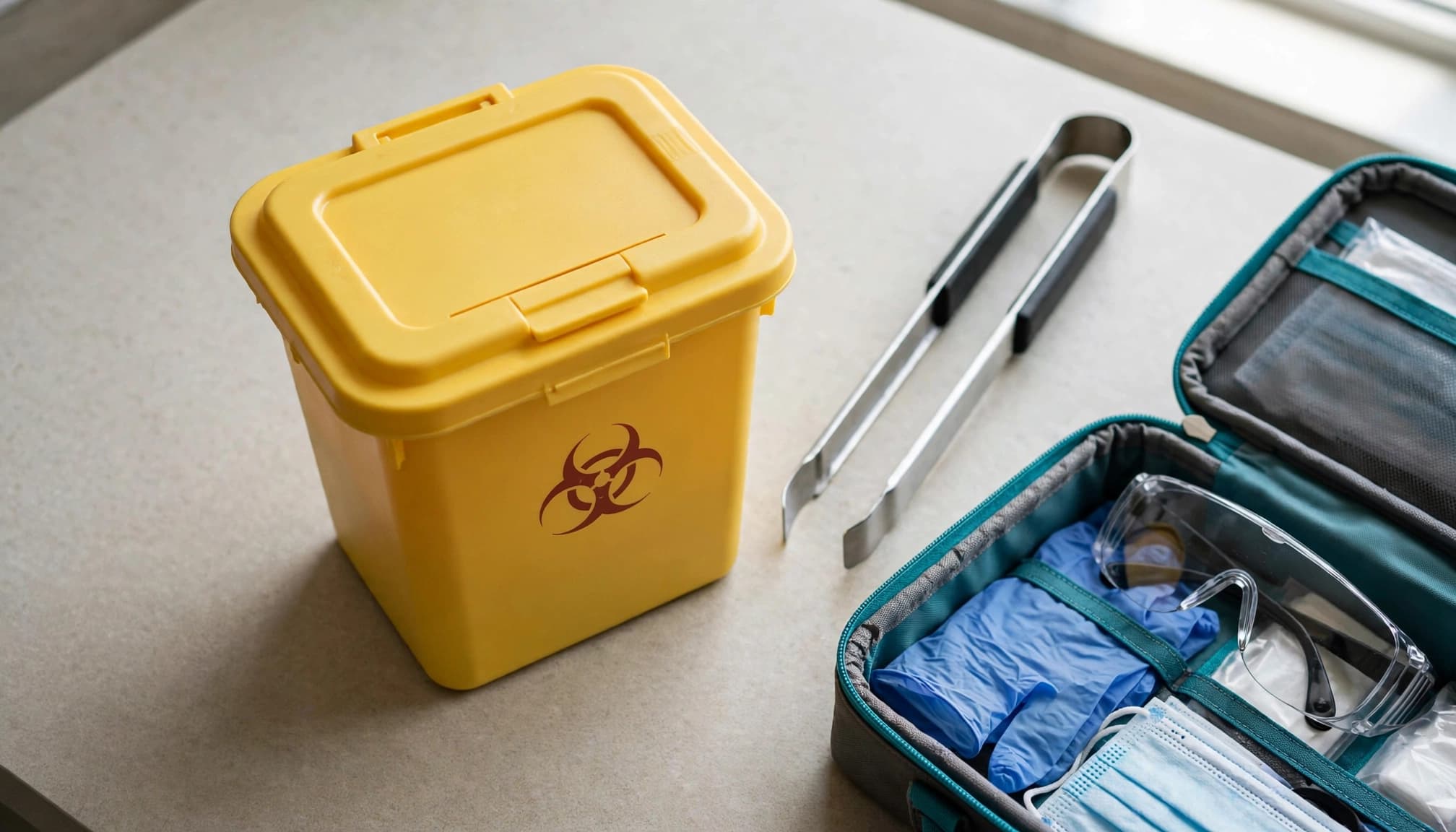
Used medical sharps need a separate disposal route. They mustn’t go loose into household bins, recycling, a skip or bags of unwanted medicines.
A clean broken drinking glass and a used syringe need different assessments. The contractor must classify the waste and use suitable containers and authorised receiving facilities.
A qualified service should provide and use a suitable sharps container. Don’t put the items into one yourself.
NHS England’s healthcare-waste guidance sets out the framework for managing healthcare waste safely.
Ordinary pharmacy medicines-return arrangements don’t cover needles, syringes or lancets. Some pharmacies provide separately commissioned services, but these aren’t universal.
Distinguish household and business responsibilities
Under the Environmental Protection Act 1990 framework, householders must take reasonable steps to pass waste to an authorised person. In England, a private clearance contractor should hold the appropriate Environment Agency waste-carrier registration.
People often search for a “licensed waste carrier”. In England, check the contractor’s relevant Environment Agency registration; “licensed” isn’t a separate legal credential.
Businesses have wider duty of care and documentation requirements. Non-hazardous transfers generally require a Waste Transfer Note; hazardous movements may require a consignment note. Household exceptions mean these documents aren’t required in exactly the same way for every domestic collection.
Keep the written scope, receipt and any disposal records provided.
Councils arrange disposal of qualifying household clinical waste, but collection processes differ. Waste generated by visiting healthcare professionals may be their employer’s responsibility.
Use your council’s current clinical-waste guidance for local arrangements. Rules elsewhere in the UK differ from those in England.
What affects the cost and time?
The extent of the sharps problem matters more than the number first noticed. One visible needle may be in an otherwise accessible room, or hidden amongst several rooms of mixed contents.
When searching for “hoarder clean up”, check that a quote separates assessment, specialist removal, ordinary clearance, cleaning and disposal. Access, contamination, sorting decisions and additional visits all affect the work.
A completion date should follow the assessment. A hospital discharge or tenancy deadline doesn’t remove the need to control hazards first.
Our guide to what a house clearance involves explains why the agreed scope matters. You don’t need to organise the contents before asking us to assess the situation.
Frequently asked questions
Can I continue clearing another room?
Only where it’s genuinely separate, safely accessible and unaffected by the suspected sharps problem. Don’t carry bags or furniture through the affected area.
If the extent is unknown, pause the clearance until it has been assessed. Finding one needle doesn’t establish where the risk ends.
Ordinary cleaning also needs its own plan. Active pest problems may need professional pest control before deep cleaning. Mould work should follow correction of the moisture source. Don’t use an ozone generator in an occupied home.
What is the fastest safe way forward?
Keep the area undisturbed and explain what has been found. Give the location, access restrictions and any known contamination without entering to gather more detail.
Existing photographs may help. Don’t take new pictures if doing so means approaching sharps or climbing over belongings.
Agree the specialist assessment first, then the clearance and cleaning stages. This gives everyone a clear handover without exposing family members, residents or workers to unnecessary risk.
A clear next step, without handling the hazard
You don’t need to identify every sharp object or prepare the property yourself. Keep the area undisturbed and protect access while the right assessment is arranged with a trauma-informed, resident-centred approach.
If you need help, tell us about your property, including any known sharps or contamination. We’ll agree what needs attention, what can safely proceed and whether another qualified service is required. We’ll discuss appropriate aftercare once the immediate clearance plan is agreed.
