 Skip to content


Yes, a hoarder house clearance can take place while the occupant remains at home, if it’s safe and agreed. Plan the house clearance around the occupant, rather than treating it as generic junk removal. Decisions about belongings need clear agreement, manageable stages and continued access to everyday facilities.
You don’t need every room emptied at once. Start with what the person needs to use safely, then plan the work around them.
Key takeaways
- Agree removal decisions with the occupant before work starts.
- Keep essential facilities and escape routes usable throughout.
- Separate sorting, removal, cleaning and specialist work in the agreed scope.
Start with consent and appropriate support
A voluntary clearance needs agreement
Being a relative or landlord doesn’t automatically give someone permission to remove another person’s belongings. Record which areas are included, what may leave and who can approve changes.
A voluntary clearance is separate from eviction or compulsory action. Eviction rules in England require a legal process; booking a clearance doesn’t replace it. Where consent, capacity or legal authority is disputed, pause removals and seek appropriate professional advice.
Support the person alongside the property
Hoarding disorder is a recognised mental health condition involving persistent difficulty discarding possessions, sometimes leaving living spaces unsafe. A sofa that can’t be used or an inaccessible kitchen shows how daily life is affected. Clutter alone doesn’t establish a diagnosis.
Slough’s hoarding protocol estimates that 2% to 5% of people have hoarding disorder or related behaviours.
A GP, adult social care team or housing provider may help. Serious self-neglect may raise safeguarding concerns. Mind’s guidance on hoarding support describes the Clutter Image Rating Tool and Hoarding Icebreaker form for starting conversations with a GP.
National Hoarding Awareness Week ran from 11 to 15 May 2026, focusing on national guidelines for support.
Plan hoarded property clearance around daily life
Assess safety and prepare together
Conditions range from overfull storage with accessible exits to an uninhabitable home with blocked exits, disconnected utilities and biohazards. The starting point determines whether remaining at home is safe.
Explain who will attend, working hours, breaks and how the occupant can pause decisions. Agree arrangements for pets, medication and privacy. Avoid threats, blame or treating every possession as rubbish.
Professional teams use a risk assessment and method statement (RAMS). This identifies hazards, everyone at risk, work stages and control measures, including protection for the resident.
Work through manageable areas
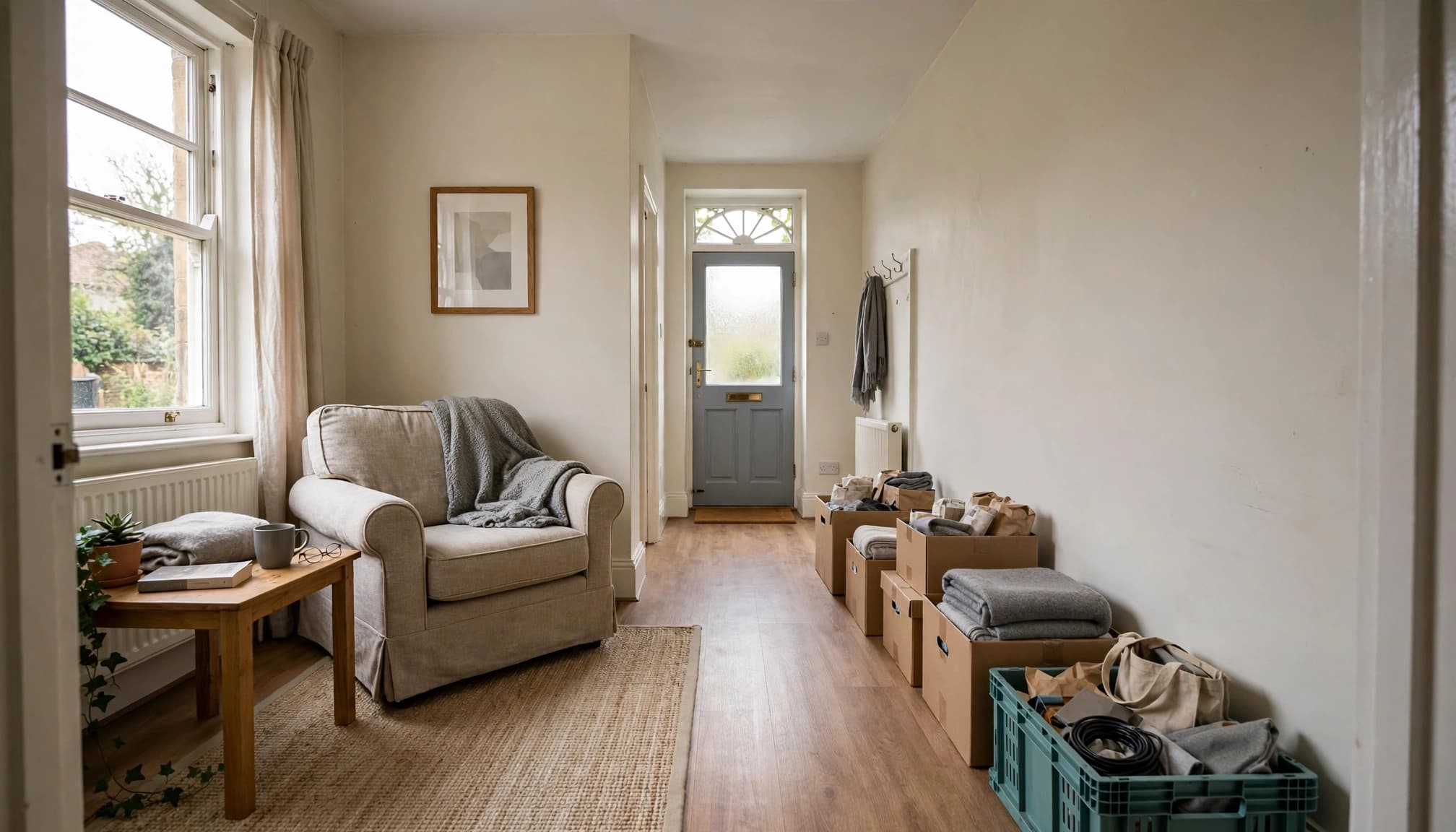
Prioritise escape routes and working smoke alarms. Preserve access to the toilet, washing facilities, kitchen, drinking water and a suitable sleeping space.
Use a room-by-room clearance plan for hoarder house clearance, agreeing safe stages before work begins. Decluttering should make specific areas safer and more usable, without pressure to discard possessions.
A smaller room can provide secure storage for retained belongings, provided clearing it doesn’t delay urgent safety work. Our hoarding and clutter clearance can focus on agreed rooms or areas.
Finish each session with waste removed and belongings safely stored. Don’t leave sorting piles across walkways. If essential facilities cannot remain usable, temporary accommodation may be necessary.
Protect belongings and control hazards
Keep decisions separate from disposal
Sort agreed contents into keep, donate, sell or dispose. Give uncertain items a separate holding area rather than making rushed decisions.
Set aside photographs, legal paperwork, sentimental items, jewellery and heirlooms. Record valuable finds and keep valuable items secure. A chattel valuation may be appropriate for jewellery, paintings, sculptures, coins or stamps before sale or disposal.
Whether to donate to charity or recycle an item depends on its condition and suitability. Soiled or contaminated belongings shouldn’t enter ordinary donation routes. Only suitable residual waste should go to landfill. The occupant’s agreement to clear a room isn’t permission to discard everything inside it.
Define specialist work before handling waste
Unstable piles, damaged electrics, pest infestation, mould, sharps and bodily fluids need assessment. Gloves, suitable masks or respiratory protection, safety goggles and protective clothing must match the hazards. PPE doesn’t make unsafe work suitable for an untrained person.
Keep the occupant away from active work areas. Suspected asbestos, unknown chemicals, sharps and any biohazard need separate specialist assessment or handling. Call 999 for immediate danger.
In England, check whether a waste carrier is registered using the Environment Agency’s waste-carrier register. Registration alone doesn’t establish competence for hazardous work. Waste must follow appropriate authorised routes, with transfer or consignment paperwork where required, including for hazardous waste.
Deep cleaning follows clearance, working from top to bottom: cobwebs and dust first, then appropriate disinfection. Mould needs moisture control and suitable assessment. Ventilate during appropriate cleaning and never mix chemicals.
Questions about occupied-home clearance
How much does it cost?
The cost to clean a hoarder house depends on the scope, volume, sorting time, access, disposal and cleaning. A basic example is £130 plus VAT for two cubic yards, roughly four washing machines or fifteen dustbin bags, with only ten minutes’ labour included. That’s not a Placeback quotation or a realistic allowance for careful occupied-home sorting.
A fixed price should be based on a clearly agreed scope. The written house clearance price should separate clearance, cleaning and specialist work.
How long will it take?
Occupied-home work may need several shorter visits. A reported three-bedroom clearance in Enfield required four workers for a week and removed 12 tonnes. Property size alone doesn’t determine duration.
What should happen after each stage?
Review whether the space remains usable and whether support needs adjusting. Renewed accumulation can indicate a need for ongoing help, rather than personal failure.
Lock changes and professionally draining down water systems may suit vacant properties. They aren’t routine occupied-home clearance steps.
Agree the next manageable step
An occupied-home clearance should leave the person with usable space, protected belongings and a clear understanding of what happens next. The pace must reflect safety and the decisions involved.
You can tell us about your property, including who lives there and which areas need attention. We’ll discuss the scope before removal begins.
