 Skip to content


If you suspect hidden mould in a heavily cluttered home, leave the area undisturbed and arrange safe access before investigating. The priority is to find and stop the moisture, without exposing anyone or damaging belongings.
US sources use “mold” for UK “mould”, including the phrase “hidden mold”.
Clutter can conceal leaks, restrict airflow and make inspection difficult. You don’t need to empty the property before asking for help.
Start with what you can observe safely, then agree whether the next step is inspection, clearance or specialist treatment.
Key takeaways
- Don’t pull away wallpaper, lift carpets or move unstable furniture to look for mould.
- People with asthma, allergies or weakened immune systems may need to stay away from affected areas.
- Extensive, recurring or inaccessible mould needs professional assessment.
- Agree which belongings stay, which can leave and how safe access will be created.
Recognise hidden mould without disturbing it
A persistent smell or change in a wall’s condition deserves attention. Neither confirms mould on its own.
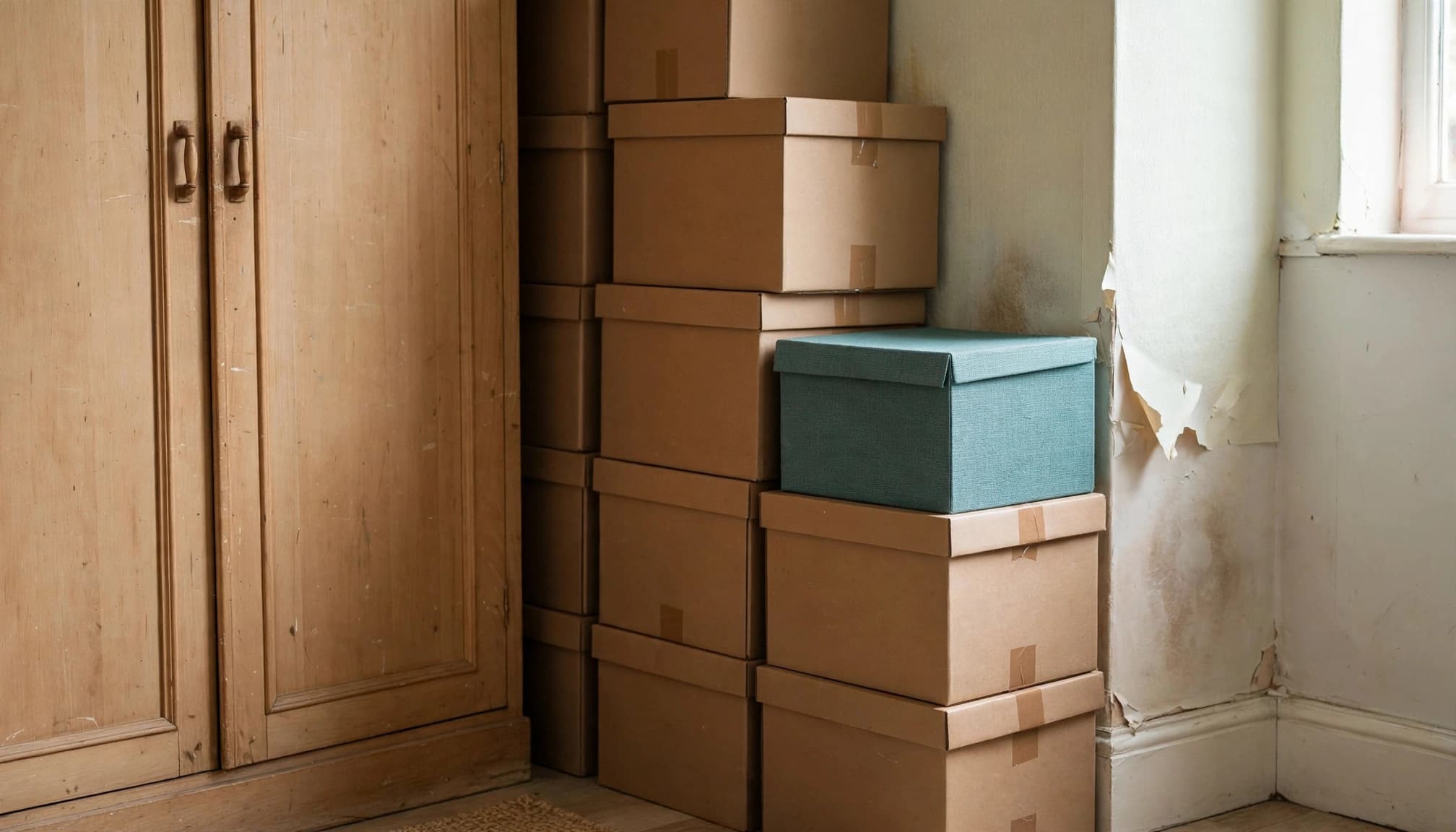
Smells and changes to surfaces
A musty smell, or a damp or earthy odour, is a common warning sign. Drains, pests and other problems can smell similar.
Look for blistering paint, lifting wallpaper joints, bubbling surfaces and bowed or soft skirting boards. Two or more signs together justify investigation, particularly near plumbing or an outside wall.
Photograph what you can see without entering unsafe areas. Note whether the smell changes after rain, bathing or heating. Don’t press, scrape or peel surfaces to see underneath.
Places growth can remain hidden
Mould commonly develops behind wallpaper and panelling, on the back of plasterboard, inside suspended ceilings and within wall cavities. Carpets and underlay can also conceal growth.
The phrase “invisible mold” refers to growth concealed from view, not individual spores visible to the naked eye.
In cluttered rooms, check only visible edges around wardrobes, stacked boxes and furniture against cold walls. Don’t shift heavy items alone.
A clean room-side surface doesn’t rule out damp behind it. Roof spaces, leaking pipework and areas beneath fitted units may need specialist access. Avoid entering lofts or enclosed spaces where access or flooring is uncertain.
Why moisture and clutter matter
Mould spores, called “mold spores” in US spelling, are microscopic particles commonly measuring around 1 to 40 microns. They occur naturally, so their presence alone doesn’t establish hidden growth.
Growth needs moisture, time and suitable material. Cellulose in plasterboard paper, plywood and some carpet materials provides food. Under suitable conditions, growth can begin within 24 to 48 hours.
Many indoor moulds favour temperatures around 25 to 30°C, although growth can occur across roughly 0 to 35°C. A cool room isn’t protection.
Clutter can hold damp materials together and restrict ventilation behind furniture. It doesn’t tell you why the moisture arrived.
The EPA’s guidance on moisture and mould explains why water control comes first. A dehumidifier can help remove airborne moisture, but it won’t repair a leaking pipe or stop rain entering a wall.
Protect health before starting work
The amount you can see doesn’t reliably show how much mould is concealed behind belongings or building materials.
Who needs extra precautions?
Infants, children and people with asthma, allergies, chronic lung disease or weakened immune systems need particular care. People with a history of allergies may develop allergic reactions after exposure.
They shouldn’t disturb suspected mould, as this can release mold spores and other particles into the air. Avoiding disturbance is especially important for vulnerable people.
Where possible, keep them away from the affected room whilst assessment and work are arranged. If bedrooms are affected or separation isn’t practical, seek advice from the housing provider and relevant health professional.
NHS guidance on damp and mould describes the health risks and groups who may be more vulnerable. Protective equipment doesn’t make every situation suitable for DIY work.
Symptoms that need attention
Exposure may cause respiratory issues, including a blocked or runny nose, sneezing, coughing or wheezing. Other possible effects include eye or throat irritation, skin reactions and allergic reactions.
Sinus symptoms, including sinusitis, and headaches may also occur, but have many possible causes.
Symptoms alone can’t diagnose hidden mould. Damp homes can also contain dust mites and other irritants.
Contact your GP about persistent symptoms or worsening asthma. Use NHS 111 for urgent advice when your GP isn’t available. Severe breathing difficulty needs 999. Don’t postpone medical help whilst trying to establish the condition of the property.
Trace the moisture source safely
These observations can help direct an inspection. They don’t replace a damp survey where the cause remains uncertain.
- Record the pattern. Note which rooms are affected, when smells appear and any previous leaks or flooding. Take photographs from a safe position.
- Look for condensation clues. Cold corners, window reveals and areas behind large furniture are common locations. Window condensation supports this possibility, but doesn’t rule out a leak. Note whether room ventilation is poor.
- Look for water-entry clues. Spreading stains, tide marks, salt deposits, soft plaster or other water damage can indicate plumbing leaks or rain penetration, but no single sign confirms the cause. Report active leaks promptly. Keep away from wet electrical fittings.
- Measure room humidity. A digital hygrometer helps identify persistent moisture. Aim for roughly 40 to 60% relative humidity, keeping it below 60% where practical. Cold surfaces can still become damp when the room reading looks acceptable.
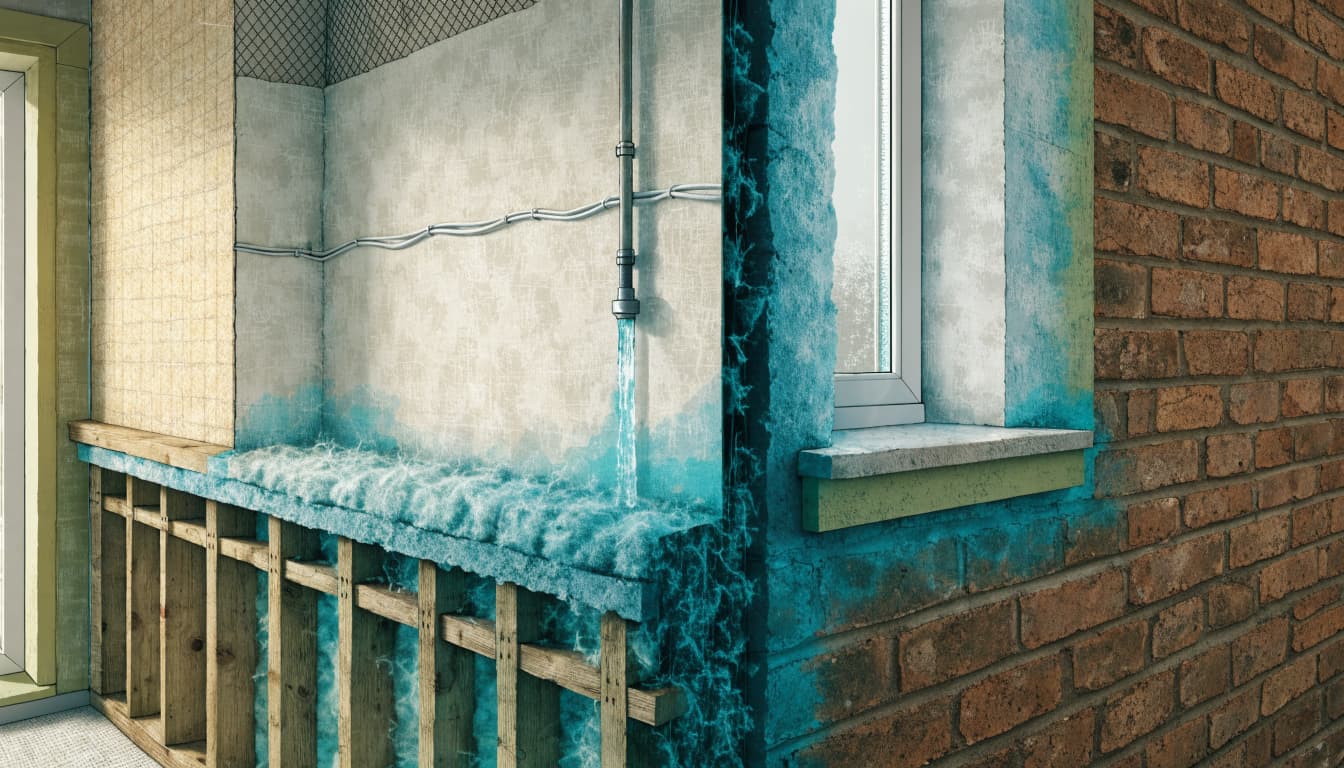
Uninsulated ducts in an HVAC system can also collect condensation in lofts and around plasterboard. A competent installer can assess insulation and a continuous vapour barrier around cold ductwork.
Don’t open walls, remove ceiling panels or lift flooring yourself. Older materials may contain asbestos and need separate assessment before disturbance.
Declutter in manageable, agreed stages
A safe plan should protect the resident, the people doing the work and belongings that still matter.
Start with access
Choose a small area where work can happen without disturbing suspected growth. Prioritise a usable exit and enough space for an assessor to inspect safely.
Don’t climb over piles, pull items out from underneath unstable stacks or carry damp contents through clean rooms. Avoid directing fans at suspect areas.
Our guidance on clear escape routes through clutter explains why access comes before wider sorting. Stop if you find damaged flooring, exposed wiring, sharps, unknown chemicals or suspected asbestos.
Keep decisions under the resident’s control
Ask what has become difficult and what the person wants help with. Use their words for their belongings. Clutter alone doesn’t establish a diagnosis.
Agree what will be retained, what is approved for removal and what still needs a decision. Identify documents, photographs, keys and sentimental items without handling contaminated contents unnecessarily.
Our hoarding and clutter clearance can focus on agreed areas. Sorting, removal, cleaning and specialist mould work need separate consideration. A clearance agreement shouldn’t be treated as permission to discard everything in a room.
Decide what needs cleaning or specialist assessment
Finding the full extent of the problem may require staged access. Clearing contents doesn’t confirm that walls, floors or services are safe.
When limited cleaning may be suitable
A small, accessible patch on a sound, washable surface may be suitable for careful cleaning once the moisture source is addressed. People with relevant health conditions shouldn’t undertake this work.
Detergent and water can be suitable for washable surfaces. Bleach isn’t the default answer, particularly on porous materials. Never mix cleaning chemicals.
Use appropriate gloves, eye protection and respiratory protection. Don’t dry-brush, sand, scrape or use a household vacuum on suspect growth. These actions can spread contamination.
When to bring in a professional
Arrange assessment where mould is extensive, returns after cleaning, affects several rooms or sits inside walls, ceilings or flooring. Restricted access and vulnerable occupants also justify earlier help.
A competent damp or building surveyor should investigate moisture sources and explain any proposed opening-up work.
Mould-affected plasterboard, drywall, carpet underlay and soft furnishings may need removal rather than surface cleaning. Repair, drying, removal and cleaning should follow an agreed remediation plan, with suitable containment where needed.
Whether air testing will help
Air sampling measures airborne spores, so it relates more directly to respiratory exposure than a surface swab. However, short samples vary and can’t establish a universally safe room.
The EPA’s mould sampling advice says testing is usually unnecessary when visible growth is present. This remains true when nobody reports symptoms.
For suspected concealed growth, arrange an inspection before professional mold testing, and ask what specific question the testing is meant to answer. Targeted sampling may help answer that question, but home petri-dish kits won’t locate the moisture source.
Frequently asked questions
Can there be mould without any visible growth?
Yes. Growth can remain behind clean-looking plasterboard, wallpaper or furniture. Microscopic spores aren’t visible individually. Persistent odours, damp damage and moisture history are more useful reasons to investigate than appearance alone.
What should I do if I rent?
Report suspected damp and mould to your landlord or agent in writing, including photographs and health concerns. Explain where clutter restricts access so inspection can be planned.
In England, government guidance for rented homes says landlords should address underlying causes and shouldn’t wait for medical evidence before acting. Clutter doesn’t remove the need to investigate building defects.
How long does recovery take?
It depends on the moisture source, affected materials and access. Removing contents may be one stage; drying and repairs can take longer. Government guidance recommends a follow-up inspection at least six weeks after remedial work to look for recurrence.
A clear next step without rushing
Hidden mould needs a moisture-led plan, with safe access and agreed decisions about belongings. You don’t need to uncover every affected surface before getting support.
If clutter is preventing inspection, tell us about your property, including suspected mould and anything that must remain. We’ll discuss the clearance needed and where separate specialist assessment is required.
