 Skip to content


You may be concerned about a loved one’s family home without knowing how to raise it. An unexpected offer can feel like added pressure, increasing their mental load. Start by asking permission and understanding what they want to change.
Their belongings may matter more than you realise. The thought of someone taking over can make accepting support difficult.
You don’t need agreement about the whole property before having a useful conversation. Begin with their experience of the home and one practical concern.
Key Takeaways
- Ask permission and listen to what your loved one finds difficult before suggesting solutions.
- Agree clear boundaries before touching belongings, including what can be moved, who makes decisions and when to stop.
- Start with one manageable outcome and keep belongings needing a decision separate from items approved for removal.
- If there are serious safety concerns or the work exceeds what you can manage, seek suitable local or professional support.
Understand the situation before offering solutions
A cluttered home doesn’t tell you why it has become difficult to manage. Before suggesting bags, boxes or a clearance, give your loved one space to explain.
Ask what has become difficult
Try asking, “Is there anything around the house that’s getting harder to manage?”
They may mention paperwork clutter, reaching a cupboard or having nowhere comfortable to sit. Follow their answer rather than listing everything you’ve noticed.
Bereavement, illness, reduced mobility or exhaustion may be part of the situation. You don’t need to identify a cause yourself. Ask whether support with decision making or a filing system might make daily life easier, and listen without correcting their explanation.
Avoid labels and assumptions
Use their words for their home and belongings. Terms such as “disgusting”, “junk” or “hoarder” can turn a practical concern into a personal judgement.
Clutter alone doesn’t establish a diagnosis. If difficulty parting with possessions causes distress or affects daily living, the NHS information on hoarding disorder explains the condition and routes to support.
You can suggest discussing concerns with their GP without deciding what the problem must be. Property support and mental health support may both be relevant.
How to start a conversation about help with clutter
Choose a private, calm moment. Avoid raising the subject during an argument, in front of visitors or by presenting storage solutions before hearing what your loved one wants.

Ask permission to talk
A simple opening gives them room to respond:
“Would it be all right to talk about the house? I want to understand whether any help would be useful.”
If they agree, keep the conversation focused. You don’t need to explain every concern at once.
Ask whether they would prefer to talk now or another time. A conversation that starts unexpectedly can feel like pressure, even when your intentions are good. Give them time to consider the question before filling the silence.
Describe what you’ve noticed
Use a specific observation and explain your concern without exaggerating.
“I’m concerned that the boxes make it difficult to reach the back door. Could we talk about making that route easier to use?”
This gives you something clear to discuss. “The whole house needs sorting” leaves much more room for disagreement.
Avoid comparisons with other homes or comments about what visitors might think. Stay with access, comfort and everyday use. Your loved one may agree that a particular area needs attention without accepting your wider view of the property.
Agree boundaries before touching belongings
Accepting help doesn’t mean handing over control. Before you move anything, agree what you can do and which decisions remain with your loved one.
Useful boundaries may include:
- Work only in the area you’ve agreed to address.
- Ask before opening cupboards, drawers or personal paperwork.
- Keep photographs, keys, jewellery and important documents separate.
- Stop when they ask, even if the task remains unfinished.
Don’t secretly discard belongings or arrange a surprise clean-out. Your loved one must agree before you donate items. Something that looks replaceable to you may have personal meaning or a practical purpose you don’t understand.
Agree who else can be involved. Bringing several relatives into the discussion without asking can make your loved one feel outnumbered. One trusted helper may be easier to accept.
Privacy matters too. Ask before taking photographs, sharing them with a provider or discussing the situation with other family members.
An item placed in a “needs a decision” group hasn’t been approved for removal. Keep it outside the agreed clearance until that decision is made.
If belongings are shared, check whose approval is needed. Being a relative doesn’t automatically give you authority over possessions in a family home, or the right to sell, donate or discard them.
Put important instructions in writing if several people will help. Clear boundaries reduce uncertainty for everyone.
What if they refuse help or become upset?
A refusal may mean they don’t want that particular help, that person involved or that conversation today. Ask once, without pressing: “Is there a different kind of support you’d feel comfortable accepting?”
They might welcome help carrying laundry but not sorting possessions. They may prefer you to sit nearby whilst they make decisions.
If the conversation becomes tense, pause. You can say, “We can leave this for now. I don’t want us to argue about your belongings.”
Don’t continue sorting whilst they are upset. Return to the conversation only when there is room for a calmer discussion.
Safety concerns still need a clear response. Describe the hazard rather than using it to justify removing everything. The Northants Fire guidance on cluttered homes provides context for fire-safety concerns.
You also have limits. Explain what you can safely help with and what needs another service. You don’t have to lift heavy furniture, handle unknown waste or enter an area that feels unsafe to prove you care.
Make the first decluttering session manageable
The first task should have a clear purpose and a stopping point. A whole-room commitment may feel overwhelming, especially when decision making is needed for every item.
Choose one useful outcome
Ask which change would make the most difference today. That might mean sorting a junk drawer, clearing a small patch of surface clutter or focusing on one agreed area in a spare room. It could also mean making a cupboard accessible or finding documents needed for an appointment.
Agree the outcome before beginning. “We will make this chair usable” is clearer than “We will get the house under control”, and keeps decluttering and organising focused.
Work at a pace your loved one can manage. If verbal questions become tiring, offer simple written choices or allow more time between decisions. Ask what helps them concentrate, rather than assuming the konmari method or another approach will suit them.
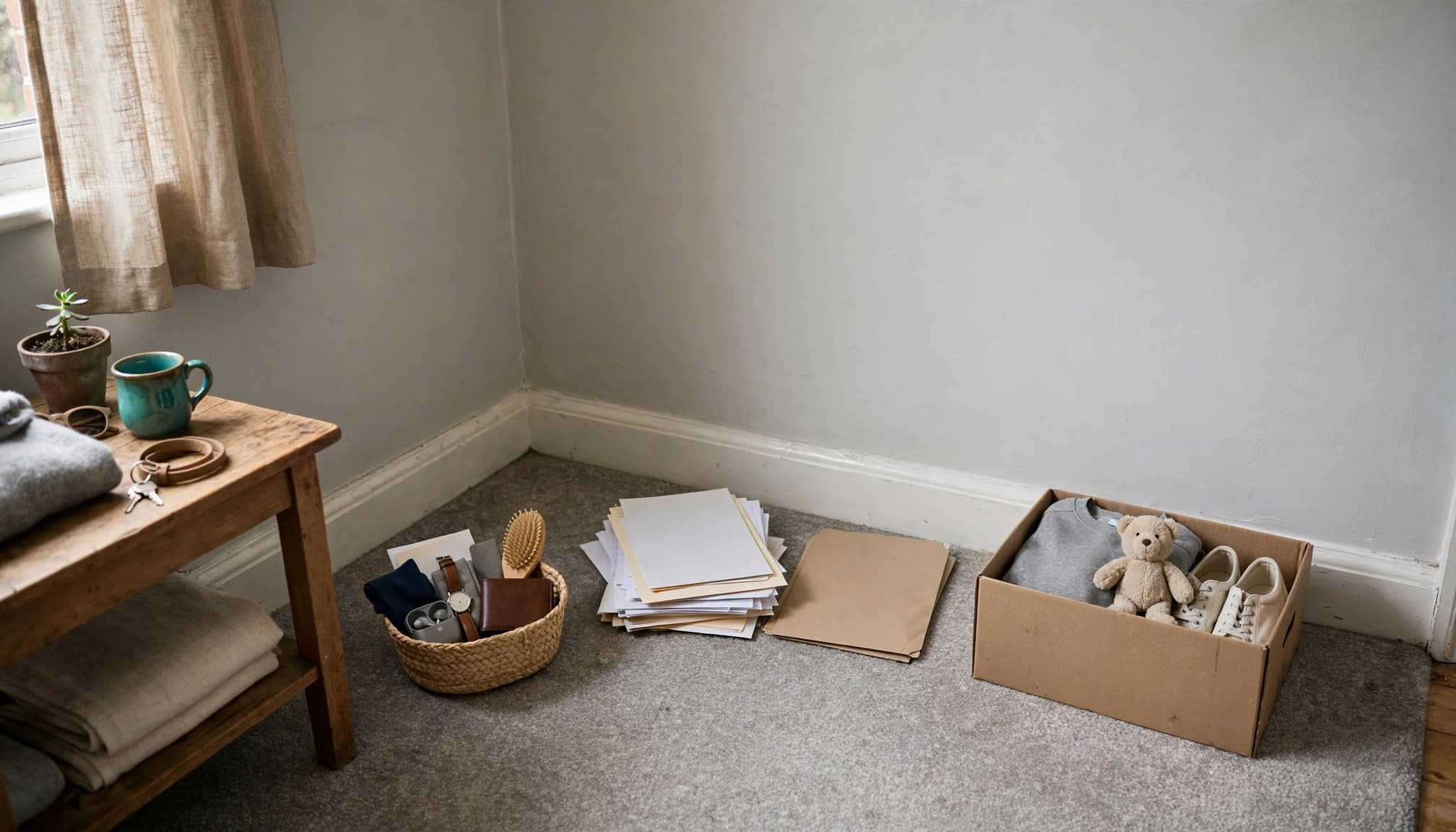
Keep uncertain belongings separate
Keep the sorting process clear with separate areas for belongings to keep, items approved for removal and anything needing more thought. Keep personal papers apart from material awaiting disposal. Items may go to a charity shop or be sold second hand, but only if your loved one chooses.
Sentimental items can wait if they aren’t part of the agreed task. You don’t need to settle every difficult decision during the first session.
Before moving an uncertain item elsewhere, agree where it will go. Otherwise, clearing one surface can leave another area difficult to use. Consider storage solutions only if your loved one wants them and they suit the agreed task.
At the end, confirm what was completed and whether another session would be welcome. Leave the space usable. Avoid leaving open bags or sorting piles that make daily life harder.
When safety needs professional or local support
Some concerns need more than a family sorting session. Blocked exits, unstable piles, damaged floors, inaccessible cooking facilities or belongings close to heat sources need careful attention.
Raise the specific issue and the outcome needed: safe access, a usable facility or an assessment. Avoid making promises that you can solve it yourself.
For households locally, South Yorkshire Fire and Rescue’s safety guidance is a relevant starting point. Dorset & Wiltshire Fire and Rescue Service also describes Safe & Well visits and smoke alarms as part of its support. Check what your own local fire service offers.
A GP, council adult social care team or housing provider may also be appropriate, depending on the concern. Explain what is happening and whether your loved one agrees to the contact. If someone is in immediate danger, call 999.
Don’t treat suspected asbestos, chemicals, sharps or biohazards as ordinary household waste. These need separate assessment and handling arrangements.
Urgent safety concerns may require professional or local involvement. They don’t make an unplanned family clean-out a suitable response. Seek advice about the immediate risk and agree the next steps wherever possible.
Choose help that matches the agreed work
Help with clutter can mean support with decisions, physical removal, cleaning or a combination. Clarify the task before choosing a provider.
Separate organising from clearance
A professional declutterer may be appropriate when the main need is decluttering and organising belongings, including support with decisions. Ask how they approach emotional attachment, privacy and pauses during a session.
A clearance service is relevant when approved contents need carrying and removing. Heavily cluttered properties may also need careful sorting, room-by-room work and cleaning afterwards.
Check what’s included. Sorting isn’t automatic in every clearance quote, and clearance doesn’t automatically include cleaning. Ask for a written scope covering rooms, tasks and access arrangements. Specify areas such as a spare room, whether storage space is included, and any separately quoted work. A provider may also offer home organisation as part of the agreed work.
Protect what matters before work starts
At Placeback, we agree what stays, what can be removed and what needs further instruction before work begins. Where included in the agreed scope, we can work through sorting, clearance and cleaning under one plan.
Tell us about photographs, documents, keys, jewellery or sentimental belongings you want us to look out for. We can’t guarantee every requested item will be found in a heavily cluttered property, but clear instructions help guide the work.
You don’t need to prepare every room before making an enquiry. With your loved one’s agreement, you can tell us about your property in Doncaster or South Yorkshire and explain what you know so far.
Frequently Asked Questions
How do I offer help with clutter without taking over?
Choose a calm, private moment and ask whether they would be willing to talk about the house. Listen to what they want help with, then agree a specific task and clear boundaries together.
What should I do if my loved one refuses help?
Respect their answer and ask once whether there is a different kind of support they would welcome. If the conversation becomes tense, pause and return to it only when they are ready.
Can I throw away or donate belongings while helping?
Only remove items your loved one has clearly approved for removal. Keep uncertain belongings separate, and ask before opening cupboards, handling personal papers or sharing photographs.
When should I seek professional or local support?
Seek advice when there are hazards such as blocked exits, unstable piles or inaccessible cooking facilities, or when the work is beyond what you can safely manage. A GP, council adult social care team, housing provider or local fire service may be relevant; call 999 if someone is in immediate danger.
A clear next step, with their agreement
The first useful outcome may be a conversation, permission to help or one area made easier to use. Keep control clear throughout: who decides, what can change and when to stop.
You can explain your concerns without judging the person living there. You can offer practical support without taking over their belongings.
Start with what they welcome, perhaps a small follow-up that fits their daily habits. Where the work or safety concerns exceed what you can manage, seek suitable support and agree what happens next.
