 Skip to content


Turning off the water in an empty property is often sensible, particularly during a long vacancy or cold weather. The right arrangement depends on your insurance conditions, the plumbing and any equipment that needs a water supply.
Whether to turn off water in an empty property depends on its insurance conditions, plumbing and equipment. You don’t need to disconnect every service because nobody is living there. Start with what the building needs to stay safe, then agree what should remain connected, what needs isolating and who will carry out the work.
Key takeaways
- Turning off the stopcock reduces the risk of an unattended leak, but doesn’t empty every pipe, tank or appliance.
- Heating, alarms and other essential equipment may still need electricity, gas or water.
- Closing a valve doesn’t close an account. Standing charges, drainage charges and other bills can continue.
When to turn off the water in an empty property
How long the property will be vacant matters, but it shouldn’t be the only factor. An exposed home in January needs a different plan from a sheltered one awaiting viewings in July.
Use these circumstances as a starting point.
| Expected vacancy | Practical starting point |
|---|---|
| A few days | Consider isolating the mains if no essential equipment needs it. |
| Several weeks | Isolation is often sensible. Full drain-down depends on weather, plumbing and insurance. |
| Several months | Arrange a plumbing assessment and a clear isolation or drain-down plan. |
| A long winter vacancy | Prioritise frost protection and any insurer-required drain-down. |
A warm home with working lighting is more welcoming to buyers than a cold, dark building. Keeping selected services available can also support cleaning, repairs and maintenance.
The aim is to retain what the property needs without leaving avoidable risks unattended.
How to shut off the water safely
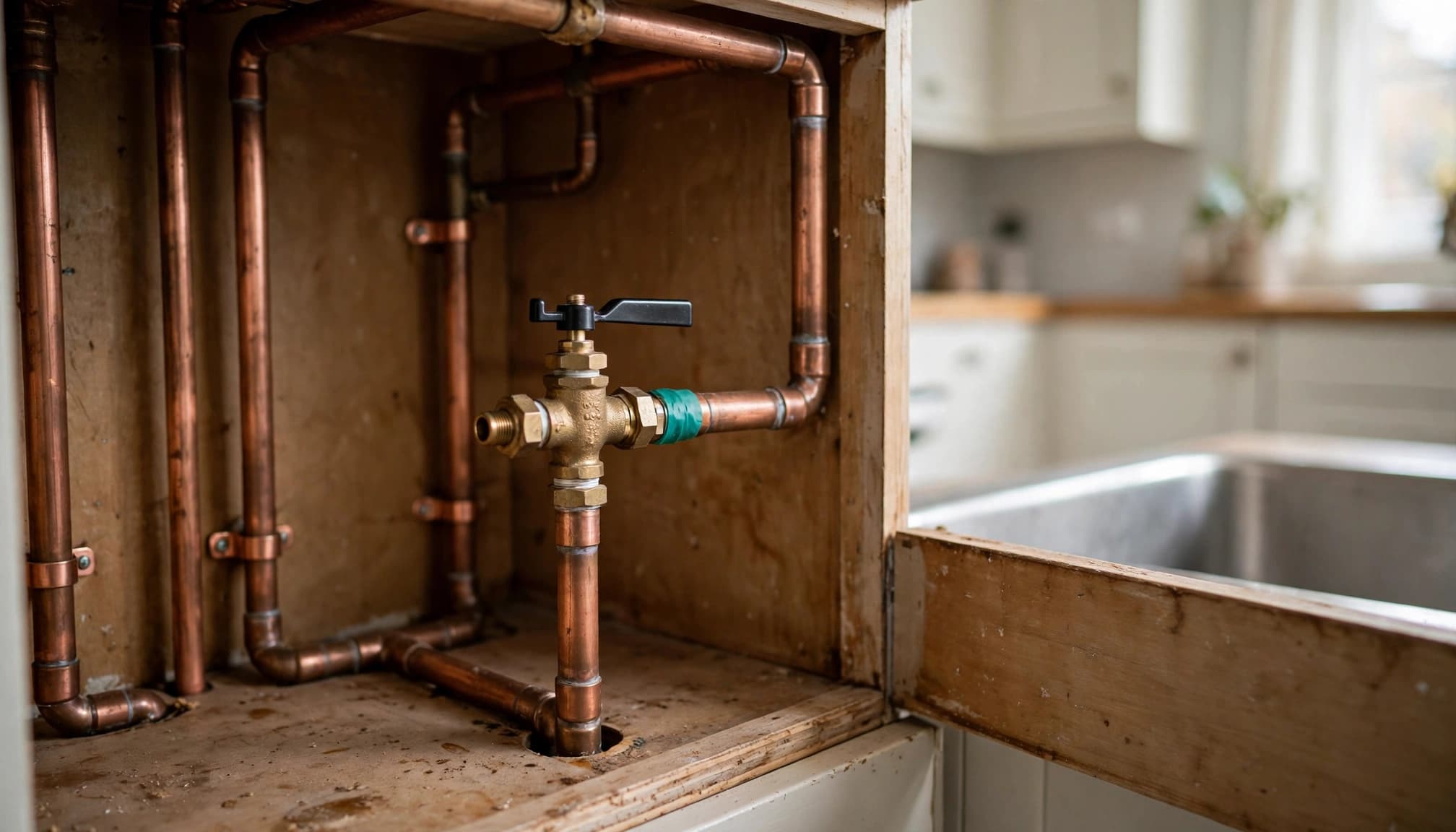
Find the correct stopcock
The internal stopcock is often beneath the kitchen sink, near the incoming mains pipe. It may also be in a utility room, downstairs cupboard or garage.
Older layouts and converted flats can be less straightforward. Don’t operate an unidentified valve or an external stopcock that might serve neighbouring properties.
If the valve is hidden behind heavy belongings, seized or leaking, arrange safe access and a plumber. You don’t need to force it or dismantle anything.
Isolate the supply before draining
For a straightforward domestic water supply:
- Identify equipment affected by losing water. Switch off immersion heaters and other water-heating equipment as their instructions require before draining.
- Close the internal valve gently. A traditional wheel valve usually closes clockwise. Don’t force it.
- Open the cold taps to release pressure and drain accessible pipework. Flow should stop once the remaining water has emptied.
Running taps won’t necessarily drain cylinders, storage tanks, appliances or low points in the system. It also doesn’t drain a separate central-heating circuit.
A closed valve and a fully drained plumbing system are different arrangements. An insurer requiring drain-down may expect more than turning off the mains.
Use a qualified plumber for a full drain down or an unfamiliar system. Sprinklers, shared supplies and specialist equipment need their own plan.
Heating and insurance need one agreed plan
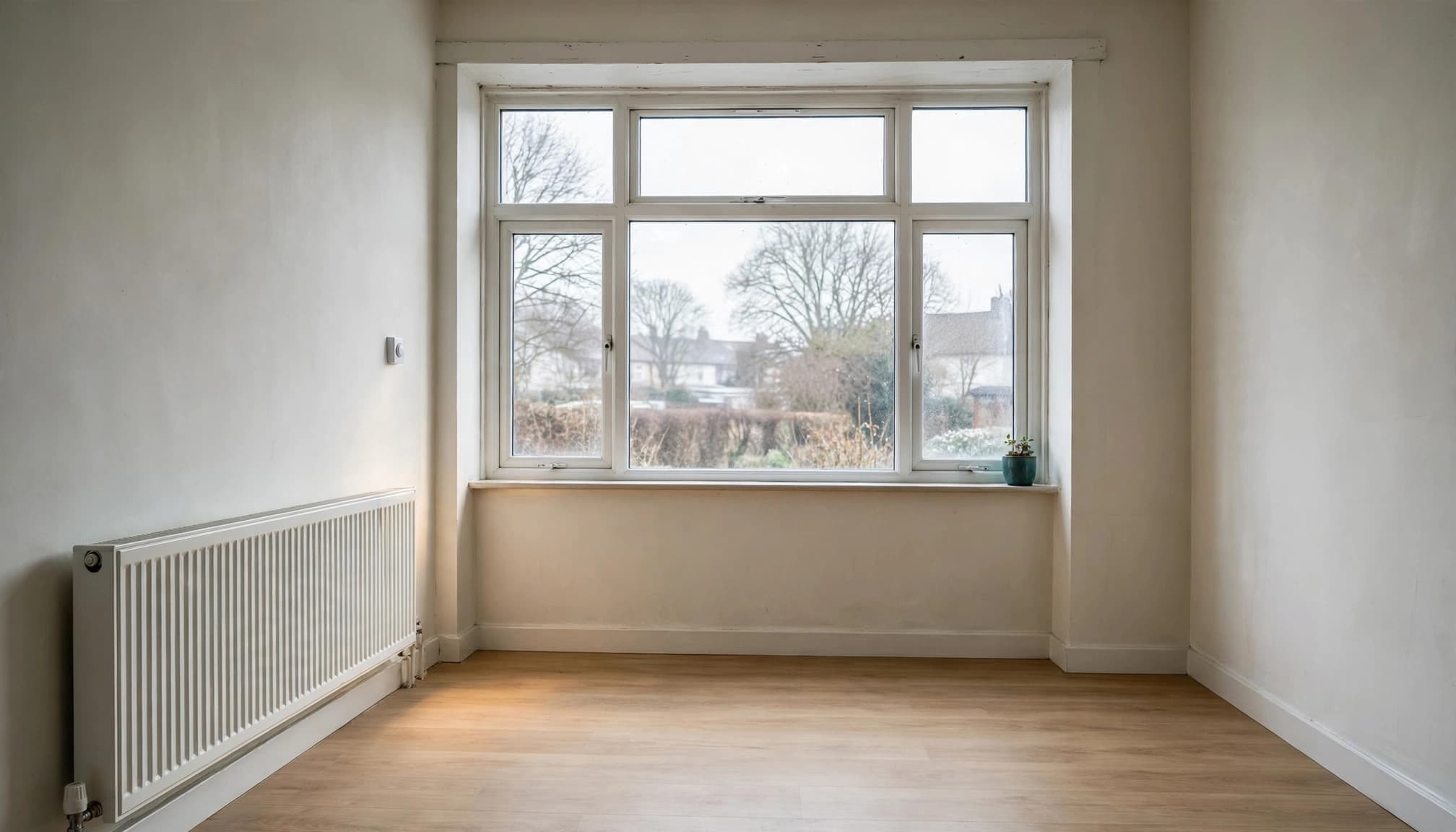
Keep the heating the property needs
Low background heating, around 12°C, can reduce the risk of frozen pipes during winter in an unoccupied property. It isn’t a universal setting or a guarantee against freezing.
Some unoccupied home insurance policies specify another temperature. Others require water isolation and that you drain down the system. Read the policy terms alongside the boiler instructions before choosing an arrangement.
A boiler’s frost protection can’t work without the supplies it needs. Prepayment meter credit matters too. If electricity or gas stops, frost protection may stop with it.
Understand when cover changes
According to Anthony Jones’ unoccupied-home guidance, many standard policies can become invalid after 30 to 60 days unoccupied. Your policy defines the limit and any restrictions.
Tell the insurer when the vacancy becomes known. Confirm your unoccupied home insurance conditions with your insurer and keep them in writing, including inspection frequency, heating requirements and water precautions.
Burst pipes can release thousands of litres before damage is discovered, causing escape of water and flooding. Some insurers require the system to be drained as a condition of cover.
Our guidance on empty property insurance conditions covers these arrangements in more detail. Precautions reduce risk, but they don’t remove exclusions in the policy.
What to do with gas and electricity
Don’t turn off utilities as a blanket measure; keep essential utilities connected if your maintenance and insurance plan needs them. Electricity may support lighting, alarms, heating controls and contractors’ equipment, while gas may still be needed for heating.
Arrange planned gas isolation through a Gas Safe Register engineer. Gas Safe Register replaced CORGI in 2009. Don’t disconnect gas pipework or appliances yourself.
Use a registered electrician for electrical isolation. Electrical Safety First’s safe-isolation guidance explains the professional procedures involved. Switching off a consumer unit doesn’t authorise work on incoming supply equipment.
Unplug non-essential appliances where safe. Keep any circuits needed for agreed protection working.
If the installation is unfamiliar, damaged or affected by water, leave it alone and arrange professional help.
Will you still pay water rates?
A closed stopcock doesn’t close the account
Turning off the water doesn’t automatically stop water rates. Metered consumption should fall when no water is used, but fixed charges can remain.
For gas and electricity, standing charges normally continue while accounts remain active. Network connection charges may form part of the bill. Estimated usage may also appear until meter readings confirm actual consumption.
Photograph accessible meters when the property becomes vacant and during later visits. An estimate isn’t proof that energy or water was used.
Severn Trent’s empty-property rules
Severn Trent’s empty property guide sets out specific arrangements.
If Severn Trent confirms that the property is empty and no water is being used, it suspends charges for up to 12 months when the owner has died and the property is in probate, entered long-term hospital or care, or gone to prison.
Outside an applicable suspension, empty metered properties still incur standing charges, surface water drainage and highway drainage charges, even when no water is used.
Severn Trent also offers free disconnection. It cancels usage charges from the date it receives confirmation of disconnection.
These are Severn Trent’s arrangements, not a UK-wide entitlement. Turning off your own stopcock is also different from supplier disconnection.
Council tax and probate are separate
Water relief doesn’t automatically provide council tax relief. The accounts follow different rules.
In England, an unoccupied property forming part of an estate can qualify for Class F exemption while probate or letters of administration are pending. There is no six-month limit after the death.
Exemption can continue for up to six months after the grant, provided the qualifying conditions remain met. Occupation, sale or transfer can end it sooner. Furniture inside doesn’t, by itself, prevent Class F exemption.
Adrian Flux’s utilities guidance also highlights the costs associated with long vacancies. In England, permitted empty-home premiums can raise the total council tax bill to four times the standard amount after ten years. Councils may offer discretionary discounts.
An exception to the premium removes the additional charge, not the ordinary bill. Keep earlier arrears separate from any exemption calculation.
Turning the water back on safely
Keep water-heating equipment switched off until the system is properly refilled and ready to operate.
Close taps left open during drainage, then open one cold tap slightly. Slowly reopen the stopcock and let trapped air escape. Stay nearby and inspect accessible pipes, joints and appliances for leaks.
Once flow is steady, close the tap and inspect again. If water escapes, close the stopcock and arrange a plumber.
A fully drained system may need professional refilling, venting and recommissioning. Don’t restart an immersion heater in an empty cylinder.
After prolonged stagnation, arrange a suitable flushing and recommissioning plan. Stagnant systems can support Legionella bacteria, which can cause Legionnaires’ disease through inhaled contaminated water droplets. Showers need particular care because they create spray.
Keep inspections and access under control
Agree who will visit and who can change heating or utility settings. Several people holding keys can otherwise lead to conflicting instructions.
Record each visit, meter readings, signs of leaks, heating operation and anything needing attention. Follow the insurer’s inspection timetable. Our guide to securing an empty property covers wider access and protection arrangements.
If clearance is planned, keep access to stopcocks, meters and heating controls available wherever safe.
You can tell us about your property if belongings or accumulated contents need clearing. We’ll agree the clearance scope. Plumbing, heating and electrical work need appropriately qualified trades.
Frequently asked questions
Can central heating work with the mains water off?
Some sealed heating systems can operate with the incoming mains isolated. Other equipment may need a continuing water supply. The boiler, system layout and manufacturer’s instructions determine what is safe.
Do occasional visits reset the insurance vacancy period?
Don’t assume they do. A visit to collect post or arrange work may not count as occupation under the policy. The insurer’s definition determines whether the property remains classed as unoccupied.
A clear plan for the empty period
Turning off the water can reduce an important risk, but it needs to fit the property’s heating, equipment and insurance arrangements.
Agree what stays connected, what needs professional isolation and who will inspect the building. Keep utility accounts and council tax separate.
You don’t need every long-term decision settled first. Start with a safe arrangement that can be maintained.
