 Skip to content


Most clearances can be completed in a day on site, but the right house clearance time depends on what is inside, access, and what needs to be kept. Booking, sorting decisions, transport and disposal may extend the overall process.
A clear, empty-looking home can still hold loft contents, paperwork, heavy furniture or rooms that need careful sorting. If there has been a bereavement, a slower pace may be the right choice.
Start with the property as it is, not how you think it should look before asking for help.
House clearance time: realistic planning ranges
A useful house clearance timeline covers more than the team’s time inside the property. The clearance size, contents and access usually matter more than the bedroom count alone.
| House clearance type | Estimated clearance time |
|---|---|
| Small flat or bungalow | Roughly half a day on site |
| Average two bedroom property | Around one day on site |
| Large, heavily cluttered or difficult-access home | Two or more days on site, with some clearances taking several days |
These are on-site estimates, not promises. Booking, confirming access, deciding what stays, arranging waste removal and securing appropriate disposal routes can extend the overall scheduling and disposal process.
A typical two-bedroom clearance
For a straightforward two-bedroom house, the team will usually begin with a walk-through. They confirm the agreed rooms, items to retain and any access concerns.
Furniture, household contents and waste are then removed room by room. A final check helps confirm that the agreed work is complete.

When same-day clearance is possible
Same day house clearance may be possible where the scope is clear, property access is straightforward, staff are available and parking is suitable. Everyone must also agree what stays before work begins.
It is less suitable where contents are unknown, family approval is pending or specialist handling is needed.
What can make a house clearance take longer?
The volume of material matters, but so does the work around it. A house clearance time estimate should account for the property’s size, room count and contents, not only the number of bedrooms.
Access, stairs and parking
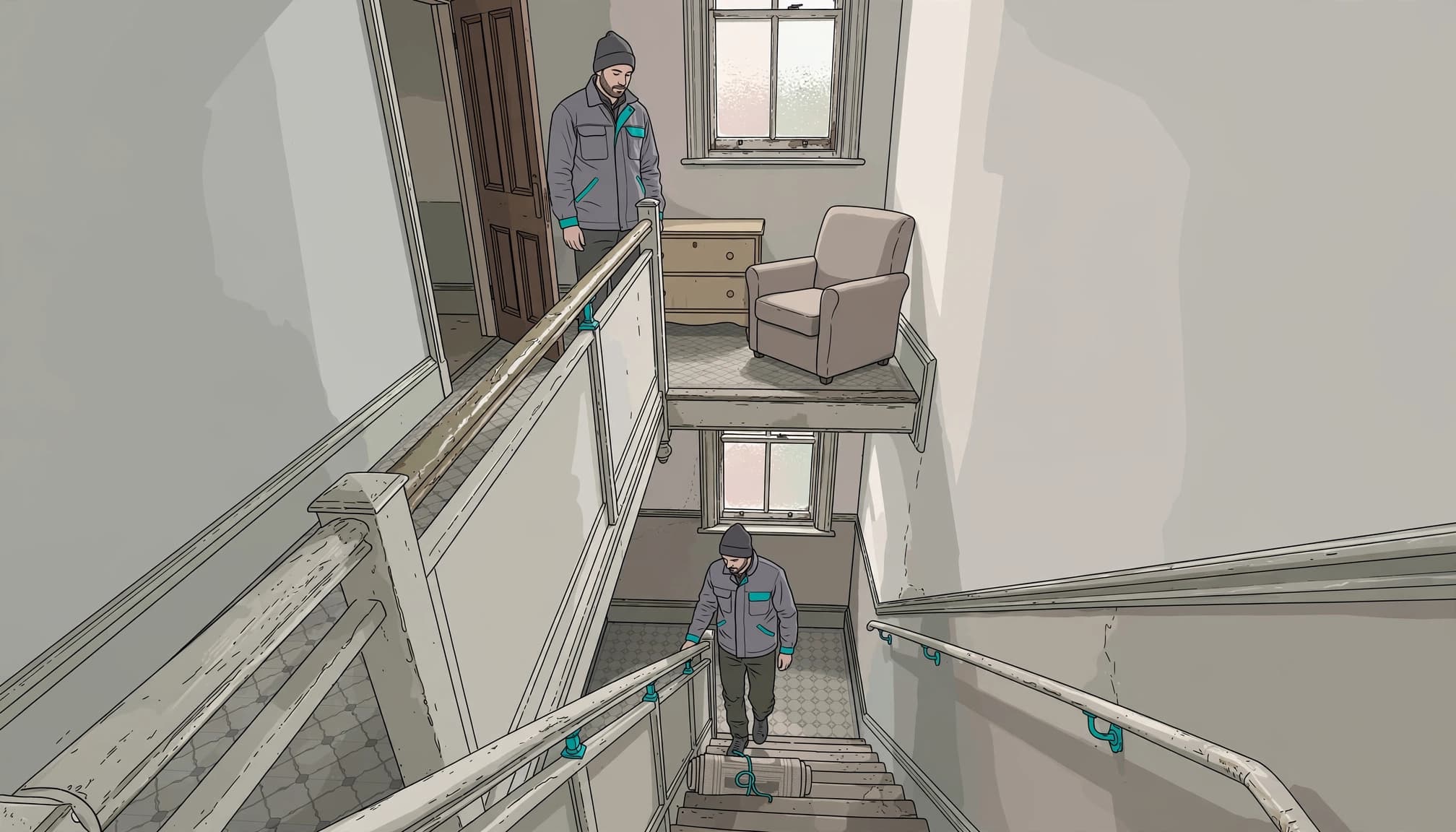
Third-floor flats without a lift take longer than ground-floor homes. Narrow staircases, shared entrances, permit parking and a long route from the door to the vehicle all add carrying time.
Lofts, garages, sheds and overgrown gardens should be mentioned at the start. They are often missed when a clearance is quoted from a few photographs.
Sorting, condition and sensitive belongings
A heavily cluttered home may need a structured, room-by-room plan. Severe clutter and hoarded properties may require additional sorting, safe access planning and specialist handling.
Important belongings can be mixed with general household waste. Damaged flooring, pests, mould, sharps, chemicals or other hazardous materials may affect what can be handled safely, and could require specialist handling or a separate arrangement.
Recycling requirements and the condition of items can also affect the schedule. More time may be needed to separate reusable, recyclable and unwanted contents correctly.
Bereavement and probate house clearance need particular care. The executor or authorised representative should confirm what may be removed. Set aside documents, jewellery, photographs, keys and items with sentimental value before work begins where possible.
Probate clearance should follow the agreed instructions, especially when ownership or sentimental value is unclear.
A clearance team can remove approved contents, but it should not decide who owns an heirloom or whether an item should be sold, donated or kept.
Professional clearance or DIY house clearance?
DIY clearance can work for a small, already sorted property with safe access and enough help. It can take much longer once van collection, loading, recycling centre opening times and repeat trips are included. Unwanted items may also require several separate journeys.
Professional house clearance covers sorting, heavy lifting and removing the agreed contents. A house clearance company or house clearance service can coordinate labour, transport and agreed disposal. This may reduce separate waste removal jobs, especially with heavy furniture, multiple rooms or difficult access.
Skip hire suits properties where everything is already sorted, there is suitable space and the household can safely load bulky items. It is less useful when belongings need checking first or parking is restricted.
Compare the house clearance cost based on the agreed scope. Ask whether labour, transport, disposal, cleaning and specialist work are included or quoted separately.
What happens to removed items?
Household contents do not all go to one place. Depending on their condition and approval, items may be kept, reused, donated, recycled or sent for authorised disposal. Some materials may ultimately go to a landfill site, depending on the contents, condition and available disposal route.
Householders should take reasonable care over where their waste goes. Your local council can help, and Bradford Council’s household waste guide for householders explains that it must be disposed of properly.
Check that any provider moving waste holds a waste carrier licence and can be identified on the Register of Waste Carriers, Brokers and Dealers. Registration helps confirm the provider’s identity, but does not prove every aspect of their service. Keep receipts, transfer notes or other disposal records where they apply.
Certain chemicals, sharps, asbestos-containing materials or other specialist items may need careful handling or a separate contractor. Fly-tipping is illegal. GOV.UK guidance on fly-tipping is a useful reminder that a cheap collection is not worth the risk.
How to make the clearance quicker
You do not need to empty every drawer before asking for help. A few clear decisions can make the day more manageable.
- Confirm which unwanted items can go, what stays and what still needs a decision.
- Put documents, keys, valuables and family photographs in one secure place.
- Give written instructions for items the team should look out for.
- Make access available, including parking permits, keys and gate codes.
- Tell the provider about lofts, garages, heavy items and any known hazards.
For probate properties, one named person should be able to approve changes to the agreed work. If an item has uncertain value, pause and arrange a valuation before it leaves the property.
If the situation feels overwhelming, you can tell us about your property with what you know so far. You do not need every room sorted first.
Key takeaways
- A small property may take half a day, while a typical two-bedroom home often needs a full day on site.
- Stairs, restricted parking, clutter, sorting and specialist handling can extend the work to several days.
- Same-day clearance depends on a clear scope, safe access and available staff.
- Probate clearance should follow the executor’s instructions, with important belongings protected first.
- Ask about disposal arrangements and check waste-carrier registration.
Frequently asked questions
Can a full house clearance be done in one day?
Yes, sometimes. A standard property with straightforward access and agreed contents can often be cleared in a day. Larger homes, heavily cluttered rooms and difficult access may need longer.
Does a bereavement clearance take more time?
It can. Family papers, photographs, valuables and possessions with uncertain ownership may need to be set aside. There is no need to rush decisions that have not been approved.
What should I ask for in an estimate?
Give the property type, postcode, rooms involved, access details and deadline. Send photographs or video where possible. Ask what is included, what may need separate arrangements, and how long the team expects to be on site.
A clear estimate starts with clear information
This house clearance guide explains that an accurate estimate depends on the property, its contents and access. Ask whether the provider offers a written free quote.
Tell the provider what stays, which unwanted items can go, and which items need more time or approval. A written scope gives everyone a clear plan and makes the next step easier to manage.
