 Skip to content

A property clearance is not about loading everything into a van and calling it rubbish. Property clearance items need to be sorted into what can go, what needs to stay, and what requires a different service altogether.
Most furniture, household contents and non-hazardous waste can be cleared where agreed. But some items carry legal, health or safety risks. The exact list varies between clearance companies and local authorities, so it is always worth asking before work begins.
A clear plan protects what matters and prevents difficult surprises on the day.
What a standard property clearance can usually include
A normal house clearance may include ordinary household contents approved for removal. House clearance services commonly cover non hazardous contents from a full property, selected rooms, a garage, loft, shed, outbuilding or storage units.
What is included depends on the agreed scope of work, access and the condition of the items. If you only need one appliance or bulky item removed, ask whether single item disposal is available rather than assuming a full house clearance is required.
Everyday furniture and household contents
Most standard clearances can remove items such as beds, wardrobes, sofas, tables, chairs, carpets, books, clothing and boxed belongings.
Large furniture may need dismantling for safe removal. This should be discussed beforehand, particularly where there are narrow stairways, shared entrances or limited parking.
Mattresses, bulky items and general contents may also be included. A responsible team will work through the agreed areas rather than making assumptions about what is unwanted.
Electrical items and white goods
Electrical items such as televisions, computers, kettles and microwaves are often accepted, but not every provider takes every type. These items are classed as waste electrical and electronic equipment, often called WEEE.
The Waste Duty of Care Code of Practice identifies electrical waste and batteries as materials that may need separate handling. Ask about the provider’s recycling policy, including the disposal route for fridges and freezers, which can require separate arrangements because of their cooling systems.
Remove personal information from phones, tablets and computers where possible before they leave the property.
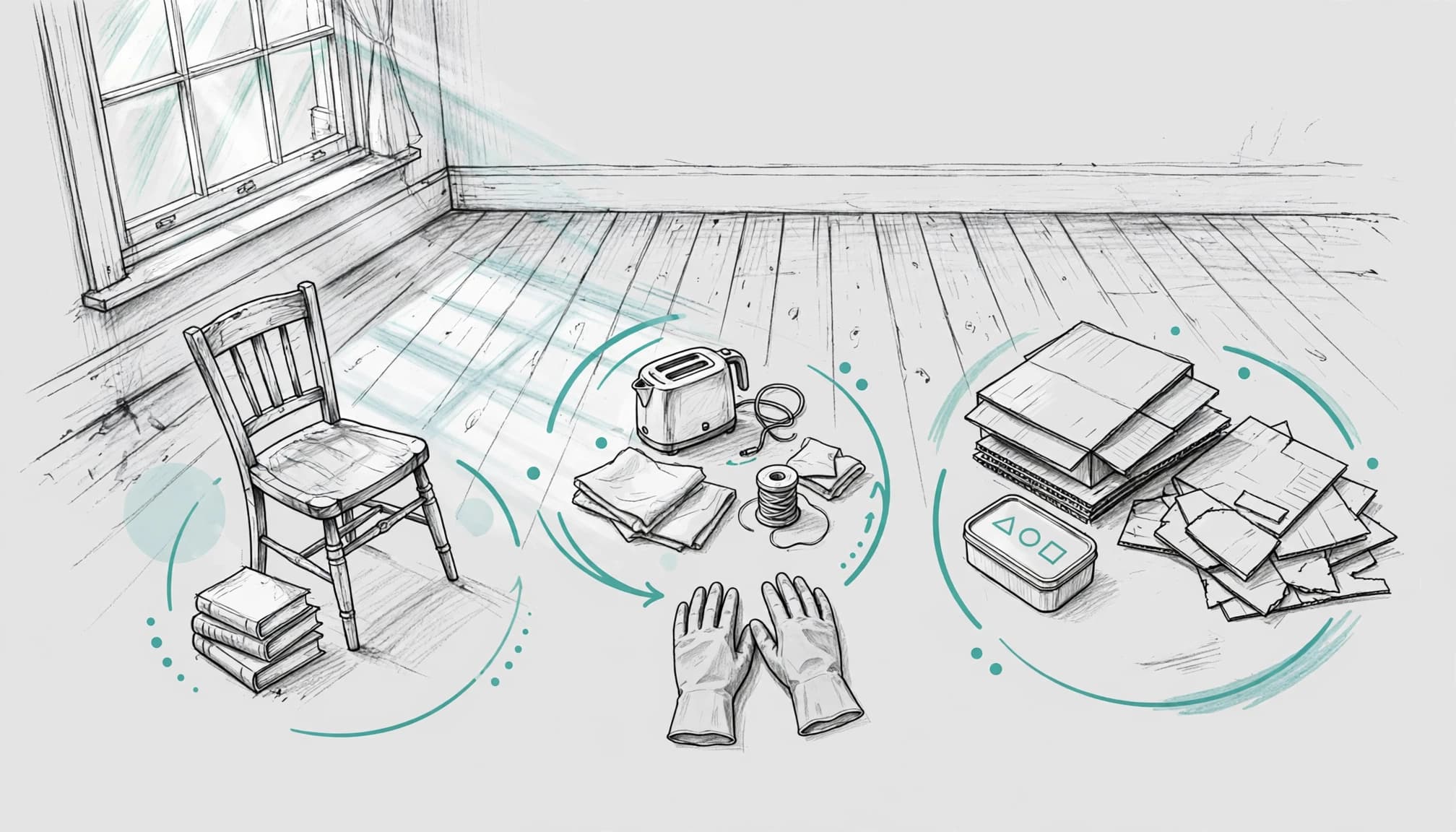
Which property clearance items need specialist handling?
Some of these items should not be placed in general waste or treated as part of a standard clearance. They may be hazardous materials, restricted by law, or simply unsuitable for standard transport and disposal.
Do not move, open, dismantle, burn or place suspected hazardous items in general waste. Leave them where they are and tell the provider what you know.
Asbestos and suspected asbestos materials
Asbestos can be found in older garages, sheds, pipe coverings, ceiling coatings, floor tiles, cement sheets and insulation boards. You cannot confirm it by looking at it alone.
If you suspect asbestos, do not break, sweep or bag it. Disturbing the material can release fibres into the air. A qualified asbestos contractor should assess it and explain the correct disposal route.
A standard clearance team should be clear about this limit. Asbestos is not ordinary household waste.
Chemicals, paint, gas cylinders and clinical waste
Paint tins, solvents, fuel, pesticides, cleaning chemicals, unknown liquids and gas cylinders all need separate consideration. Even a partly used container can present a risk.
The same applies to needles, sharps, bodily fluids, medicines, pest-contaminated waste and rooms affected by animal waste. These situations may need specialist cleaning as well as specialist disposal.
Unknown containers are not something to investigate yourself. Leave them in place, keep others away where possible, and mention them before the clearance is booked.
Firearms, ammunition and other regulated items
Firearms, ammunition, explosives and weapons are not standard clearance waste. Do not transport them yourself or place them in a wheelie bin, skip or rubbish pile.
Contact the police or an appropriately authorised specialist for advice. If you find an item during a probate clearance or while sorting a property, stop work around that area until you know what it is and what needs to happen next.

Belongings that may stay by agreement
Not everything left in a property is rubbish. Some items may be excluded from removal because they have value, personal meaning or unclear ownership.
This is usually a matter of agreement, not a legal restriction. The important point is to decide what stays before clearance begins.
Documents, keys and financial records
Set aside passports, wills, property deeds, bank statements, insurance documents, driving licences and spare keys. These can be missed when they are mixed into drawers, filing cabinets, folders or bedside tables.
If confidential paperwork needs secure destruction, ask how it will be handled. Don’t leave it amongst general household contents and assume it will be dealt with separately.
For landlords and letting agents, keep tenancy records, meter readings, inventory documents and any keys needed for the next stage of the property.
Jewellery, cash and sentimental belongings
Jewellery, cash, photographs, letters, medals, family collections and small antiques are easy to overlook. Check the property carefully before agreeing a clearance, especially cupboards, lofts, sheds and furniture drawers.
A clearance team can set aside agreed items and look out for named belongings where this forms part of the plan. An uncertain antique or collection may qualify for a free valuation if the provider offers that service.
Any valuation, resale or auction house decision requires agreement from the owner, executor or another authorised representative. A clearance company cannot decide who owns a family heirloom or whether it should be sold, donated or kept.
If several relatives or executors are involved, agree who has the final authority. Mixed instructions cause delays and difficult decisions.
Domestic and commercial clearance are not the same
A house clearance and a commercial clearance can look similar at first. Both may involve furniture, equipment and unwanted contents. The paperwork and waste management responsibilities can be different.
Commercial premises may include offices, retail units, warehouses, workshops and storage units. The type and volume of material often affects how the work is planned.
What can be cleared from business premises
An office clearance may include office furniture such as desks, chairs and filing cabinets, along with shelving, computer equipment, kitchen items and general non-hazardous contents. A further office clearance scope check may be needed for specialist equipment or restricted materials.
Retail and warehouse clearances may involve loose stock, cardboard, display units, pallets, light racking and damaged furniture. Loose stock may need sorting, counting or following inventory instructions before removal. Light racking should be assessed for safe dismantling, while heavy racking, machinery, chemicals and trade waste should be declared before any quote is agreed. The condition and fixing method of light racking can affect whether specialist removal is needed.
Costs are usually based on the amount of material, access, labour, parking, loading distance and disposal routes. An office clearance quote may also change if specialist work is required. Storage units can involve difficult access and longer carrying distances, while loading distance from storage units can affect the price. A large warehouse is not simply a bigger house clearance.
Waste transfer notes and duty of care
For relevant non-hazardous business waste, each load moved from the premises needs a waste transfer note or equivalent record with the required information. These requirements apply to commercial waste and should not be treated as identical to household clearance arrangements. Both parties should complete the relevant details and keep a copy for two years.
A digital record can be useful, but it is not the only lawful format. GOV.UK provides a waste transfer note template that shows the information a record should contain. Good waste management also involves keeping records, separating materials where required and using authorised disposal routes.
Before handing waste over, check that the provider is authorised to carry it. Ask about their waste carrier licence or the appropriate Environment Agency registration, depending on the UK nation and waste activity. The business’s duty of care includes checking the carrier and relevant documentation. If a provider claims zero landfill, ask for its recycling policy or disposal records, including any documented landfill diversion.
Prepare the property without trying to do everything
You don’t need to empty every room before contacting house clearance services. When comparing quotes, check the agreed scope, exclusions and access requirements.
A heavily cluttered property may need careful sorting, and important belongings can be mixed with things that need to go.
Start with what you know. The rest can be worked through in a clear order.
Put clear instructions in place
Before the team arrives, identify the areas included and anything that must remain. A simple written list is often enough.
List outdoor areas, sheds or gardens separately if included, as garden clearance may not be part of every service.
Use three straightforward groups:
- Keep items such as documents, photographs, keys, jewellery and named furniture.
- Remove items that have been approved for clearance.
- Mark items that need a decision from the executor, landlord, owner or family representative.
If a company advertises fixed prices, check exactly what they include. Hazardous items, difficult access, extra labour or changes to the agreed scope may be charged separately where agreed.
Tell the company about rooms that are difficult to enter, damaged floors, mould, pests, sharp objects or suspected hazardous materials. Early disclosure helps plan safer waste management, including suitable segregation and disposal.
Check access and authority
Agree who is giving instructions before work starts. This matters where a probate property has several family members, or where a landlord, agent and tenant are all involved.
Check access, parking, lift use, stairways, gates and shared entrances. For storage units, confirm loading arrangements, gate access, lift use and any restricted opening times.
If you cannot attend, agree how access will be provided and whether photo evidence is needed.
For properties in Doncaster, Sheffield, Rotherham, Barnsley or nearby, you can tell us about your property before you have every cupboard or room organised.
Key takeaways
- Standard clearance usually covers agreed furniture, household contents and non-hazardous waste.
- Asbestos, chemicals, gas cylinders, clinical waste, firearms and ammunition need qualified or authorised specialists.
- Valuables, documents, cash and sentimental belongings may stay by agreement. Check the property carefully before removal begins.
- Electrical goods may be accepted, but they need an appropriate WEEE disposal route.
- Commercial waste requires proper records. Ask about waste carrier registration and waste transfer notes.
- A written scope makes clear what stays, what goes and what needs a decision.
Frequently asked questions
Can a clearance company remove paint tins and cleaning chemicals?
Not automatically. Paint, solvents, pesticides, fuel and unknown chemicals may be hazardous materials. Tell the provider what is present before work begins.
Don’t open containers to check them or pour contents down drains. A qualified or licensed specialist may be needed, depending on the material and local disposal rules.
Are fridges, freezers and other electrical items allowed?
They may be, but this varies between providers. Electrical goods need a suitable WEEE recycling route, while fridges and freezers often require separate handling.
Ask whether they are included in the agreed quote. Also check whether the company can deal with batteries, monitors and old computer equipment.
Do I need a digital waste transfer note for a house clearance?
A digital note is not always required. For business waste, a waste transfer note or equivalent record with the required details is needed for each load of non-hazardous waste moved from the premises.
Private householders still need to take reasonable steps to pass waste only to an authorised person. Keep any paperwork you receive, particularly where the clearance is substantial.
Can antiques and collectables be sold during probate clearance?
They may be set aside for valuation, resale or auction where agreed. First, the executor or authorised representative should confirm what can be removed and what needs further discussion.
Don’t assume that an old item has no value. Leave uncertain belongings out of the clearance scope until a decision has been made.
A clear plan keeps the property under control
The safest clearance starts before anything is lifted. Identify ordinary contents and specialist items at a home, business or storage units.
You don’t need every answer on the first day. You do need clear instructions, responsible disposal and a professional service that can escalate restricted or hazardous items appropriately.
