 Skip to content


A house clearance is not about loading everything into a van and treating it as rubbish. Professional house clearance services check and sort items for reuse, donation, recycling or responsible disposal.
That matters when you are moving home, dealing with a tenancy, managing a probate property or clearing years of accumulated contents. Furniture, documents, valuables and personal belongings may all require different decisions.
A clear plan helps separate what stays, what can go and what needs more time.
Key takeaways
- Belongings are often sorted for reuse, charity donation, resale, recycling and disposal through lawful, responsible routes. They are not automatically thrown away.
- Remove valuable items, personal documents and sentimental possessions before work starts where possible.
- In a probate clearance, the executor or authorised representative should confirm what may be removed.
- Standard house clearance does not automatically include hazardous materials, asbestos, chemicals or biohazard work.
- A written quote should cover the agreed areas, labour, waste disposal, access issues and any cleaning or additional work.
- Check that the provider is insured, registered to carry waste where required, and clear about paperwork and disposal arrangements.
What happens on a house clearance day?
Every property is different. A bereavement clearance needs a different pace to an end-of-tenancy clearance. A heavily cluttered property may need more sorting, access work and time.
The process should begin before the team arrives. You should know what is included, who can give instructions and what needs to remain in the property.
The assessment and agreed scope
A house clearance company may ask for photographs, video or a visit before quoting. They need to understand the amount of contents, the rooms involved, parking, stairs, shared entrances and any difficult access points.
Mention lofts, garages, sheds and outbuildings. Tell the company about heavy furniture, fridges, damaged flooring or anything that may affect safe access.
The written scope should state what is being removed, what is staying and whether cleaning is included. A responsible provider follows this agreement, rather than treating unwanted contents as illegal dumping.
If the job changes because a room contains far more material than expected, the team should discuss it before carrying out extra work.
Sorting before removal
A careful clearance team works through the agreed areas methodically. Items may be placed into three working groups:
- Items to keep or set aside.
- Items approved for removal.
- Items that need a decision from the person giving instructions.
This is different from rubbish removal. A full house clearance may involve furniture, household items, personal belongings, cupboards, drawers and rooms that have not been sorted beforehand.
What happens to furniture after house clearance depends on its condition and the agreed service. It may be kept, set aside for reuse or donation, dismantled for safe transport, recycled or sent through responsible waste disposal.
Large wardrobes, beds and sofas may need dismantling for safe removal. The team should take reasonable care around stairways, walls, floors and communal areas.
What should you protect before clearance begins?
You don’t need to empty every cupboard before asking for help. But known important personal belongings should be removed or clearly identified before the work begins.
Where several relatives, executors, landlords or agents are involved, agree who has final authority. Mixed instructions can lead to delays and difficult decisions.
Documents, keys and financial records
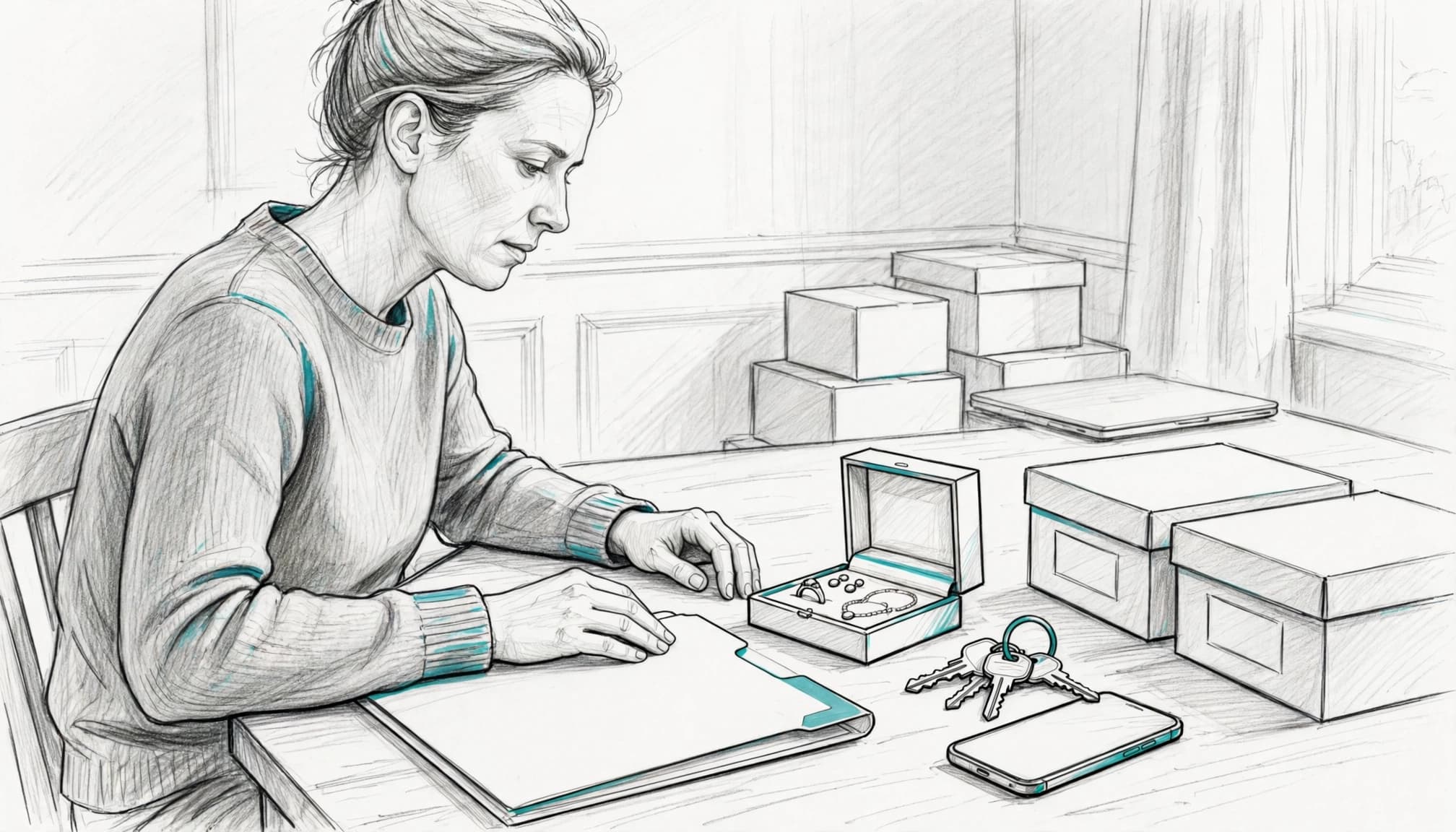
Set aside passports, birth certificates, wills, property paperwork, bank statements, insurance documents, driving licences and spare keys. These personal documents may be in filing cabinets, bedside drawers, desk drawers or folders.
Confidential papers shouldn’t be left amongst general household items. If documents need secure destruction, ask how the company handles that material and whether it’s included in the quote.
For a landlord or letting agent, keys, tenancy records, appliance manuals and meter information may also be needed for the next stage of the property.
Valuable items and sentimental belongings
Jewellery, cash, medals, watches, collectables, family photographs, letters and small heirlooms can be easy to miss. Remove any sentimental items you already know you want to keep.
Give clear written instructions for anything the team should look out for. “Keep all photo albums in the front bedroom” is more useful than “save sentimental items”.
No clearance team can promise to find every item in a heavily cluttered home. Still, knowing what matters changes how the property is approached.
Belongings subject to probate
A property after a death can contain probate-related belongings that need checking before anyone decides their future. Executors may need to identify, value and authorise the removal of antiques, jewellery, silver, branded goods or collections.
A clearance company can set aside agreed items. It isn’t their role to decide who owns a family heirloom or whether it should be sold, donated or kept.
If a decision hasn’t been made, leave the item out of the clearance scope. Not every decision needs to happen on the same day.
House clearance belongings: where do they go?
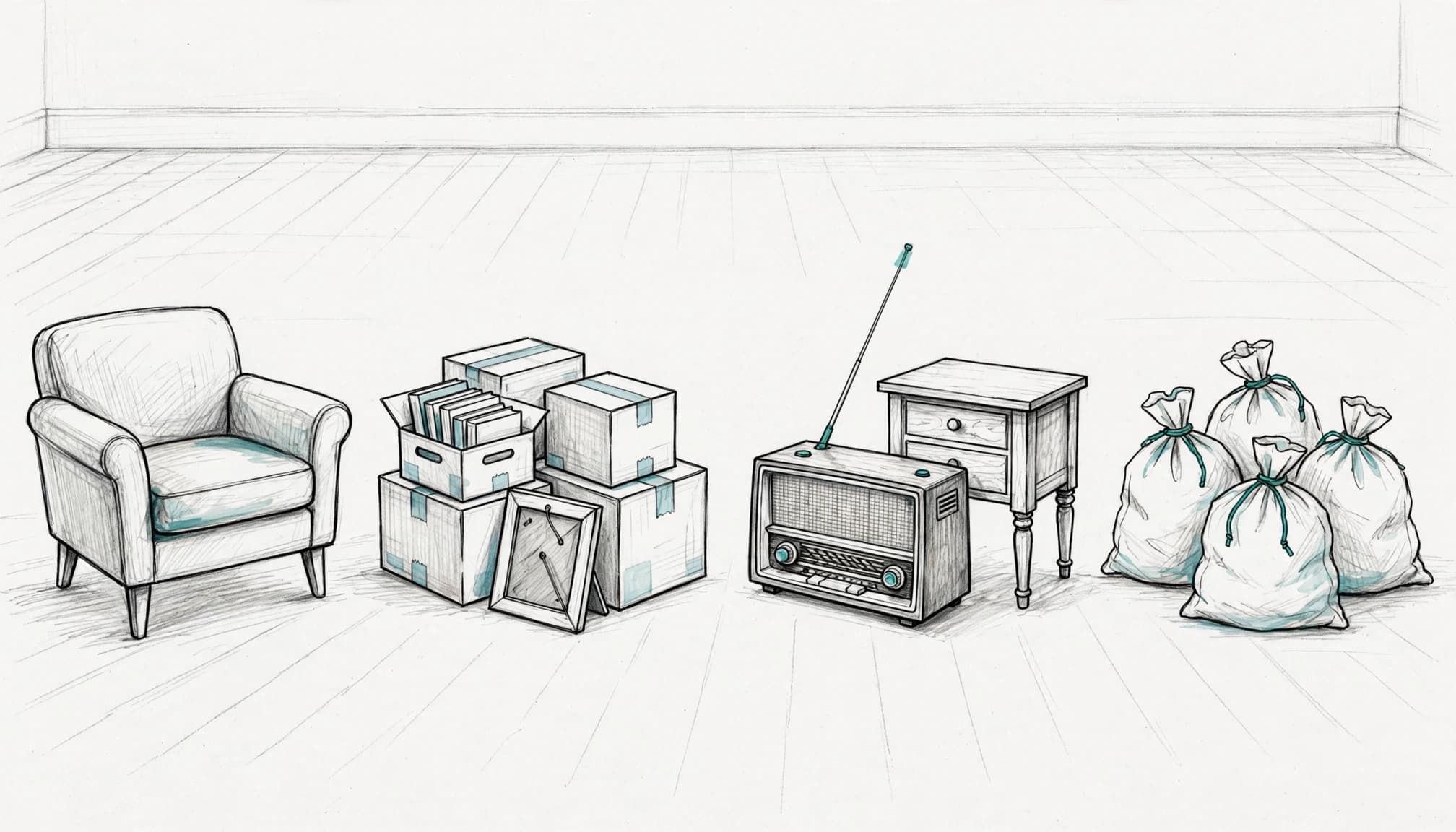
What happens after removal depends on the item, its condition and the provider’s arrangements. A responsible house clearance looks at the available options rather than treating every unwanted item in the same way.
Ask the company how they separate materials and where usable items may go. Practices vary.
Reuse, resale and auction
Clean, usable furniture, working appliances and household items may be suitable for reuse. Some companies may identify items with resale value, while others may work with auction houses or second-hand outlets.
Resale value can sometimes reduce the cost of a clearance. It doesn’t automatically make a clearance free. Labour, transport, sorting and disposal still need to be covered.
If you believe an item could be valuable, arrange your own valuation before it is approved for removal. Don’t rely on a quick assumption made on clearance day.
Charity donation
Charities may accept usable furniture, clothing, books and household items, subject to their own condition standards and collection capacity. Stained mattresses, broken furniture, damaged electrical items and incomplete sets are less likely to be accepted.
Ask whether donations are taken directly to a charity, passed to a reuse partner or handled through another route. A company shouldn’t claim that every item will be donated.
Recycling and responsible disposal
Metals, wood, cardboard, textiles and some furniture components can often be separated for recycling. Materials are separated where possible, while remaining waste is handled through an appropriate facility as part of recycling and disposal.
“Everything recycled” is not a meaningful promise without a clear explanation of how materials are sorted and where they are taken.
The GOV.UK waste duty of care guidance explains the responsibilities around transferring waste to another party. Ask what records will be provided for your clearance.
Items a standard clearance may not cover
Ordinary household contents and non-hazardous waste are one thing. Materials that could cause harm need separate consideration, especially hazardous materials.
Tell the provider what you know before work begins. Hidden risks can affect the plan, cost and timescale.
Chemicals, paints and hazardous materials
Paint tins, solvents, pesticides, fuel, gas bottles, unknown containers and similar hazardous items should never be assumed to be part of a standard house clearance. Sharps, bodily fluids, mould-affected areas and pest-contaminated rooms may also require a different approach.
These items may need specialist handling and a separate waste disposal route. A responsible provider will explain what they can safely handle, while qualified contractors should manage risks such as asbestos, chemicals and contamination.
Where another appropriately qualified service is needed, that should be stated plainly.
Do not move unidentified containers yourself. Leave them in place, take photographs if safe to do so and mention them during the assessment.
Fridges, freezers and electrical goods
Televisions, monitors, microwaves, kettles, computers and other electrical items are covered by Waste Electrical and Electronic Equipment rules. Fridges and freezers may need separate handling because of their cooling systems.
Ask whether electrical goods are included in the quote and whether extra charges apply. Appliance collection or specialist handling may cost more when offered separately by the provider. Remove personal data from phones, tablets and computers before they leave the property where possible.
How much does a house clearance cost in the UK?
There is no single price for a house clearance. Whether it’s linked to moving home, bereavement or tenancy work, volume matters. Access, labour, heavy lifting, sorting, parking restrictions, waste type and cleaning can also change the quote.
Commercial price guides commonly place a standard two or three-bedroom property between £300 and £1,200. A small room or studio may be around £150 to £350, while a heavily furnished four-bedroom home or difficult hoarded property can cost £900 to £3,500 or more.
Why similar properties can cost different amounts
A first-floor flat without a lift can take more labour than a larger house with clear driveway access. Stairs, long carrying distances and large furniture can increase costs because they require more heavy lifting.
London and the South East often cost more because parking, congestion and disposal costs are higher. In South Yorkshire, the same practical issues still matter, particularly for terraced homes, shared access and properties with full lofts or outbuildings.
Cleaning after clearance, preparing a property for sale, garden work, mattress removal and fridge removal may be priced separately. Ask whether VAT applies.
Compare quotes on the same basis
A lower quote is not always cheaper once extra work is added. A free quote should still state the agreed scope and any exclusions. Check whether each company has included labour, loading, transport, waste disposal, dismantling and agreed cleaning.
Ask these questions before you book:
- Is the price fixed for the agreed scope of work?
- What happens if unexpected contents or hazards are found?
- Which rooms, storage areas and outside spaces are included?
- Will you provide completion photographs where needed?
- What paperwork will be supplied after waste is removed?
Choosing a responsible clearance company
The right house clearance company should make the situation clearer, not more confusing. A professional team won’t pressure you to remove everything immediately or decide before you’re ready.
Check the company’s insurance, written terms and disposal arrangements. In England and Wales, check the provider’s waste-carrier registration and ask whether it holds the appropriate waste carrier licence. Businesses transporting controlled waste generally need to be registered as waste carriers. The waste carrier registration rules set out part of that regulatory framework.
Ask whether a waste transfer note will be provided where it applies. It records details of the waste transfer, including where and when the material was collected.
Be wary of anyone who won’t put the scope in writing, explain the waste disposal route or provide clear paperwork. The person arranging the clearance should check where waste goes, helping to avoid illegal dumping and fly-tipping problems.
For properties in Doncaster, Sheffield, Rotherham, Barnsley or nearby, you can tell us about your property before you have every room organised.
Frequently asked questions
Do I need to be at the property during the clearance?
Not always. If authority, access arrangements and instructions are clear, a clearance can often be completed while you are elsewhere. You may wish to arrange photographs at handover, particularly for a probate, landlord or remote property clearance.
Can a house clearance include cleaning?
It can, but it is not automatic. Agree whether the job is clearance only or includes cleaning afterwards. A clear handover should confirm what has been completed and what still needs attention before sale, repairs, refurbishment or re-letting.
What if a property is heavily cluttered?
A heavily cluttered home may need a phased plan. Important belongings can be mixed with waste, rooms may be difficult to enter and access may be restricted.
You do not need to sort the whole property first. Explain what you know, identify anything that needs to stay and allow time for an assessment.
A clear plan protects what matters
A house clearance is manageable when important decisions are made before items leave the property. What stays, what can be removed and what needs a decision should all be clear.
Sentimental items, furniture, documents and other belongings should be identified before removal. Most items can follow a sensible route through reuse, donation, resale, recycling or responsible disposal. The key is clear instructions, a written scope and a company that treats the property with care.
